•
•
•
•
•
•
•
•
•
•
•
•
•
•
•
•
•
•
•
•
•
•
•
•
•
•
•
•
•
•
•
•
•


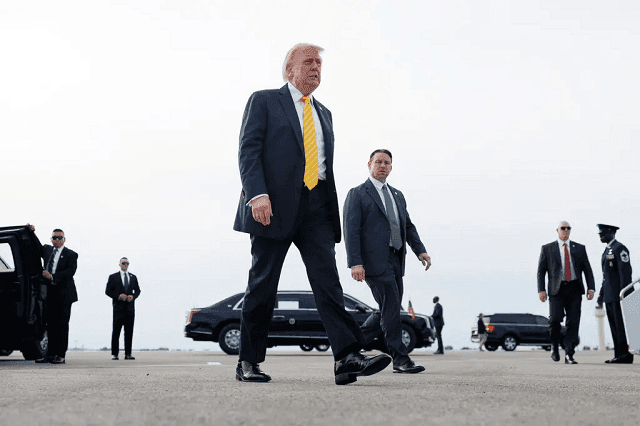
The U.S. Court of International Trade ruled that President Donald Trump had no legal basis to impose a 10% tariff on most imported goods, delivering another setback for the White House as it seeks to reshape trade policy without clear authorization from Congress. The court said Trump misapplied a decades-old trade statute to implement the tariffs starting in February 2026, after tariff countermeasures were previously blocked by the Supreme Court.
While the court declared the tariffs illegal, it currently blocks the collection of duties only from small businesses and some states that sued. Observers expect the administration to appeal, and the White House’s interpretation of the decision remains unclear.
The ruling also raises the likelihood that the administration will have to refund money already collected under the tariffs deemed unlawful. Parties have begun refunds totaling roughly $166 billion collected under the International Emergency Economic Powers Act (IEEPA).
The White House and the U.S. Trade Representative did not respond immediately. Trump later criticized the judges and indicated the administration would continue its trade strategy, saying, “We always have another way,” and that it would proceed in a different direction.
The decision comes ahead of Trump’s trip to China next week, where he is expected to meet President Xi Jinping to discuss tariff barriers and trade. The court ruling could weaken the U.S. negotiating position in upcoming talks.
From the outset, the administration treated broad tariffs as a temporary measure while it worked to build a legally stronger framework. The process is now accelerating, including consideration of tools such as Section 122 of the Trade Act of 1974, which is rarely used, to reimpose similar tariffs in the future.
The court’s 53-page decision found that Trump did not meet the legal criteria to invoke Section 122. Two of three judges reached that conclusion. The court cited legislative history, stating that the provision reflects “multiple efforts to cautiously limit the president’s discretionary power in trade.”
Jeffrey Schwab, head of litigation at Liberty Justice Center, which represents the small-business plaintiffs, said Section 122 was enacted to respond to a specific historical crisis when U.S. gold and monetary reserves were depleted, adding: “That is not the current context.”
Liberty Justice Center said this was its second major legal victory over Trump, following a prior case that reached the Supreme Court. Although states were involved, the court found most states lacked standing to challenge the use of Section 122.
Oregon Attorney General Dan Rayfield said, “As long as President Trump continues to push illegal tariffs on the people of Oregon, we will continue to the courts to stop him.”
Ryan Majerus, a partner at King & Spalding, said the court “clearly fears the administration’s overbroad interpretation of Section 122.” He predicted that if refunds proceed, the process could last until 2027.
The administration is preparing the next tariff steps, though new measures could not be implemented immediately. Two Section 301 trade investigations have been proposed, relating to global rules on goods produced with forced labor and other countries’ production capacity. Hearings on these measures took place in Washington this week and last.
While the Section 122 tariffs were expected to run through July, alternative measures would likely require more time before implementation. Timothy C. Brightbill, a lawyer at Wiley Rein, called the ruling a “clear rejection of the president’s use of tariffs under Section 122.” He cautioned that an appeal is almost certain and said a “Plan C”—Section 301 investigations—will likely lead to new tariff announcements in July.
Premium gym chains are entering a “golden era” that is ending or already in decline, as rising operating costs collide with shifting consumer preferences toward more flexible, community-based ways to exercise. Long-term memberships are shrinking, margins are pressured by higher rents and facility expenses, and competition from smaller, more personalized…