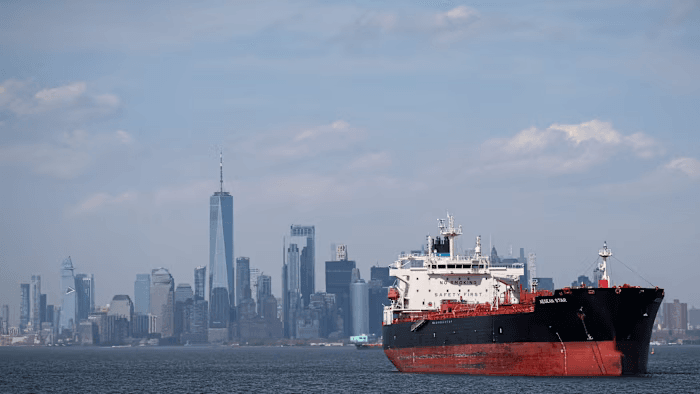
US fuel exports reach record highs as Europe and Asia rely more on U.S. supply to offset shortages caused by the Iran conflict.\n\nAccording to new data released by the U.S. Energy Information Administration (EIA) on Wednesday, May 6, the United States last week exported more than 8.2 million barrels per day of refined fuel products, including gasoline, diesel, and jet fuel. This level was up more than 20% from the same period in 2025.\n\nRising overseas demand is delivering substantial cash flow to U.S. energy companies. Analysts say that if
fuel prices stay elevated, U.S. energy firms could generate about $60 billion in cash flow this year.\n\nHowever, this trend could also put pressure on the Trump administration as domestic gasoline prices have climbed. The average nationwide retail price for gasoline rose to $4.53 per gallon, the highest in four years.\n\nRecently, the White House has repeatedly stated that there is no plan to ban fuel exports, given that U.S. supply remains a key anchor for European and Asian economies. Nevertheless, energy analysts say domestic pressure could force the administration to reconsider this stance.\n\n“The situation is getting more awkward for the U.S. administration. If gasoline prices rise to $5 per gallon, Washington may have to consider export bans,” said Robert Yawger, a commodity strategist at Mizuho Securities, in an interview with the Financial Times.\n\nAccording to Jeff Currie, senior energy adviser at private equity Carlyle, the scale of exports is rapidly reducing U.S. oil inventories. U.S. diesel stocks are at the lowest level in 20 years.\n\n“A shortage does not begin when supply stops, but when inventories run dry,” Currie said.\n\nLast week, strong overseas demand for U.S. energy helped the United States become a net exporter of crude oil for the first time since World War II. This marks a notable reversal, given that just over a decade ago the U.S. was among the world’s largest crude importers.\n\nOver more than two months, the Iran conflict has nearly paralyzed shipping through the Hormuz Strait, disrupting about one-fifth of global oil supply and triggering the largest supply shock in oil market history.\n\nOil prices moved sharply in Wednesday’s session after Trump indicated the potential end of U.S. military actions and that the Hormuz Strait would be “open to all sides.” Brent crude briefly rose to $109 per barrel before retreating to around $97.\n\nWhenever signals suggest the United States and Iran could reach a peace agreement, oil traders sell off again. The reason is that if the conflict cools, about 100 million barrels of crude trapped in the Gulf could be released to the market, increasing supply and pushing prices lower.\n\nHowever, Trump also warned that if Iran refuses to accept a deal, the United States would resume air strikes with greater intensity. That warning pushed Brent back to around $101 per barrel. Iranian officials said Tehran is considering Washington’s latest proposal but are trimming expectations for a breakthrough sufficient to end the conflict.\n\nAccording to Tasnim News Agency, which has close ties to Iran’s Islamic Revolutionary Guard Corps (IRGC), the U.S. proposal includes terms unlikely to be accepted.\n\nMeanwhile, Trump has repeatedly said negotiations between the U.S. and Iran are progressing, and expressed optimism about a deal to end the conflict. Yet prospects for a breakthrough remain limited as mediators have not bridged the large gaps between Washington and Tehran, especially on Iran’s nuclear program.\n\nOn May 6, global oil prices fell after Axios reported that the U.S. had sent Iran a proposal via Pakistan. Under this proposal, Tehran would suspend uranium enrichment—central to the dispute over Iran’s nuclear program—in exchange for the U.S. easing sanctions and the release of Iranian assets abroad.\n\nThese issues are central to the negotiations and have been major sticking points since Washington and Tehran began high-level talks in Pakistan about a month earlier.\n\nThe Trump administration seeks a 20-year suspension of uranium enrichment, while Tehran says only a 3–5 year period would be acceptable.\n\nIn an interview with the Financial Times, an Iranian diplomat said the latest U.S. proposal includes a 30-day phase of “trust-building.” During this period, the Hormuz Strait would be reopened in parallel with the U.S. lifting sanctions on Iran’s ports, before the two sides enter more detailed discussions on Tehran’s nuclear program.\n\nPreviously, Iran has said it would not resume negotiations unless the U.S. lifted sanctions on its ports.