•
•
•
•
•
•
•
•
•
•
•
•
•
•
•
•
•
•
•
•
•
•
•
•
•
•
•
•
•
•
•
•
•

An agreement between the United States and Iran could ease Asia’s oil shortfall, but the impact will take months to materialize. On June 17, the United States and Iran signed a preliminary deal to end the conflict in the Middle East, with Iran agreeing to reopen the Hormuz Strait, a chokepoint that ships about 20% of global oil.
For nearly four months, the strait’s blockade effectively reduced flows, contributing to a global oil shortfall of about 1.15 billion barrels, according to Kpler. Asia— the region that consumes the largest share of Middle East crude—was especially affected.
In several Southeast Asian economies, governments implemented measures including a four-day workweek, rationed diesel, restarted coal-fired plants, accelerated ethanol blending, and restricted crude exports. The Philippines even declared a national energy emergency in late March as fuel prices rose roughly 40% since the conflict began.
As energy-supply pressures weigh on growth, ING analysts said the deal offers hope for the region. “The U.S.-Iran peace deal is a positive signal for Asia, a region heavily dependent on imported energy and vulnerable to disruptions in the Middle East,” ING said.
ING’s analysis suggests Southeast Asia would benefit most if oil prices fall, with the Philippines highlighted as a notable example. India and Thailand—also heavily dependent on energy imports—could see lower transport and delivery costs.
Improved energy supply could also support stronger growth in Korea and Japan. ING pointed to Korea’s petrochemical industry and Japan’s car exports to the Middle East as areas that could rebound.
Even if new supply recovers only partially, the market should ease, lifting sentiment among consumers and businesses, particularly in countries that had faced disruptions.
However, it will take time to relieve Asia’s oil hunger. ING’s baseline scenario calls for roughly 50% of Hormuz flows to be restored by the end of June, with full restoration only by late 2026.
Many analysts warn that it will take months to return oil flows to pre-war levels. Chen Chien-Ming, associate professor at Nanyang Technology University (Singapore), said supply will not rebound immediately. “A round-trip tanker between Singapore and Gulf states could take one to two months, while many Asian countries hold inventories at multi-year lows and energy prices are elevated,” he said.
Sushant Gupta of Wood Mackenzie forecast Asian oil stocks to keep declining until around August before gradually recovering. “In the last three months, inventories in many countries have fallen to minimums. We do not expect to return to pre-war levels this year,” he said.
Some energy facilities damaged in the conflict cannot be restarted immediately. The article cited Qatar’s Ras Laffan LNG export terminal as an example. Refineries, it said, also cannot resume operations instantly.
Restoring flows does not automatically push energy prices down quickly. The Iran crisis underscored the importance of energy security, and energy-intensive regions like South and Southeast Asia may bolster strategic oil reserves, perhaps even above pre-war levels.
Pushan Dutt, economics professor at INSEAD, said Asian countries will likely increase oil purchases while China and the United States also rebuild reserves. “Thus supply and demand could rise together, delaying price declines,” he said.
Investors may also delay price declines because they want more information on demining and sanctions. Doubts persist about the long-term stability of the agreement given the fragile U.S.–Iran relationship and intermittent negotiations.
Chen Chien-Ming cited Iran’s 14 points, including demands for compensation for war damages and the release of frozen assets, as well as Tehran’s call for Israel to withdraw from Lebanon and end all military activity—an outcome Israel is unlikely to accept.
Kim Fustier, HSBC’s global oil expert, said the deal is a positive signal but more evidence is needed to show it is actually being implemented. Gupta added that signing is only the first step, and a sharp near-term price drop is unlikely.
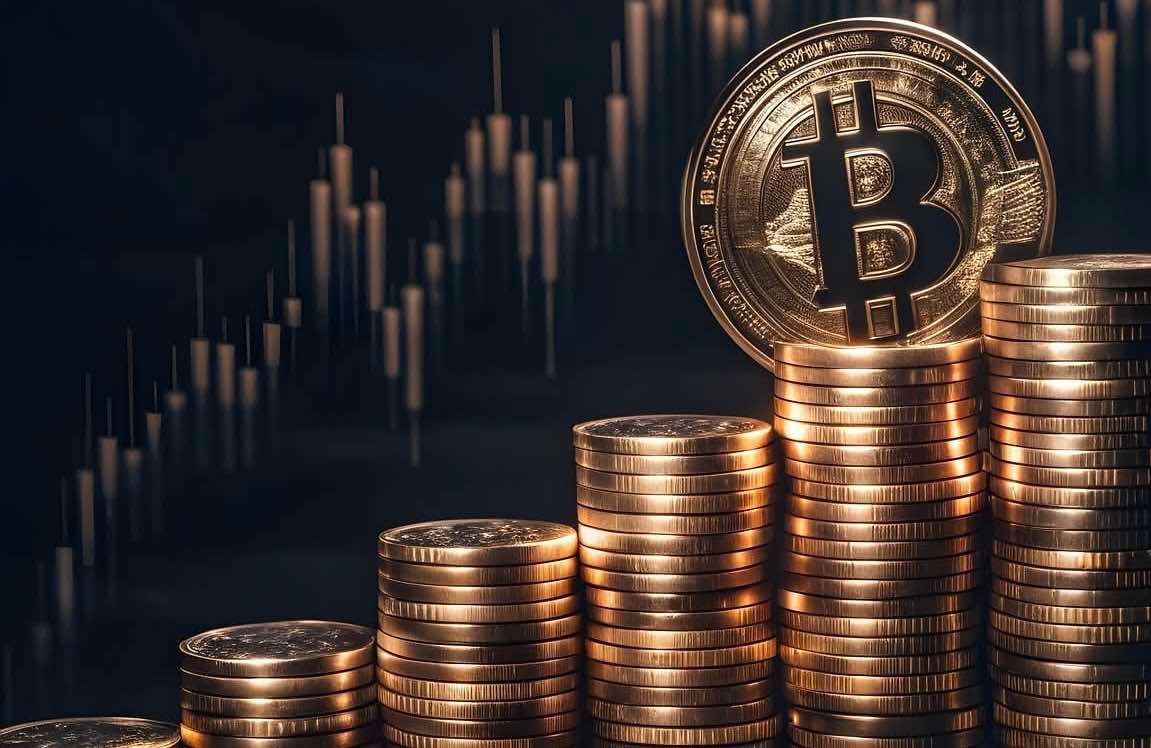
Bitcoin (BTC) investors who use steady dollar-cost averaging (DCA) may be underperforming versus strategies that adjust exposure to the market’s cycle, according to new research arguing that Bitcoin’s behavior differs from traditional long-duration assets.
In a report cited by Markus Thielen of 10x Research, Bitcoin’s market…