•
•
•
•
•
•
•
•
•
•
•
•
•
•
•
•
•
•
•
•
•
•
•
•
•
•
•
•
•
•
•
•
•
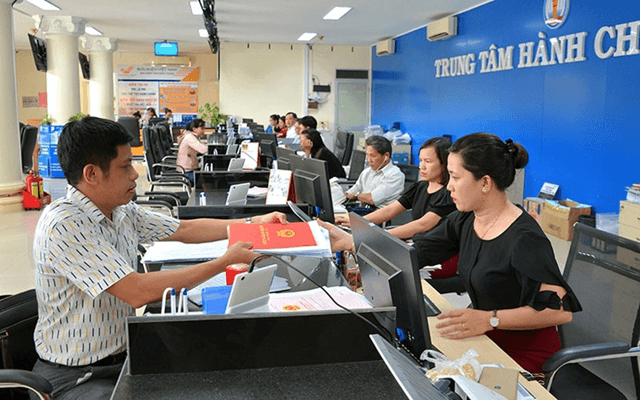
The Ministry of Justice has proposed a draft decree to amend and supplement Decree 118/2025/ND-CP, aiming to strengthen the use of existing national and sector databases to reduce paperwork in administrative procedures under the one-stop, one-door mechanism and the national public service portal.
A key proposal would add a principle requiring agencies receiving and processing administrative procedures to tap information and data already available in national databases and sector databases. Under the draft, agencies would not be allowed to require citizens or businesses to provide documents or information that already exists in connected and shared data systems.
Additional documents would only be requested when data cannot be exploited or is insufficient to resolve the case. The ministry said the approach is intended to implement the principle that “citizens provide information once,” thereby reducing procedures and compliance costs for citizens and businesses.
The draft would amend 13 of the 41 articles of Decree 118/2025/ND-CP. It focuses on clarifying state management responsibilities for the One-Stop Unit, the operating responsibility of the National Public Service Portal, the acceptance of administrative procedures not bound by administrative territorial boundaries, and the application of new technologies in dossier processing.
The draft also proposes applying artificial intelligence to support monitoring, evaluation of administrative procedure implementation, and quality control of dossier handling.
Another change clarifies the role of the Ministry of Public Security in managing the technical infrastructure of the National Public Service Portal. The portal is proposed to be built, managed, and operated by the Ministry of Public Security, with data integration from ministries and local governments nationwide.
Meanwhile, the Ministry of Justice would continue to oversee the professional functioning of administrative procedure operations, with the division intended to separate infrastructure operation responsibilities from professional management responsibilities.
The draft adds provisions on receiving administrative procedures without territorial boundaries within provinces and nationwide, and clarifies responsibilities of vertical agencies when participating in local administration proceedings.
Under the proposal, if a local vertical agency does not establish a Separate Receiving and Returning Section, it may assign staff to the provincial or district-level Public Service Center to receive and process files for citizens.
The draft also suggests expanding reception and results-return models under provincial service centers to improve access for people and businesses when filing or receiving results.
For localities with sufficient digital infrastructure and digital transformation, the draft allows consideration of a one-tier Public Service Center under provincial People’s Committees. It also proposes determining the number of branches and reception/return points based on practical needs.
According to the ministry, the amendments aim to build a modern, synchronized system for handling administrative procedures, maximize the use of digital data, reduce paperwork, and shorten processing time for citizens and businesses.

Bitcoin (BTC) investors who use steady dollar-cost averaging (DCA) may be underperforming versus strategies that adjust exposure to the market’s cycle, according to new research arguing that Bitcoin’s behavior differs from traditional long-duration assets.
In a report cited by Markus Thielen of 10x Research, Bitcoin’s market…