•
•
•
•
•
•
•
•
•
•
•
•
•
•
•
•
•
•
•
•
•
•
•
•
•
•
•
•
•
•
•
•
•


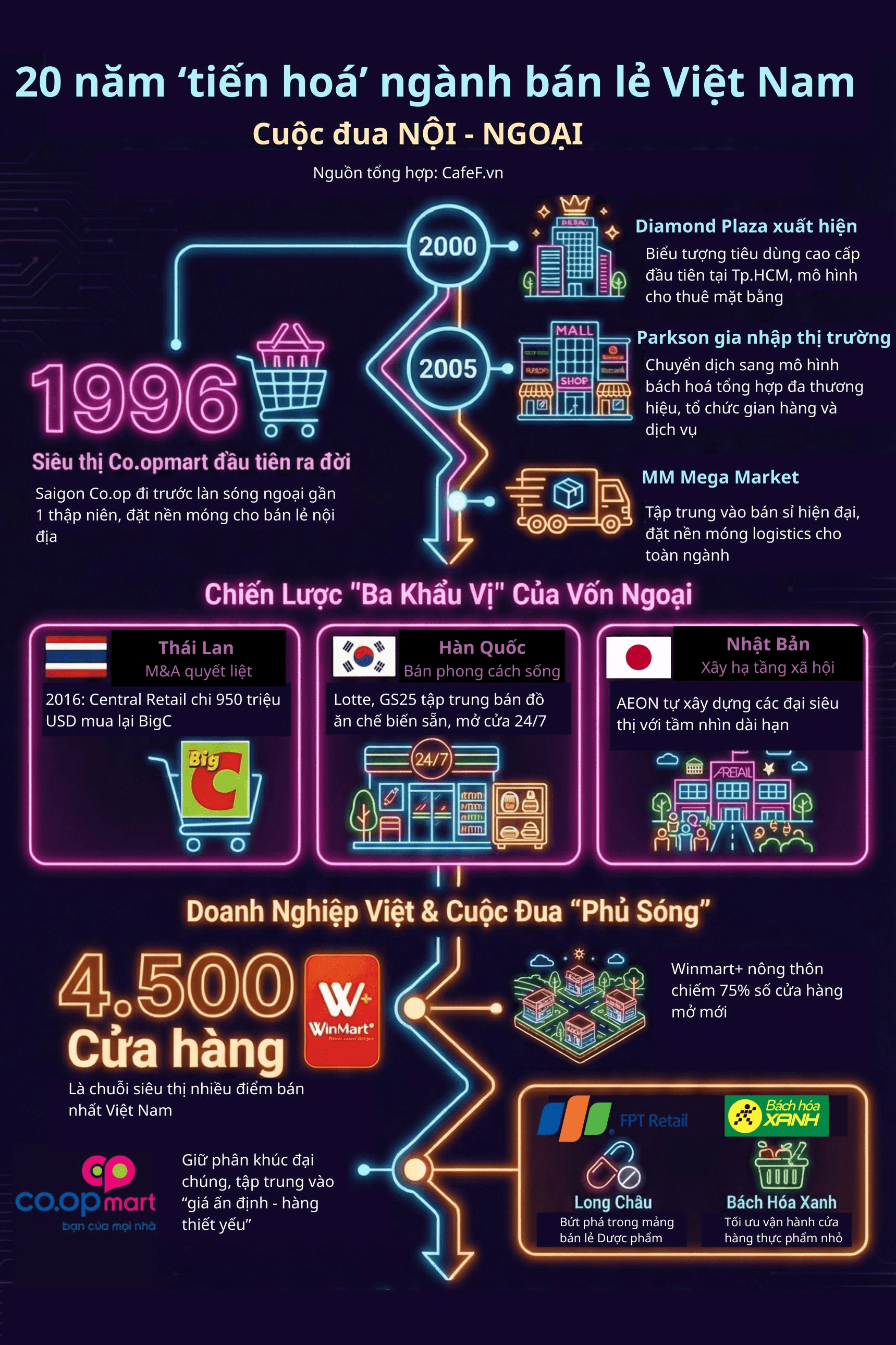
Two decades ago, Vietnam’s “modern retail” was often associated with glamorous glass-front towers in city centers, where foreign brands rented space to sell goods. Twenty years later, that picture has changed dramatically. Today, the Vietnamese retail market is no longer just about leasing space; it has become a battleground of massive supply chains, shaped by foreign investment and the rise of domestic players.
Thai groups have used capital to move quickly. Central Retail paid around 920 million euros to acquire Big C Vietnam from Casino Group in 2016. The deal gave it ownership of more than 40 hypermarkets, along with a network of suppliers and customer habits built over more than a decade. Central Retail is now pursuing an investment plan of nearly $1.5 billion for 2023–2027 to extend GO! and Tops Market across provinces.
In contrast, the Japanese player AEON has taken a “slow but steady” approach, building infrastructure and capabilities such as parking lots, logistics systems, and staff training to maintain service standards. AEON’s commitment is also about $1.5 billion, with an ambition to grow threefold by 2030, viewing retail as long-term social infrastructure.
Korean representatives, led by Lotte and GS Retail (including GS25), have entered with a culture-driven strategy. Their model accepts high rent costs and slim margins, placing stores in urban areas and offering 24/7 convenience along with fast food in a Korean style. The strategy is tied to expectations for growth in Vietnam’s rising urban middle class.
While foreign giants dominate large hypermarkets and malls, Vietnamese enterprises have anchored themselves in residential districts and near-home convenience formats.
Saigon Co.op, founded in 1996, has stuck to the motto “essential goods – price stability.” As foreign rivals pursue scale and experience, Co.opmart has remained robust by aligning with everyday shopping habits of the majority.
WinCommerce (Masan), rebuilt as the WinMart/WinMart+ network, has grown to nearly 4,600 outlets as of October 2025. The company’s expansion shows a clear rural push: 75% of new stores opened in the fourth quarter were in rural areas.
The Dien May Group (Thegioididong) has also expanded beyond electronics into groceries through Bach Hoa Xanh. The business has moved from small-format trials to improved operations and broader provincial coverage beyond Ho Chi Minh City.
After 20 years, Vietnam’s retail market has formed clear battlegrounds. Foreign powerhouses dominate large destination shopping centers, while domestic enterprises control convenient, near-home formats focused on daily essentials. This evolution has shifted retail from a primarily real-estate-driven model toward competition in technology, supply chains, and understanding consumer behavior.

Premium gym chains are entering a “golden era” that is ending or already in decline, as rising operating costs collide with shifting consumer preferences toward more flexible, community-based ways to exercise. Long-term memberships are shrinking, margins are pressured by higher rents and facility expenses, and competition from smaller, more personalized…