•
•
•
•
•
•
•
•
•
•
•
•
•
•
•
•
•
•
•
•
•
•
•
•
•
•
•
•
•
•
•
•
•


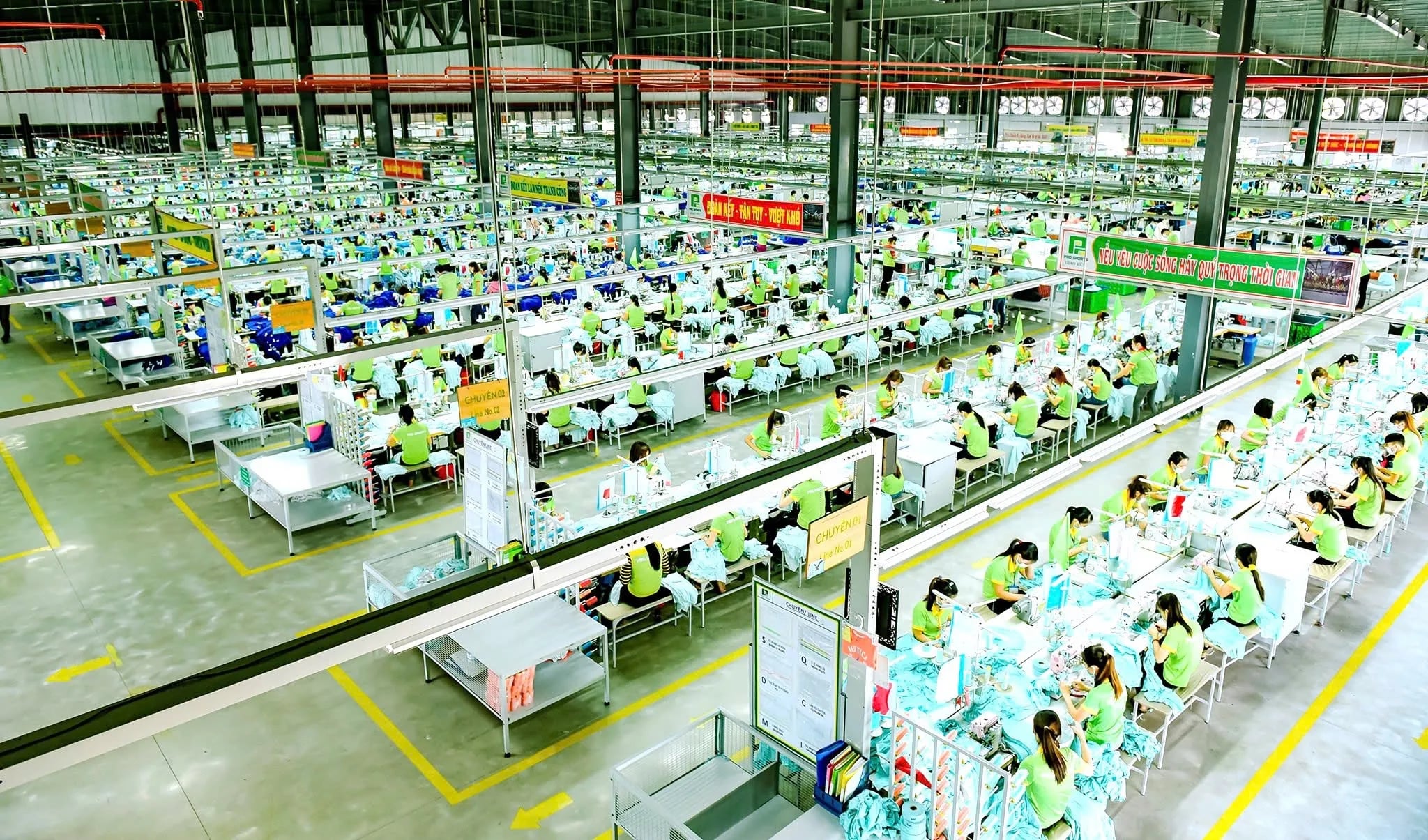
Velosar, the domestic sportswear brand launched in 2024 by Pro Sports, is aiming to raise product standards, strengthen distribution channels, and gradually establish a presence in Southeast Asia within five years, according to the company’s chairman, Phan Minh Chính.
Pro Sports, established in 2007, is a garment contract manufacturer for the US, Europe and Canada. It has grown from an initial workforce of 10 employees to a network of five plants in northern provinces, with more than 6,000 workers and exports of nearly 50 million products per year.
Velosar was created after Pro Sports shifted from contract manufacturing to direct design, product development and the building of distribution channels. After nearly two years, Velosar has sold over 500,000 products, contributing to a 12% growth of the company.
Phan Minh Chính said the brand-building path began with the desire to create products “for Vietnamese people, by Vietnamese.” He also emphasized that the move was not sudden, citing capability, market maturity and the company’s focus on sport.
Pro Sports has nearly 20 years of experience, including five plants in northern provinces with a total area of over 100,000 m2, 124 production lines, and an R&D center. The company reported maintaining 8–12% annual growth.
During development, Pro Sports worked with international brands including Adidas, Puma and Under Armour, positioning its “DNA” around sport. From the start, the company defined three pillars: contract manufacturing, ODM business, and building its own brand.
Velosar’s product philosophy is built on what the chairman described as “intelligence” in addition to physical performance. He said sports products must support health and athletic performance, with functional design and material choices playing a key role.
The brand focuses on R&D, especially materials. Velosar selects lightweight fabrics that are environmentally friendly, using soft yarns with good elasticity. The company also highlighted “made-to-measure” customization for different purposes.
According to the chairman, product requirements vary by region and weather. For example, for events such as the VnExpress Marathon, materials for central Vietnam—where there is sun and wind—should prioritize durability and heat resistance, while products for the south should be light, breathable and moisture-wicking due to hot and humid conditions. For the north, the focus is on heat retention.
Phan Minh Chính said the company’s core strength remains contract manufacturing, while brand recognition within Vietnam was low. Creating a new brand for direct-to-consumer sales meant starting from scratch across consumer awareness, trust-building and demonstrating long-term commitment rather than short-term profit.
He added that the challenge is to make consumers feel engaged and believe the journey will last at least 5–10 years, not just 1–2 years. Internally, he described the most important achievement as building a cohesive team and operational systems over the past two years.
Velosar inherits Pro Sports’ production capabilities, including five plants and 124 production lines, with capacity to supply about 4 million sports products per month.
For 2025, the brand plans to consume 250,000 running products, 50,000 golf products, 50,000 pickleball products, and 200,000 multi-sport products.
On distribution, Velosar has started building online sales channels and expanding presence in malls and supermarkets through distribution partners. The brand contributed to Pro Sports’ 12% growth last year.
The company said it will prioritize online channels first, supported by wholesalers and retailers to broaden reach. In the near term, it plans to expand into large shopping centers, and in 2027 it aims to open physical stores in Hanoi and nearby areas, followed by nationwide expansion. The chairman said these spaces are intended to integrate online experiences rather than function as standalone physical stores.
Velosar’s promotion strategy includes partnering with major sports events as distribution channels shift and physical stores are no longer the sole route to customers. This year and next, the brand is a clothing partner for the VnExpress Marathon, described as Vietnam’s largest running event series with over 100,000 runners annually.
Phan Minh Chính said event partnerships help bring the brand closer to the community and gather real-time feedback.
Velosar has not yet exported products, but the company said international markets are a clear target. In Q4 2026, it plans to open cross-border sales channels, starting ODM operations for the US and EU markets.
Looking further ahead, the brand aims to meet international standards for export, including ISO, ASTM and OEKO-Tex. The chairman said the company’s export manufacturing strength—inherited from Pro Sports—supports the feasibility of this goal.
Over the next five years, Pro Sports said it will add two more factories, increasing capacity to about 5 million products per month. The company also expects the domestic market to remain open for running, trekking, trail, pickleball and golf products.
In five years, Velosar aims to sell about 2 million products per year, roughly four times the current level. International markets are also targeted, with the chairman citing Northeast Asia, Europe, the US and Canada as promising regions because Pro Sports has already worked there.
The chairman described Velosar’s “sport” spirit as something that spreads across the organization. He said that in running events, the company can mobilize 400–500 people, and that many workers exercise regularly, reflecting the broader adoption of the sport culture.
He also linked sport to business growth through willpower, discipline and knowledge. He said he has been running seriously for the past four years, completing a trail run of up to 75 km and aiming for 100 km, and described training as requiring a structured system and continuous learning.
On advice for aspiring entrepreneurs, he said to start with small tasks done with passion and quality, to act with an owner’s mindset if working as an employee, and to immerse oneself in the chosen field—“not 100%, maybe 200–300%”—so that effort translates into concrete results.






Premium gym chains are entering a “golden era” that is ending or already in decline, as rising operating costs collide with shifting consumer preferences toward more flexible, community-based ways to exercise. Long-term memberships are shrinking, margins are pressured by higher rents and facility expenses, and competition from smaller, more personalized…