•
•
•
•
•
•
•
•
•
•
•
•
•
•
•
•
•
•
•
•
•
•
•
•
•
•
•
•
•
•
•
•
•


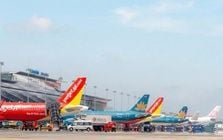
Against a backdrop of aircraft shortages and long waiting times, Vietjet Air is moving toward the COMAC C909 through a lease-financing agreement for 10 aircraft, aiming to secure advantages in price and delivery schedules while taking on pioneering operational risk.
According to Vietjet Air’s website, the group and SPDB Financial Leasing have signed a lease-financing agreement for 10 COMAC C909 aircraft. The deal is positioned as a step in fleet diversification and in expanding Vietjet’s access to a new aircraft supply channel, bringing the Chinese aircraft type closer to international markets.
The two parties agreed on an operating lease structure for the 10 aircraft. Vietjet said the arrangement is the largest collaboration to date between the airline and a Chinese financial institution in the aircraft sector.
For Vietjet, the agreement provides access to additional aircraft supply at a time when the global market is tight. Data from Airbus and Boeing cited in the article shows that their combined order backlogs exceed 13,000 aircraft, equivalent to roughly 7–10 years of production capacity.
For Vietjet’s core aircraft type, the Airbus A320neo family, the article notes that typical lead times for new deliveries under contracts signed after 2023 extend to 2029–2031.
From 2018 to 2026, Vietjet continued to expand its orders, bringing its total order book to nearly 600 aircraft. Specifically, it raised Airbus A321neo orders to around 280 aircraft and added 40 wide-body A330neo jets. With Boeing, Vietjet maintains 737 MAX contracts and has added new financing agreements. However, the article says actual deliveries have lagged behind orders, leaving a backlog that spans many years.
By adding COMAC aircraft, Vietjet may be able to receive planes 1–3 years earlier than under new Airbus/Boeing contracts, according to estimates referenced from aviation advisory firms such as Cirium.
The article highlights a key risk: Vietjet could become one of the first non-Chinese airlines to operate the C909. By early 2026, COMAC had delivered about 130–150 C909 (ARJ21) aircraft, mainly to 9–10 Chinese airlines, including Chengdu Airlines, China Eastern Airlines, and Air China.
These airlines are described as mostly state-owned or domestically focused, with networks largely within China. In contrast, Vietjet—operating a fleet of more than 100 Airbus aircraft and an international network across Asia—would be among the largest airlines outside China to operate this aircraft type, implying it would need to “pioneer” operation, maintenance, and certification in an international environment.
For COMAC, the deal is described as strategically meaningful. The article notes that for years the commercial aircraft market has been dominated by Airbus and Boeing, which account for more than 90% of the global fleet. Having a major private airline such as Vietjet take COMAC aircraft into operation is seen as helping the manufacturer move closer to exporting and international leasing, an area traditionally led by Western lessors.
The agreement is also viewed as a stepping stone toward more flexible operating models such as wet lease, where the manufacturer, lessor, and airline coordinate more deeply on fleet operations.
Alongside the financial-aircraft partnership, Vietjet announced five additional routes to China, including Hanoi–Hangzhou, Anshi, Huangshan, and Ho Chi Minh City–Guilin, Huangshan. The Hanoi–Anshi and Ho Chi Minh City–Guilin routes have been launched since early April 2026, contributing to more than 50 Vietnam–China routes.
With international travel demand recovering and the global aircraft market facing a supply shortfall, the COMAC move suggests Vietjet is seeking to bypass the Airbus–Boeing bottleneck. At the same time, the article notes that being among the first non-Chinese operators of the C909 raises questions about how Vietjet will balance potential cost-and-speed advantages against early-stage operational risks.


Premium gym chains are entering a “golden era” that is ending or already in decline, as rising operating costs collide with shifting consumer preferences toward more flexible, community-based ways to exercise. Long-term memberships are shrinking, margins are pressured by higher rents and facility expenses, and competition from smaller, more personalized…




