•
•
•
•
•
•
•
•
•
•
•
•
•
•
•
•
•
•
•
•
•
•
•
•
•
•
•
•
•
•
•
•
•


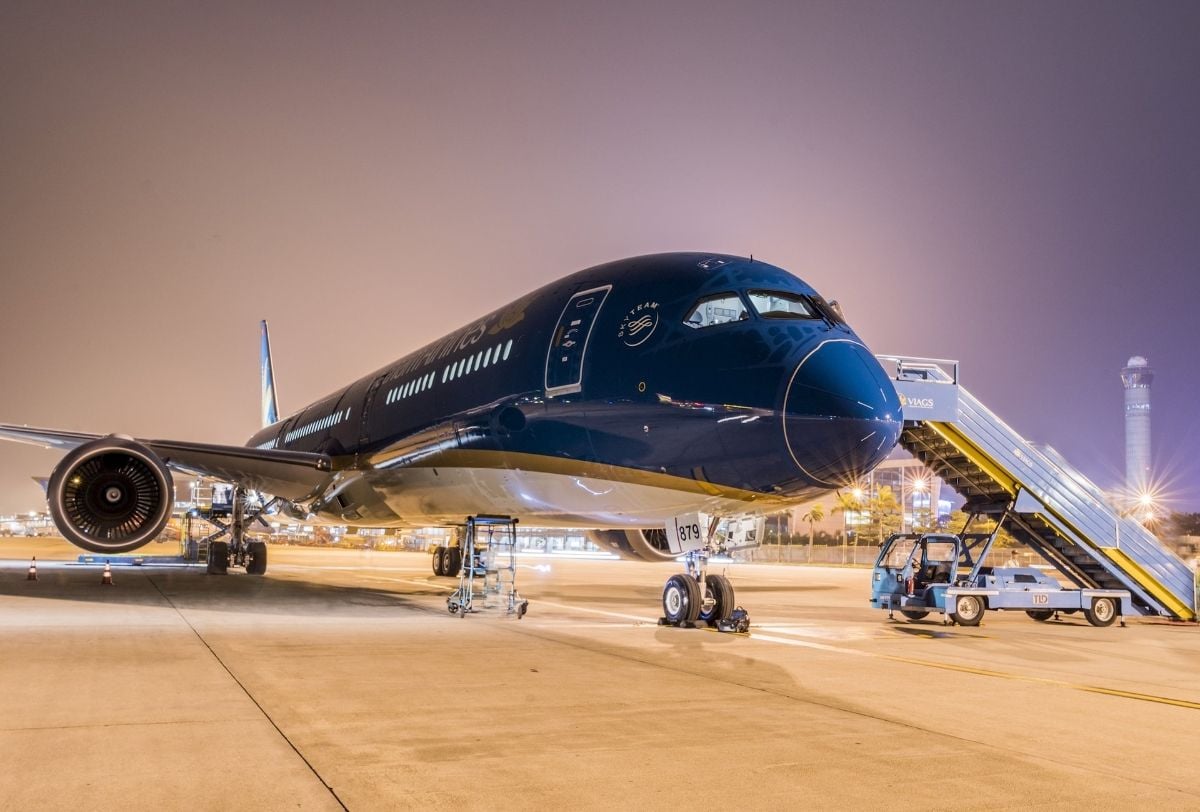
Vietnam Airlines reported positive business results for Q1 2026, despite uncertainty in the international aviation market linked to the Middle East conflict. Building on early-year performance, the airline said it is tightening operational measures to proactively manage costs and market volatility.
In Q1 2026, Vietnam Airlines operated nearly 43,000 flights and carried more than 6.9 million passengers. This represents an 11% increase in flights and nearly a 12% rise in passenger volume versus the same period last year. The airline attributed the improvement to market recovery and effective network and capacity management.
During the Lunar New Year peak period, Vietnam Airlines said it operated safely and stably, at times reaching 660–670 flights per day, up more than 13% year-on-year.
Consolidated revenue in Q1 reached over VND 37.5 trillion, while net profit after tax was VND 4.514 trillion. For the parent company, revenue exceeded VND 29.5 trillion and net profit after tax was VND 3.948 trillion.
The airline noted that international demand continued to rebound and supported overall results. It also said fuel price volatility in the first quarter had not yet manifested clearly.
Beyond volume growth, Vietnam Airlines continued expanding its international network. International traffic in the quarter rose 28.6% year-on-year.
The carrier currently operates 11 direct routes to Europe using wide-body aircraft, including Airbus A350 and Boeing 787. It plans to launch the Hanoi–Amsterdam route on June 16 and increase Hanoi–Moscow frequency to four weekly from July 1.
Vietnam Airlines also highlighted its long-term strategy to modernize the fleet, including a 50-aircraft order for Boeing 737-8 to improve competitiveness in the mid- to long-term.
On-time departure performance (OTP) in March 2026 reached 80.4%, the highest in Vietnam’s aviation sector, up 22% year-on-year.
For Q2 2026, Vietnam Airlines expects tougher operating conditions as cost pressures rise, particularly fuel costs. Jet A1 is currently in the range of around USD 190–220 per barrel, with spikes above USD 240 per barrel.
The airline said fuel accounts for about 30–40% of operating costs, meaning fuel price volatility can directly affect profitability. It estimated that every USD 1 per barrel increase in fuel price above plan could raise annual costs by more than VND 300 billion, indicating increased cost pressures and narrower margins in the coming quarters.
Against this backdrop, Vietnam Airlines said it has built flexible operating scenarios, focusing on optimizing the network along key axes, tightly controlling operating costs, boosting fleet utilization, and using resources efficiently.
The airline added that it will continue monitoring market developments and geopolitical factors to adjust capacity plans as needed, while maintaining safety, network stability, cost control and operational efficiency.
Vietnam Airlines also said that together with government energy-security measures, diversification of supply and stabilization of fuel markets, it aims to maintain double-digit growth in 2026 and continue supporting connectivity, trade, tourism and international economic integration.






Premium gym chains are entering a “golden era” that is ending or already in decline, as rising operating costs collide with shifting consumer preferences toward more flexible, community-based ways to exercise. Long-term memberships are shrinking, margins are pressured by higher rents and facility expenses, and competition from smaller, more personalized…