•
•
•
•
•
•
•
•
•
•
•
•
•
•
•
•
•
•
•
•
•
•
•
•
•
•
•
•
•
•
•
•
•


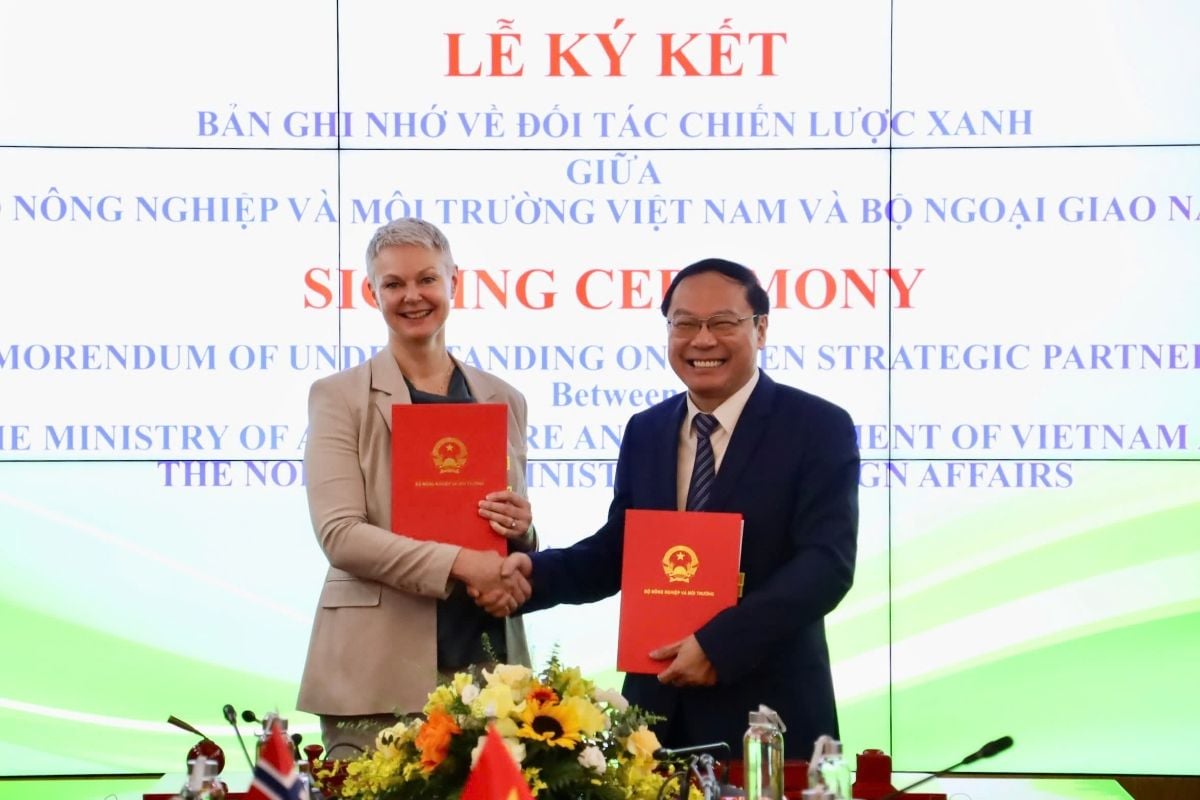
Vietnam and Norway signed a Memorandum of Understanding (MoU) on the Vietnam–Norway Green Strategic Partnership on April 17, 2026, during a meeting hosted by the Vietnamese Ministry of Agriculture and Environment. The Norwegian delegation was led by Ragnhild Sjoner Syrstad, State Secretary of Norway’s Ministry of Trade, Industry and Fisheries. The signing coincided with the 55th anniversary of diplomatic relations between Norway and Vietnam (1971–2026), reflecting both sides’ ambition to elevate bilateral cooperation into a long-term strategic framework.
At the meeting, Le Cong Thanh, Deputy Minister of Vietnam’s Ministry of Agriculture and Environment, and Ragnhild Sjoner Syrstad agreed that the MoU establishes a long-term platform to deepen cooperation across both public and private sectors. The parties said they aim to advance joint work in the green economy and blue economy, strengthen research and innovation, and deliver concrete and sustainable outcomes.
The MoU is intended to be translated into concrete actions that support sustainable growth, environmental protection, and long-term prosperity. The parties also pointed to progress in the EVFTA free trade agreement negotiations between the EU and Vietnam as an additional factor expected to reinforce trade and investment ties and create further business opportunities.
The Green Strategic Partnership is based on the shared view that the green transition must accelerate to achieve net-zero emissions by 2050, strengthen climate action, and ensure sustainable resource management. The two sides will focus on priority areas including:
These areas are described as contributing to food security, value addition, environmental protection, and resilient economic growth. The cooperation is also framed as aligned with Vietnam’s green growth priorities and Norway’s leadership in climate action and ocean governance.
The MoU sets an overarching framework for policy dialogue, technical cooperation, and joint actions. It will build on existing cooperative activities and support the development and implementation of specific initiatives aligned with the Paris Agreement and the United Nations Sustainable Development Goals.
Under the partnership, cooperation activities will include capacity building, institutional development, knowledge sharing, and joint implementation of scalable pilot initiatives. The focus is on integrated solutions that connect environmental protection with economic development to support a robust and inclusive green growth transition.
Private sector involvement is highlighted as a key driver. Both sides aim to promote closer business cooperation, encourage green investment, and accelerate innovation and technology transfer.
Deputy Minister Le Cong Thanh said Vietnam’s 2021–2030 socio-economic development strategy identifies green growth and the circular economy as top priorities, with the private sector expected to play a leading role. The partnership is expected to strengthen institutions, mobilize resources, and drive innovation, supporting sustainable development and creating new opportunities, particularly in the circular economy and sustainable ocean governance.
The Vietnamese Ministry of Agriculture and Environment will coordinate with the Vietnamese and Norwegian embassies in each country to promote cooperation with Norwegian partners and align policies to support the green transition across sectors under the ministry’s purview. The MoU is presented as part of Vietnam’s commitment to climate and environmental goals.
Norway’s State Secretary described the Green Strategic Partnership as a milestone in the Norway–Vietnam relationship built on 55 years of close cooperation. The partnership, the State Secretary said, reinforces shared commitments on climate and the economy. The ambassador also noted that the agreement marks a new chapter in cooperation, highlighting Norway’s strengths in climate policy, sustainable blue economy, renewable energy, and green shipping solutions, and expressed confidence in collaboration between enterprises from both countries to implement practical solutions supporting the green transition.





Premium gym chains are entering a “golden era” that is ending or already in decline, as rising operating costs collide with shifting consumer preferences toward more flexible, community-based ways to exercise. Long-term memberships are shrinking, margins are pressured by higher rents and facility expenses, and competition from smaller, more personalized…