•
•
•
•
•
•
•
•
•
•
•
•
•
•
•
•
•
•
•
•
•
•
•
•
•
•
•
•
•
•
•
•
•


International financial institutions and economic bodies, in updates released in April 2026, maintained a broadly positive outlook for Vietnam’s economy despite ongoing concerns about global volatility. While acknowledging external risks, the assessments point to resilient growth drivers and increasingly favorable positioning for Vietnam as a regional bright spot.
Vietnam’s 2026 growth forecast is set higher than the global average across major institutions. The Asian Development Bank (ADB), in its Asian Development Outlook (ADO) report released on April 10, 2026, projects Vietnam’s GDP growth at 7.2% in 2026 and around 7% in 2027.
AMRO and United Overseas Bank (UOB) also project growth of roughly 7% to 7.2%. By contrast, the World Bank (WB) and HSBC take a more cautious stance, forecasting 6.3% to 6.5%. Even so, all institutions agree Vietnam remains among the fastest-growing economies in the region.
Institutions attribute the positive outlook to foundations already in place, particularly export-oriented manufacturing and stable foreign direct investment (FDI) inflows. AMRO highlights that growth is supported by an export-oriented manufacturing sector and steady FDI, reflecting long-term investor confidence amid global supply-chain restructuring.
UOB notes that the manufacturing sector continued to post solid growth in Q1, underscoring resilience in the industrial sector despite intermittent supply-chain disruptions. It also describes manufacturing as the “engine” of industrial growth.
In addition, the ADB reports the February 2026 Purchasing Managers’ Index (PMI) at 54.3, the eighth consecutive month above the expansion threshold.
Beyond exports, domestic demand is increasingly viewed as a stabilizer of growth. AMRO says domestic consumption remains stable, supported by policies including extended tax relief and intensified public investment.
The ADB also expects the services sector to continue recovering, especially in travel and technology. This is seen as important support if external demand weakens, helping balance an open economy like Vietnam.
Despite the constructive growth view, the April 2026 updates emphasize external risks, particularly energy price volatility. HSBC notes Vietnam’s sensitivity to oil prices because of heavy energy imports. When oil prices rise, inflationary pressures increase and production and transport costs climb, directly affecting key export sectors.
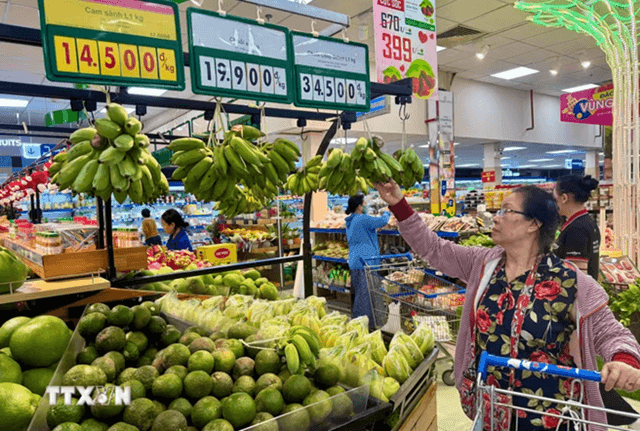
Inflation pressures have already been building. The March 2026 CPI rose 4.65% year on year, above the 4.5% target. The transportation component rose 10.8%, adding significant pressure to logistics and production costs. HSBC forecasts full-year inflation around 4.3% and said it does not rule out breaching the target if Middle East conflicts persist.
UOB also warns that supply disruptions from the Middle East could affect inputs for petrochemicals, plastics, and fertilizers. In addition to energy factors, it flags policy risk in major export markets—especially the United States—as a volatile variable, reinforcing the need for Vietnam to diversify markets and partners.
International organizations describe the domestic economy as stable but with areas to monitor. AMRO cautions that rising credit and public expenditure could add inflationary pressures if not coordinated properly.
The ADB also highlights risks in financial markets, including liquidity and bad debt, which could affect capital availability for the economy.
A recurring positive theme across institutions is the government’s flexible policy management. The ADB assesses targeted fiscal measures—such as tax relief, the use of stabilization funds, and energy stockpiling—as contributing to resilience against external shocks and supporting macroeconomic stability in the near term.
Looking to the medium and long term, international institutions emphasize structural reforms. AMRO proposes three priorities: upgrading industry, improving policy frameworks, and developing the capital market. The ADB recommends accelerating infrastructure investment and continuing institutional reforms, including administrative restructuring, to improve public sector efficiency and attract private investment.
ADB also stresses accelerating green transformation to reduce dependence on fossil fuels, strengthen resilience to energy price shocks, and meet increasingly stringent environmental standards in international markets.
Overall, the April 2026 assessments depict a positive but challenging outlook for Vietnam. Growth remains the main trend, but the quality and sustainability of that growth depend on inflation control and progress on reforms. The updates suggest Vietnam’s growth potential in 2026 is not only tied to traditional drivers, but also closely linked to policy implementation capacity and the speed of structural change.
Premium gym chains are entering a “golden era” that is ending or already in decline, as rising operating costs collide with shifting consumer preferences toward more flexible, community-based ways to exercise. Long-term memberships are shrinking, margins are pressured by higher rents and facility expenses, and competition from smaller, more personalized…