•
•
•
•
•
•
•
•
•
•
•
•
•
•
•
•
•
•
•
•
•
•
•
•
•
•
•
•
•
•
•
•
•


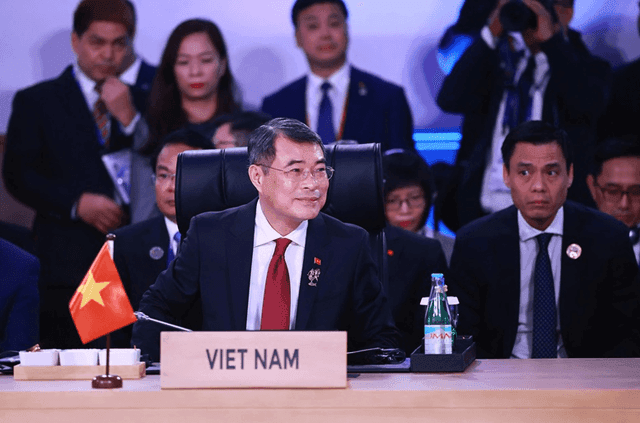
Prime Minister Le Minh Hung said that in an increasingly unstable world, ASEAN cannot simply chase changes; it must proactively lead and shape the regional agenda.
On the night of May 8, 2026, Prime Minister Le Minh Hung and a high-level Vietnamese delegation arrived in Hanoi, concluding their participation in the 48th ASEAN Summit in the Philippines. This was his first foreign trip in the role of Prime Minister and also his first time attending an ASEAN summit as PM.
The summit was held as regional and global volatility continued to emerge, with tensions in the Middle East highlighted. Against this backdrop, ASEAN members spent considerable time discussing how to strengthen resilience in the region against geopolitical, economic, and security shocks that are increasingly unpredictable.
During the sessions, the Vietnamese delegation put forward proposals covering energy security, food security, intra-ASEAN economic connectivity, digital transformation, green development, and expanded cooperation with partners outside ASEAN. Vietnam’s consistent message was that ASEAN should maintain a peaceful and stable environment so that people directly benefit from growth, rather than only making commitments.
In the plenary, the Vietnamese head of government said the question for ASEAN is no longer whether it will be affected, but how to respond and how to coordinate a collective response. He proposed three major groups of proposals.
Vietnam urged ASEAN to accelerate the implementation of energy cooperation mechanisms, increase cross-border power grid connections and gas pipeline networks in the region, diversify energy supplies, and promote the green transition.
On food security, the PM proposed increasing strategic reserves of rice and essential items, and Vietnam affirmed its readiness to provide food assistance to ASEAN member states in emergencies.
The second group of proposals focuses on boosting economic resilience for ASEAN by promoting intraregional trade and the digital economy. Vietnam called for effective implementation of the ASEAN Trade in Goods Agreement (ATIGA) and the early completion of the ASEAN Digital Economy Framework Agreement (DEFA).
The final group aims to reinforce ASEAN unity and its capacity for coordination in emergencies, while raising the role of the ASEAN Secretariat to ensure regional commitments are implemented more coherently.
In the closed session, Prime Minister Le Minh Hung reiterated that ASEAN should “go ahead, lead, and shape change” rather than merely adapt to volatility. He argued that ASEAN should be steadfast in international law and multilateralism while maintaining its central role in regional issues.
On the South China Sea, he said ASEAN and China should push for full implementation of the DOC and promptly achieve a Code of Conduct consistent with UNCLOS 1982.
Leaders also urged ASEAN to be more proactive in crisis prevention and management. Drawing lessons from the Middle East, the PM said the region should better use dialogue mechanisms and preventive diplomacy to reduce the risk of conflict spreading.
According to the Vietnamese delegation, many proposals received consensus and positive assessments from ASEAN members. The summit adopted the ASEAN Leaders’ Declaration on priority actions to enhance regional resilience to the impact of the Middle East situation.
Besides multilateral activities, Prime Minister Le Minh Hung held a series of bilateral meetings with ASEAN leaders, the ASEAN Secretary-General, and the President of the Asian Development Bank (ADB).
The discussions focused on economic cooperation, trade, investment, infrastructure connectivity, green transformation, semiconductors, and artificial intelligence. Many ASEAN leaders also affirmed a desire to cooperate more closely with Vietnam amid regional pressure from major-power competition and geopolitical instability.
In a three-way meeting with the leaders of Laos and Cambodia, the three Prime Ministers agreed to advance the implementation of outcomes from their February 2026 meeting, aiming to create new development space for the three countries.
ASEAN Secretary-General Kao Kim Hourn assessed that after more than 30 years in ASEAN, Vietnam has become a key member of the bloc. He noted that a Vietnam with strong development will make an important contribution to the ASEAN Community’s advancement.
According to the Vietnamese side, Prime Minister Le Minh Hung’s first overseas trip in his new role carried not only diplomatic significance but also reinforced the image of a proactive Vietnam seeking to play a larger role in regional affairs.
Premium gym chains are entering a “golden era” that is ending or already in decline, as rising operating costs collide with shifting consumer preferences toward more flexible, community-based ways to exercise. Long-term memberships are shrinking, margins are pressured by higher rents and facility expenses, and competition from smaller, more personalized…