•
•
•
•
•
•
•
•
•
•
•
•
•
•
•
•
•
•
•
•
•
•
•
•
•
•
•
•
•
•
•
•
•


Fast delivery has become the new standard for e-commerce platforms, with consumers increasingly expecting shorter delivery times for online orders. A March 2026 StateGlobe study indicates Vietnamese shoppers expect online orders to be delivered in about 3.2 hours per order.
Businesses are adjusting to reflect this shift. Ms. Tran Hoang To Uyên, Marketing Director at Nutifood, said that delivering within a few hours is no longer a competitive advantage, describing the trend as a long-term change in consumer behavior.
“The consumer trend of ‘need it now — want it fast’ will be a long-term shift. Especially in the fast-moving consumer goods sector, where demand arises frequently and is time-sensitive, delivering within a few hours is gradually becoming the new expected standard.”
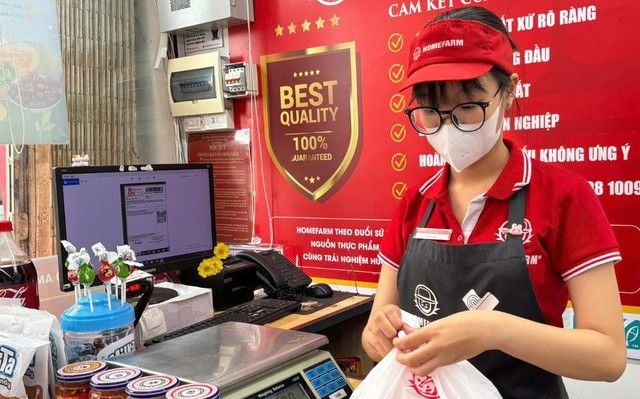
At Homefarm, demand for fast delivery of fresh products is also rising. Mr. Nguyen Vinh Hung, Head of Southern Operations at Homefarm, pointed to the company’s online repeat-order performance.
“Our online repeat-order rate on our platform reaches 80%, showing the great potential of express delivery options and placing pressure on order-processing workflows.”
To meet faster delivery expectations, companies and e-commerce platforms are upgrading operations to reduce the steps between order placement and delivery.
Nutifood said it has focused on upgrading operations by optimizing order processing and building a flexible distribution network. The company noted that, after joining Shopee’s Fast Delivery channels, it invested in restructuring operations to standardize and shorten the order-processing workflow, aiming to reduce prep time while maintaining product quality during transport.
Nutifood also integrated its Ngôi nhà dinh dưỡng store network in major cities, including Hanoi and Ho Chi Minh City, into its distribution network to further improve operations.
Homefarm has taken a different approach by investing in a network of physical stores as a core part of its operations. The company currently operates 166 outlets nationwide and said it aims for every 5km to have a Homefarm store accessible to consumers.
Homefarm described the store network as integrated into its online order processing, helping shorten delivery distance and delivery times by shipping products from the nearest store—an approach the company said is particularly important for fresh goods.
Both companies emphasized the importance of close collaboration with Shopee to meet delivery needs. Earlier this year, Shopee further shortened transport times with Fast Delivery, including “Fast Delivery — Priority delivery within 1 hour,” which is being rolled out in parts of Hanoi and Ho Chi Minh City.
Homefarm reported positive customer feedback after joining the Fast Delivery channel. The company said customers can receive online orders in just 1 hour for the first time, and that many customers expressed satisfaction with the experience.
“For the first time, our customers can receive online orders in just 1 hour. Many customers have expressed satisfaction with this new experience.”
Homefarm also said it saw modest growth in online order sales last month, indicating that fast-delivery methods are meeting customer demand.
For Nutifood, which joined the Fast Delivery channel in March 2026, the company cited early signs of positive impact, including speed, transparency, and improved customer experience.
“We see clear advantages in deploying Shopee’s fast-delivery options — speed, transparency, and a notably enhanced customer experience.”
Taken together, the Nutifood and Homefarm examples suggest that combining internal operational strengths with e-commerce platform capabilities can reduce delivery times and help set a new standard for Vietnamese e-commerce experiences.

Premium gym chains are entering a “golden era” that is ending or already in decline, as rising operating costs collide with shifting consumer preferences toward more flexible, community-based ways to exercise. Long-term memberships are shrinking, margins are pressured by higher rents and facility expenses, and competition from smaller, more personalized…