•
•
•
•
•
•
•
•
•
•
•
•
•
•
•
•
•
•
•
•
•
•
•
•
•
•
•
•
•
•
•
•
•


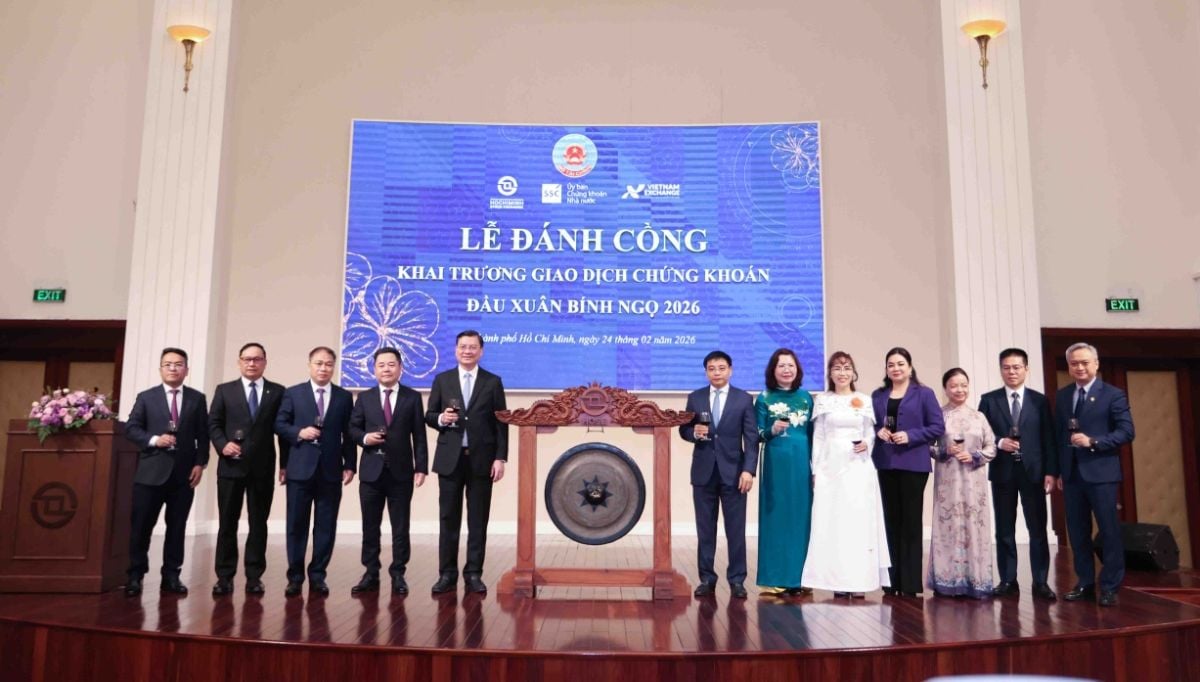
On the morning of February 24, 2026, the Ho Chi Minh City Stock Exchange (HOSE) held a bell-ringing ceremony to open stock trading for Spring 2026, in the festive spirit of the Year of the Horse. The event marks a milestone as the securities sector enters its 30th year, with a commitment to a stable, sustainable market and deeper international integration.
Speaking at the ceremony, Vu Thi Chan Phuong, Chair of the State Securities Commission (UBCKNN), said 2026 is particularly important for Vietnam’s stock market as it marks the 30-year anniversary (1996–2026). She noted that the market is at a turning point—shifting from meeting conditions to operating stably and sustainably under the standards of a developing market.
Ms. Phuong emphasized that achieving this requires strengthening governance, supervision, and market structure. She also said the core task in 2026 is not only to maintain index points or liquidity growth, but to build a market that operates safely, transparently, and resiliently to volatility, and can adapt to the new market model amid deepening international integration.
From the perspective of listed companies, Nguyen Thi Mai Thanh, CEO of Refrigeration and Electrical Equipment Joint Stock Company (HOSE: REE), said sustainable growth depends primarily on the market’s internal strength. While branding and market symbols are necessary, she said the most sustainable foundation lies in the quality of enterprises and products.
On the macro outlook, Nguyen Thi Mai Thanh added that the policy support system for enterprises is becoming more refined. If implemented smoothly with cooperation from entrepreneurs and the broader economy, Vietnam can maintain steady growth and sustainable development in the coming years.
Regarding attracting capital as the market upgrades toward index inclusion, Thanh said capital flows naturally as the economy becomes more attractive, adding that attracting capital does not rely on exhortations but on the market’s intrinsic appeal.
Nguyen Ha Quynh, CEO of HD Securities, said the upgrading process is a key driver of market prospects. He highlighted upcoming reviews by FTSE and MSCI, noting that FTSE is expected to conduct important assessments this year and MSCI may consider Vietnam for an upgrade watch list.
“These two factors will positively affect investor sentiment and the market outlook. This is a crucial foundation for sustaining growth expectations in the period ahead,” Quynh said.
Echoing an optimistic view, Nguyen Hoai Thu, Deputy CEO of VinaCapital Fund Management, forecast that listed companies could achieve 18–20% profit growth. She said the outlook is supported by comparatively attractive valuations, particularly for stocks that did not rally last year.
Thu also said the upgrade story is a major catalyst, and foreign investors have begun returning to Vietnam as global funds rebalance.
Thu further noted interest in the carbon credits market, describing it as a promising area given Vietnam’s forestry and agricultural enterprises. She said obstacles remain in understanding carbon credits, and VinaCapital is promoting awareness to help potential participants join.
On market supply, there is optimism about IPOs and new listings in 2026. VinaCapital said many deals are progressing, including private subsidiaries of listed groups and some foreign direct investment candidates looking to join the market, signaling new momentum for Vietnam’s stock market in 2026.
At the spring opening ceremony, HOSE launched a new signage and market symbol. The blue granite signage is intended to embody fairness and transparency, while the Dakmin bull symbol represents growth, ambition, and sustainable development.
Foreign investors net sold 1.2 trillion VND on the Spring session.

Premium gym chains are entering a “golden era” that is ending or already in decline, as rising operating costs collide with shifting consumer preferences toward more flexible, community-based ways to exercise. Long-term memberships are shrinking, margins are pressured by higher rents and facility expenses, and competition from smaller, more personalized…