•
•
•
•
•
•
•
•
•
•
•
•
•
•
•
•
•
•
•
•
•
•
•
•
•
•
•
•
•
•
•
•
•


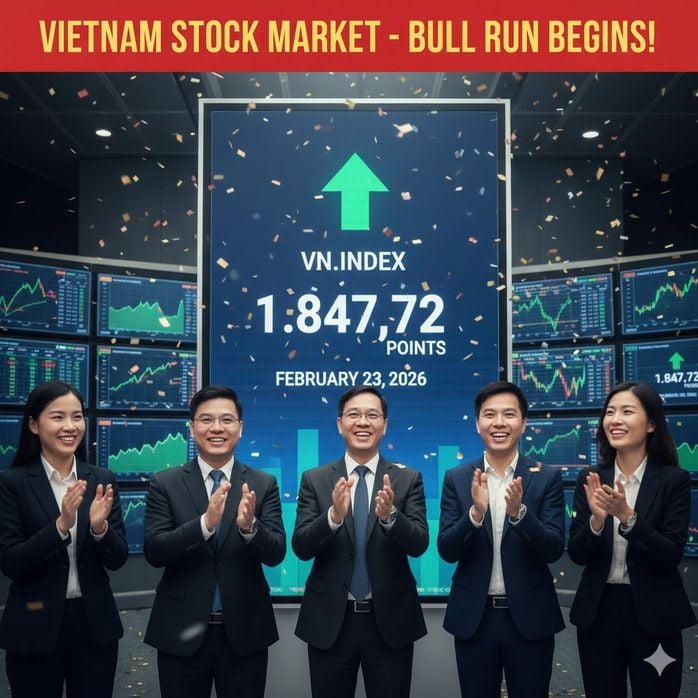
The early-year stock market mood is upbeat as shares in oil and gas, energy, and telecommunications technology sectors all rose sharply.
In the morning of February 23 (the seventh day of Tet), the stock market opened the year with positive momentum as the VN-Index posted a fairly positive gain.
Accordingly, the VN-Index rose 23.63 points to 1,847.72. On the HoSE board, 244 stocks advanced (6 at the ceiling) and 85 declined. Liquidity surged to more than 12.7 trillion dong across the three exchanges.
In the VN30 group, a number of large-cap stocks hit the ceiling. Vietnam Oil and Gas Group (PLX) rose nearly 7% to 55,600 dong. GAS of PetroVietnam Gas rose to 108,700 dong, while Vietnam Rubber Industry Group (GVR) surged to the ceiling at 38,900 dong.
On the Hanoi exchange, oil and gas stocks also rose strongly, including PVC of Petrochemical Services Company, up 10% to 14,700 dong, and PVS of PetroVietnam Technical Services Corporation, up 10% to 47,400 dong.
Among the three Vingroup stocks, VHM (Vinhomes) was flat at first, then VIC (Vingroup) rose sharply, while VRE (Vincom Retail) and VPL (Vinpearl) eased slightly.
Banking stocks also accelerated, with HDB (Haiphong-based bank associated with billionaire Pham Thi Phuong Thao) flat and Eximbank down slightly. BID, VPB, MBB, and VCB rose notably.
An investment analyst from VPS Securities said the market was bifurcated across sectors such as oil and gas, energy, and other beneficiaries like financials.
The drivers include geopolitical developments in parts of the world, rising oil, commodity, and energy prices, and the impact of US tariff policy.
Domestically, the analyst noted that a wave of divestment in large state-owned enterprises has begun to restart, and infrastructure and public investment continue, supporting liquidity.
By Son Nhung, Nguoi Lao Dong
Premium gym chains are entering a “golden era” that is ending or already in decline, as rising operating costs collide with shifting consumer preferences toward more flexible, community-based ways to exercise. Long-term memberships are shrinking, margins are pressured by higher rents and facility expenses, and competition from smaller, more personalized…