•
•
•
•
•
•
•
•
•
•
•
•
•
•
•
•
•
•
•
•
•
•
•
•
•
•
•
•
•
•
•
•
•


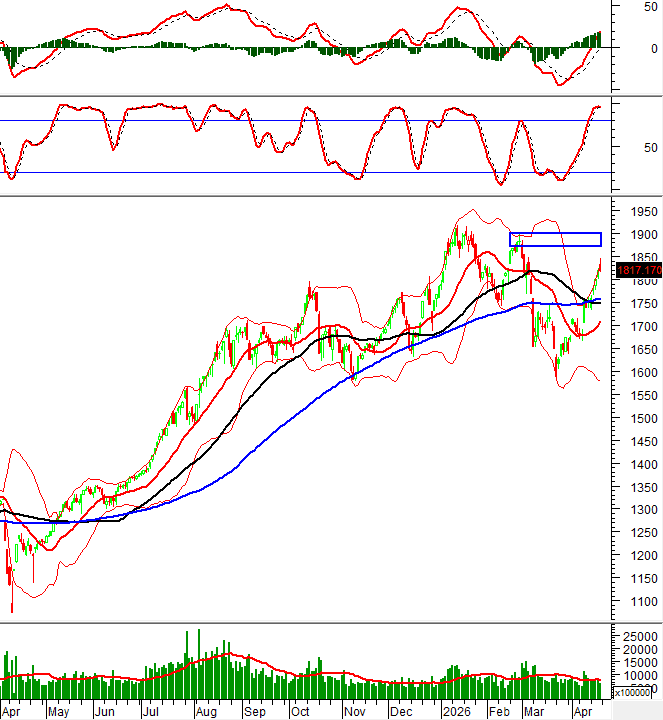
Technical analysis of the Vietnamese stock market: Week 20-24 April 2026 Investment strategy & in-depth technical analysis of the Vietnamese stock market. Analysis of Trends and Price Oscillations VN-Index – Stochastic Oscillator is in the overbought region In trading on 17 April 2026, the VN-Index reversed slightly after five consecutive days of gains with declining trading volume and remained below the 20-day moving average, signaling cautious investor sentiment. Currently, the index is approaching the former February 2026 high (around 1,870-1,900 points) while the Stochastic Oscillator is in the overbought region. If a selling signal reappears and the indicator falls out of this zone in upcoming sessions, the short-term downside risk will rise. [image] HNX-Index – Testing the mid-term downtrend In trading on 17 April 2026, the HNX-Index gained for the fourth consecutive day and is approaching the February 2026 high (around 260-265 points). The index continues to ride along the upper band of Bollinger Bands while the MACD remains positive after issuing a buy signal, further supporting the near-term rebound. However, the HNX-Index is testing the mid-term downtrend as the Stochastic Oscillator is in the overbought zone. If selling signals reappear and the indicator falls from this zone in the next sessions, the short-term correction risk will rise. [image] Money Flow Analysis Money flow dynamics “Smart money” – Negative Volume Index of the VN-Index is below the 20-day EMA. If this condition persists into the next session, the risk of a sudden decline (thrust down) will increase. Money flow from foreign investors: Foreign investors turned net buyers on 17 April 2026. If foreign investors maintain this behavior in the coming sessions, the outlook will be more optimistic. Technical Analysis Department, Vietstock Advisory FILI ... 06:28 19/04/2026








Premium gym chains are entering a “golden era” that is ending or already in decline, as rising operating costs collide with shifting consumer preferences toward more flexible, community-based ways to exercise. Long-term memberships are shrinking, margins are pressured by higher rents and facility expenses, and competition from smaller, more personalized…




