•
•
•
•
•
•
•
•
•
•
•
•
•
•
•
•
•
•
•
•
•
•
•
•
•
•
•
•
•
•
•
•
•


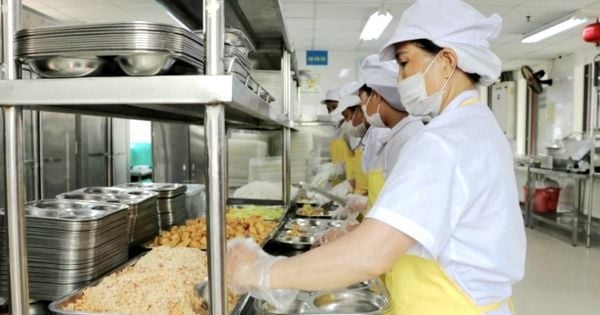
Vietnam’s Ministry of Health is moving to strengthen food safety governance by shifting from piecemeal, step-by-step controls to managing the entire food value chain, from farm to table. The approach is designed to apply risk-based management across input controls, initial processing conditions, production, distribution, and consumer handover, with the aim of preventing widespread food poisoning.
The Ministry’s measures will regulate residue limits for pesticides, veterinary drugs, antibiotics, stimulants, and preservatives in food ingredients. It will also tighten conditions for production and initial processing, including requirements covering farming, husbandry, and slaughter, with detailed provisions to be set out in sectoral laws.
Requirements will define conditions for direct food businesses, sale premises, utensils and containers, ingredients, and additives. Government authorities at all levels will strengthen interagency guidance, improve post-inspection oversight, and carry out targeted cross-agency inspections.
The plan includes developing a centralized food safety database to trace the origins of food products and facilitate rapid recalls. This is intended to improve prevention of foodborne illnesses by enabling authorities to respond more quickly when problems are identified.
Vietnam is developing a national food safety strategy through 2035 with a vision to 2045. The strategy is aligned with international Good Hygiene Practice (GHP) standards.
Enterprises will be encouraged to adopt advanced production methods and modern preservation technologies to better participate in the global supply chain. The Ministry is coordinating with the Ministries of Agriculture and Environment, Industry and Trade, Justice, and other agencies to enact an amended Food Safety Law and tighten controls at all stages of the food value chain—from input sourcing to distribution and consumer handover.
Specific residual limits for various substances will be regulated, and precise conditions for direct food businesses, locations, utensils, containers, ingredients, and additives will be established. Local authorities will be tasked with enhanced enforcement, intersectoral coordination, post-market controls, and proactive cross-cutting inspections.
The government will continue developing a risk-analysis framework and national standards for residues to keep unsafe foods out of the market and to issue timely public warnings. The plan also includes finalizing organizational arrangements for state management of food safety from central to local levels, with proposals to the Politburo in May 2026.
In 2026, emphasis will be placed on strengthening post-market controls. Penalties for street-food sales that violate food safety rules can reach up to 3 million VND, alongside a no-tolerance stance against dirty or unsafe foods.
Broader regulatory updates also include potential changes to tax thresholds affecting small businesses, as part of the wider effort to reinforce food safety and the integrity of Vietnam’s food supply chain.

Premium gym chains are entering a “golden era” that is ending or already in decline, as rising operating costs collide with shifting consumer preferences toward more flexible, community-based ways to exercise. Long-term memberships are shrinking, margins are pressured by higher rents and facility expenses, and competition from smaller, more personalized…