•
•
•
•
•
•
•
•
•
•
•
•
•
•
•
•
•
•
•
•
•
•
•
•
•
•
•
•
•
•
•
•
•
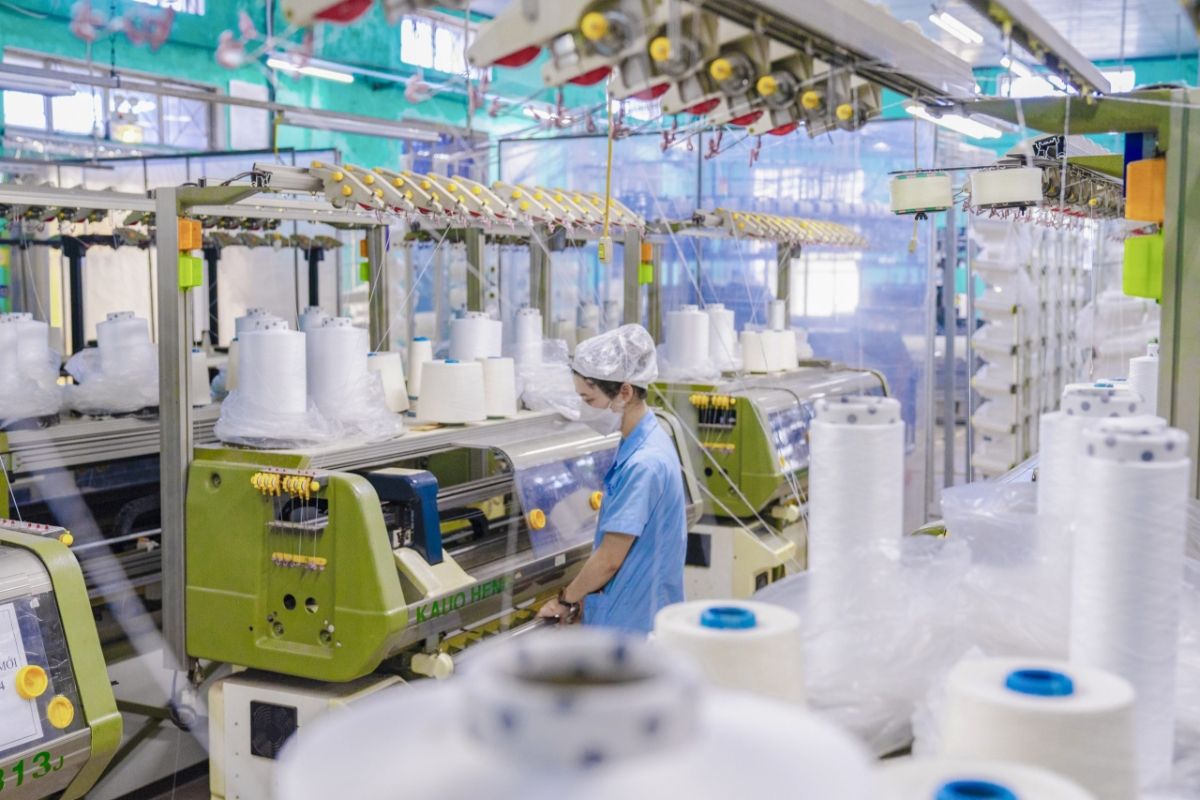
In Q1 2026, Vietnam’s textile and garment sector recorded 2.9% year-on-year growth in export turnover despite volatile global markets, according to the Vietnam Textile and Apparel Association (VITAS). The rebound was most visible in March, when export value reached $3.857 billion—up 36% from February and 5.8% from the same period last year.
Within the export structure, apparel remained the main pillar, earning $8.181 billion (up 2.2%). Other segments also posted broad-based increases: fibers and yarns at $1.085 billion (up 5.0%); fabrics at $719 million (up 3.9%); accessories for textiles and garments at $382 million (up 11.8%); and non-woven fabrics at $199 million (up 4.2%).
VITAS noted that while the first two months of 2026 saw a slight dip due to seasonality and trade uncertainty, the clear rebound in March highlighted the resilience and faster adaptation of domestic enterprises.
VITAS Chairman Mr. Vu Duc Giang said that in 2025, Vietnamese textile products were present in 138 markets, with the United States remaining the largest partner.
Vietnam National Textile and Garment Group (Vinatex) stood out among leading industry players. In Q1 2026, the group reported net revenue of VND 4,486 billion (up 5.1%), while pre-tax profit rose 31% to VND 355 billion. VITAS attributed the improvement mainly to core business performance in the yarn and garment sectors.
The garment division maintained orders, supported by a positive price outlook from late 2025. The group and its subsidiaries also expanded into new export markets and accelerated production and delivery to take advantage of a buffer created by the U.S. imposing an additional 10% global tariff to replace the previous higher tariffs.
VITAS said the fiber segment also rebounded strongly as firms captured global cotton and fiber price movements amid geopolitical tensions in the Middle East. It added that demand from China helped offset a loss of cost advantage in that market. The 10% U.S. import tariff cushion was cited as creating a competitive edge for Vietnamese textiles.
Despite the favorable results, the industry faces structural constraints. Domestic value-added content is currently around 51–52%. Heavy reliance on imported inputs remains a hurdle to fully leveraging tariff concessions under CPTPP or EVFTA—VITAS cited that in 2025 imported fabrics reached up to $17 billion.
International rules on supply chains and sustainable development are also gaining importance. Mr. Vu Duc Giang (Vice Chairman and Secretary General of VITAS) emphasized that supply-chain due diligence, yarn traceability, and ESG reporting are no longer optional but mandatory, requiring enterprises to prepare proactively for stringent standards in key markets.
To reach the 2026 export target of $49 billion, VITAS recommended a synchronized set of measures: diversify markets, invest in technology and AI, and pursue a green transition toward a circular economy.
On environmental concerns related to dyeing and finishing, Mr. Giang said current wastewater treatment technology can be effectively controlled, aiming to remove psychological barriers to developing domestic dyeing and finishing capacity. He said this would increase domestic content and strengthen Vietnam’s textile brand internationally.
VITAS concluded that coordinated actions are needed to address supply-chain sustainability and competitiveness to complete the export target.
Premium gym chains are entering a “golden era” that is ending or already in decline, as rising operating costs collide with shifting consumer preferences toward more flexible, community-based ways to exercise. Long-term memberships are shrinking, margins are pressured by higher rents and facility expenses, and competition from smaller, more personalized…