•
•
•
•
•
•
•
•
•
•
•
•
•
•
•
•
•
•
•
•
•
•
•
•
•
•
•
•
•
•
•
•
•


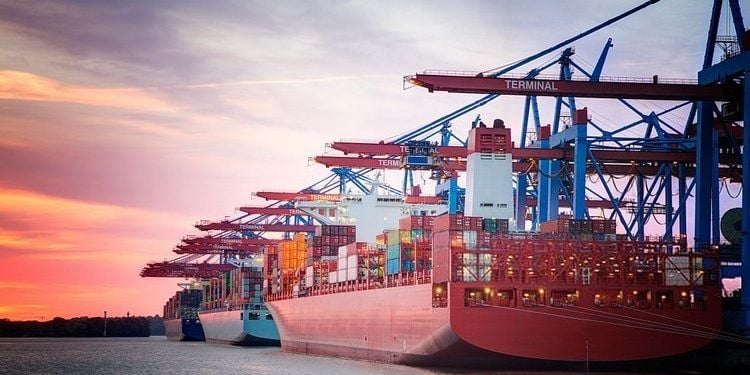
Vietnam’s trade balance swung from deficit to surplus in the latter half of April 2026, reaching $87.69 million. A preliminary report from the General Department of Customs shows that during April 15–30, Vietnam’s total goods import-export turnover was about $48.56 billion, down 6.86% from the second half of March 2026.
For the first four months of 2026, total turnover still rose to $345.68 billion, up 24.66% year-on-year, indicating that growth momentum remains despite signs of short-term consolidation.
On the export side, the value in April 15–30 reached about $24.32 billion, down 6.59% from the second half of March 2026. The decline was broad-based, particularly in the processing and manufacturing industrial sector.
Garment and textiles fell 4.7%, reflecting that consumer demand in major markets such as the US and EU has not yet fully recovered. The sector also faces cost-competitiveness pressures from countries including Bangladesh, alongside stricter green standards and traceability requirements that increase production costs and reduce competitiveness.
Exports by the FDI sector in April 15–30 reached about $18.96 billion, down 9.34%. Since the FDI sector accounts for about 78% of total export value, fluctuations in FDI exports directly affect overall export performance. The near-10% decline was partially offset by a 4.67% increase in exports from the domestic sector.
The adjustment in orders for high-tech and electronics mainly originated from the foreign-invested sector, which remains the main driver of Vietnam’s export activity. The report also highlights that the issue is not only the level of decline but also the value-added structure: much of FDI export activity relies on processing and assembly within global supply chains, resulting in a relatively limited share of value added domestically. In electronics, computers and components, Vietnam mainly performs stages with medium-to-low value added such as assembly, testing and packaging.
In the latter half of April 2026, Vietnam’s import value of goods was about $24.23 billion, down 7.13% from the second half of March 2026. As with exports, the import structure remains concentrated in processing and manufacturing groups, especially high-tech products, and declines in these main groups pulled total imports lower.
During the period, the FDI sector maintained a trade surplus of about $1.97 billion, while domestic enterprises recorded a deficit of about $1.88 billion. This continues to reflect a split trade structure: the FDI bloc leads in generating a trade surplus, while the domestic sector remains heavily dependent on importing inputs and machinery for production.
Imports by the FDI sector were nearly $17 billion, down 6.9% from the prior period, while domestic enterprise imports were about $7.24 billion, down 7.65%. The declines occurred in both sectors, but the FDI sector’s reliance on global supply chains concentrates the impact on overall import performance.
Some groups still posted growth, mainly in energy and essential materials: liquefied petroleum gas rose 130.41%, coal products rose 62.51%, and crude oil rose 23.63%. The movements indicate that energy demand supporting domestic production and consumption remains, while also reflecting global energy price effects in a complex geopolitical environment.
Despite declines in several major export categories, the energy group recorded strong growth, helping ease the overall export downturn. Crude oil reached $207.08 million, up 661.68%, and gasoline and diesel reached $66.47 million, up 688.43%. The report links the rise partly to global price dynamics and Vietnam’s energy supply chain characteristics, with higher average export prices boosting export value even if production did not rise significantly.
Vietnam’s trade balance improved to a surplus of $87.69 million after five consecutive deficits, but the surplus remains largely driven by the FDI sector and does not indicate a fundamental shift in the overall trade structure. The improvement is described as largely short-term and tied to order cycles, and the imbalance trend has not yet reversed.
In the first four months of 2026, Vietnam’s trade balance remained in deficit of about $7.64 billion, reflecting continued pressure from imports of inputs, machinery and equipment for production.

Premium gym chains are entering a “golden era” that is ending or already in decline, as rising operating costs collide with shifting consumer preferences toward more flexible, community-based ways to exercise. Long-term memberships are shrinking, margins are pressured by higher rents and facility expenses, and competition from smaller, more personalized…