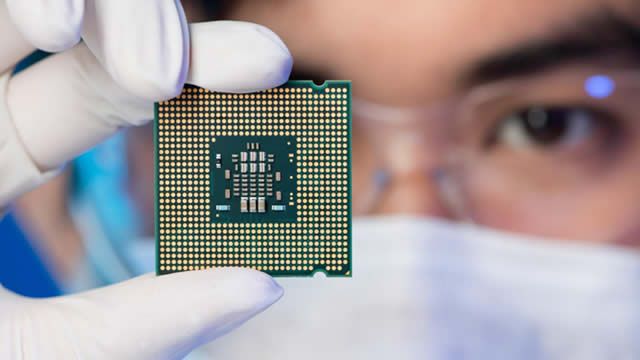
Over the past year, Taiwan Semiconductor Manufacturing Company (NYSE: TSM) has experienced one of the most impressive rallies among global technology
stocks, with its share price increasing approximately 65% as investors adapted to the positive effects of artificial intelligence (AI) and changes within the industry. What was previously viewed as a cyclical semiconductor business has been redefined by Wall Street as a fundamental infrastructure player for the upcoming technological era. But what exactly accounts for this rise — and what could be in store for TSM stock in the future?\n\nIf you’re looking for potential gains with less volatility than investing in an individual stock like TSM, you might want to explore the High Quality Portfolio. It has consistently outperformed its benchmark — a mix of the S&P 500, Russell, and S&P MidCap indexes — recording returns that have surpassed 105% since its launch. Why is this so? Collectively, the stocks in the HQ Portfolio have given better returns with reduced risk compared to the benchmark index; it has been a smoother ride, as indicated by HQ Portfolio performance metrics. In addition, see – Alcoa’s 2x Run Explained\n\nThe Perfect Storm: AI, Advanced Nodes, and Record Profits\n---------------------------------------------------------\n\nCentral to TSMC’s exceptional rise is a surge in the demand for AI chips and high-performance computing (HPC). In the third quarter of 2025, the company reported revenue of approximately $33.1 billion, reflecting a year-over-year increase of 40.8%, while earnings per share rose nearly 39%, fueled by orders for advanced 3-nanometer and 5-nanometer technologies that support AI accelerators and data center processors. Advanced nodes — defined as 7 nm and below — represented about three-quarters of wafer revenue, highlighting the economic premium placed on cutting-edge manufacturing.\n\nThese figures are not anomalies. Recent quarterly results indicated record revenue exceeding 1.05 trillion New Taiwan dollars (~$33.7 billion), with stronger-than-anticipated earnings driving the ADR stock to new heights. Investors celebrated not just the revenue beats but also the unmistakable signal of sustained demand for AI across numerous customers.\n\nThis growth has solidified TSMC’s outlook. Management anticipates AI-related revenue will double in 2025 and will maintain elevated compound annual growth rates through the latter part of the decade. Analysts within the industry typically project mid-40% and higher growth paths for this segment, reflecting both the expansion of data center infrastructure and the widespread adoption of AI capabilities across enterprise and consumer markets.\n\nMORE FOR YOU\n\nTechnology Leadership: A Moat That Wins\n---------------------------------------\n\nTSMC’s technological advantage is not solely a marketing ploy — it’s measurable. As of 2025, over 70% of the company’s global foundry market share is linked to leading-edge nodes, with its 2-nanometer (N2) manufacturing process expected to commence volume production in the second half of 2025 and next-generation processes (such as 1.6 nm and beyond) lined up in its strategy. This technological leadership has enabled TSMC to uphold pricing power and robust margins against competitors such as Samsung and others striving to catch up.\n\nAdvanced packaging technologies like CoWoS (Chip-on-Wafer-on-Substrate), which combines logic silicon with high-bandwidth memory, further distinguishes TSMC’s offerings. These platforms are particularly vital for AI accelerator chips, where performance per watt and interconnect density determine overall system efficiency. The demand for advanced packaging has been so strong that capacity was reported to be fully booked through 2026.\n\nDiversification also contributes to TSMC’s success. In addition to AI chips and HPC, TSMC manufactures processors for leading smartphone manufacturers (for instance, Apple), automotive microcontrollers, and IoT devices. While smartphones constitute a substantial part of revenue (around 30–35%), the rapid growth of AI infrastructure spending has reformulated the company’s profit model toward higher-growth sectors.\n\nInfrastructure Spending and Geopolitical Tailwinds\n--------------------------------------------------\n\nInvestors have also reacted positively to TSMC’s capital expenditure plans. The company intends to considerably boost its capital spending, with plans for $52–$56 billion in 2026 alone, an increase of roughly 30% from 2025, allocating funds for state-of-the-art fabs and capacity expansion in Taiwan, the United States (notably Arizona), Japan, and Germany.\n\nThis bold investment approach has geopolitical support. A recent trade agreement between the U.S. and Taiwan has lowered tariffs on Taiwanese semiconductor products and secured $250 billion in Taiwanese investments in U.S. technology sectors, with TSMC playing a pivotal role. Such initiatives enhance supply chain resilience and align TSMC with broader national policy priorities regarding AI and semiconductor autonomy.\n\nRisks, Valuation, and What Comes Next\n-------------------------------------\n\nCapital expenditures, essential for growth, place pressure on free cash flow and margins in the short term, particularly as fabs outside of Taiwan may incur higher operational costs. Geopolitical frictions — particularly among China, Taiwan, and the U.S. — could also introduce supply chain vulnerabilities or unforeseen policy changes.\n\nFrom a valuation standpoint, TSMC is trading at a significant premium over historical averages, although this valuation reflects its distinctive role in advanced chip manufacturing and AI infrastructure. Should demand for AI weaken or semiconductor cycles enter a decline, stocks closely linked to growth expectations may experience volatility.\n\nLooking ahead, the critical questions for TSMC’s next phase will focus on the execution of its 2 nm and beyond roadmaps, continued growth in AI chip revenue, and how global capacity expansions translate into actual shipments and customer commitments. If these fundamentals align with or surpass expectations, the company might well sustain its leadership and continue to justify its valuation.\n\nConsider, investing in an individual stock without thorough analysis carries risks. Explore the Trefis RV Portfolio, which has outperformed its all-cap stock benchmark (a combination of the S&P 500, S&P mid-cap, and Russell 2000 benchmark indices) to yield strong returns for investors. Why is this the case? The quarterly rebalanced mix of large-, mid-, and small-cap RV Portfolio stocks has provided a responsive mechanism to capitalize on favorable market conditions while mitigating losses when markets decline, as detailed in RV Portfolio performance metrics\n**.\n\nEditorial Standards Reprints & Permissions LOADING VIDEO PLAYER... FORBES’ FEATURED Video