•
•
•
•
•
•
•
•
•
•
•
•
•
•
•
•
•
•
•
•
•
•
•
•
•
•
•
•
•
•
•
•
•
Direct Air Capture (DAC) technology has long been viewed as essential to the European Union’s climate goals. DAC uses chemical or physical processes to extract CO2 directly from ambient air, producing captured CO2 in a form that can be stored underground or reused in production. Some materials, such as concrete, can lock CO2 away for centuries, while other uses—such as synthetic fuels or beverages—can release CO2 back into the atmosphere.
In 2023, research from the European Parliament highlighted a “diverse” portfolio of CO2 removal approaches, including DAC, as necessary to keep global warming within 1.5-2°C. The same work also warned that emissions reductions must be prioritized: if the global emissions budget is exceeded before removal measures are scaled up, there is no guarantee that temperatures will fall.
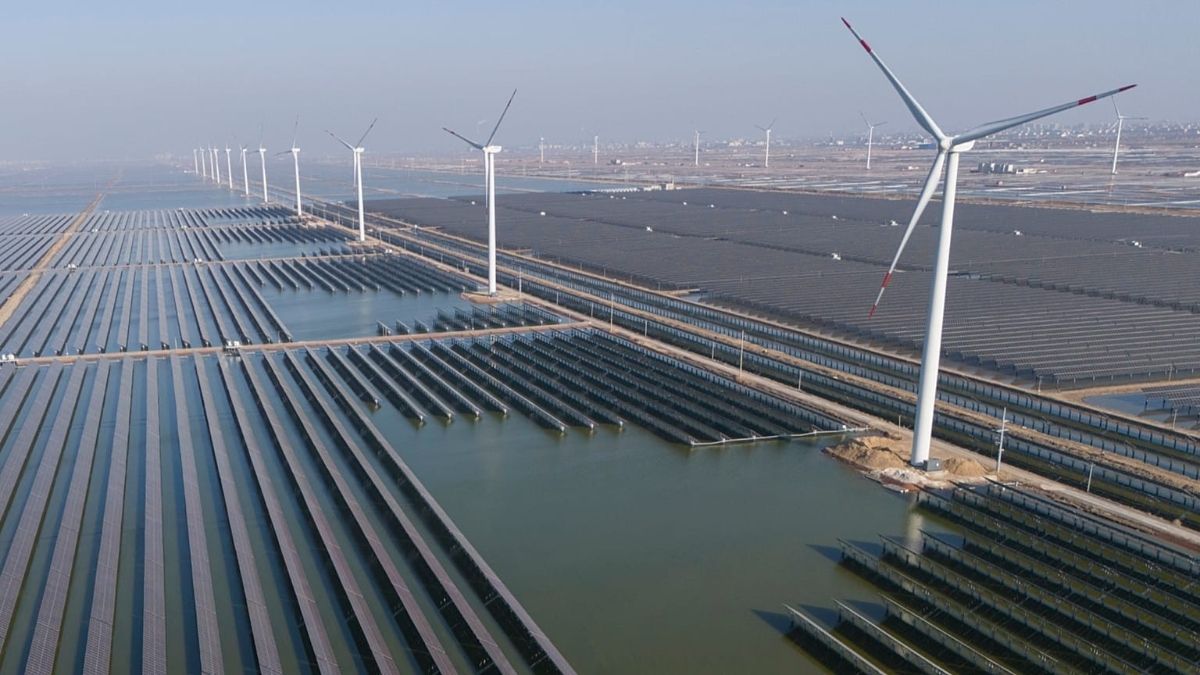
A new study published in Communications Sustainability finds that, when investment levels are held constant, wind and solar provide greater climate and public-health benefits than DAC. This conclusion holds even under extremely optimistic assumptions for DAC development.
The research team at PSE Healthy Energy (USA) simulated DAC deployment scenarios alongside large-scale solar and onshore wind across 22 U.S. grid regions from 2020 to 2050.
In the study’s current scenario, DAC requires about 5,500 kWh of electricity to capture 1 tonne of CO2, at a cost of around $1,000 per tonne. In an improved scenario, electricity use falls to 1,500 kWh and the cost drops to $500 per tonne.
Despite these improvements, the study reports that renewables still outperform DAC on a per-dollar basis in both scenarios.
The authors also report that, under current conditions, grid-connected DAC systems can generate more greenhouse gases and air pollution than the CO2 they remove. Even in a “breakthrough” scenario—where DAC costs fall to $100 per tonne and electricity consumption drops to 800 kWh (the lowest among the forecasts)—wind and solar still perform better in many regions.
One reason cited is that the electricity used for DAC remains partly powered by fossil fuels, which can add pollutants such as SO2, NOx, and fine particulates. These pollutants can affect communities near power plants. By contrast, expanding renewable energy reduces pollution and supports public health across the modeled scenarios.
Jonathan J. Buonocore of Boston University School of Public Health says that as more decarbonization options become available, cost-effectiveness assessments are important to ensure that funding produces the greatest climate impact while minimizing health side effects.
The study’s authors emphasize that DAC is not described as a “useless” technology. They argue that, in the long run—if emissions are significantly reduced—DAC could help remove CO2 that remains in the atmosphere.
However, the core message is that resource allocation should be more cautious. As Yannai Kashtan of PSE Healthy Energy put it: “If the sink is overflowing, turn off the faucet before you mop the floor.”
From a policy perspective, the study suggests prioritizing solutions with more immediate benefits—such as expanding renewables and improving energy efficiency—especially when budgets for the energy transition are constrained. Experts cited in the article note that direct CO2 capture may still matter later, particularly for residual emissions in sectors such as aviation, cement, and steel. The question, the article concludes, is not choosing one approach over another, but timing and scaling investments to optimize both economic and environmental outcomes during the transition.
Premium gym chains are entering a “golden era” that is ending or already in decline, as rising operating costs collide with shifting consumer preferences toward more flexible, community-based ways to exercise. Long-term memberships are shrinking, margins are pressured by higher rents and facility expenses, and competition from smaller, more personalized…