•
•
•
•
•
•
•
•
•
•
•
•
•
•
•
•
•
•
•
•
•
•
•
•
•
•
•
•
•
•
•
•
•


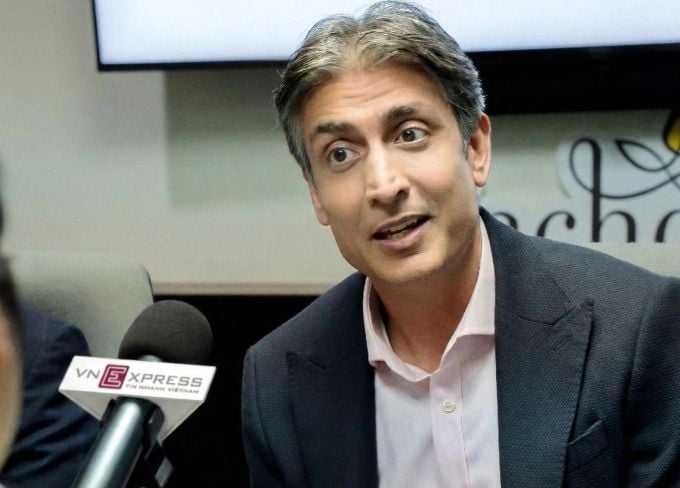
Indian consumer goods company Wipro, which owns Romano and Enchanteur, plans to expand its business scale in Vietnam by three to five times, citing rising consumption and a localization strategy.
After more than two decades in Vietnam, Wipro’s leadership says the country has become one of the group’s important growth engines within its global Consumer Care network. The company points to a large consumption market and Vietnam’s role in supporting its people- and technology-driven development approach.
Wipro also frames Vietnam within a broader Asia growth outlook, noting that Asia accounts for more than 40% of global GDP and is expected to remain the world’s growth engine. Within the region, Vietnam is described as a strategic destination due to an open economy, a young population, and rapid digitalization.
During a recent first visit and working trip to Vietnam, Wipro Chief Executive Officer Rishad Premji spent time assessing both modern and traditional distribution channels in Ho Chi Minh City and met with the Vietnam management team. The company said the retail activity and evolving consumer trends made a strong impression.
“Vietnam is a dynamic economy with a size above $500 billion, growth rates among the top in the region, a population over 100 million, and GDP per capita above $5,000,” said Rishad Premji.
Wipro entered Vietnam in 1996 and consolidated its presence in 2007 after acquiring Unza, which the company said helped shape its long-term strategy. Since then, Wipro has expanded its personal care portfolio and maintained double-digit growth for many years.
Looking ahead, Premji said steady growth over two decades and the scale of consumer demand are key reasons for Wipro’s commitment to remain in the market.
“We see Vietnam has ample room to continue to break out, to expand the business scale by three to five times in the coming years,” he added.
To support the growth target, Wipro said it is focusing on a diverse product portfolio and localization. Instead of applying global formulas, the company said it empowers domestic teams to tailor products to fast-changing consumer preferences, particularly among younger customers.
The approach is reflected in the market positions of its brands. Wipro said Romano holds the No.1 share in the men’s shampoo segment and is in the top two in bathing and deodorant categories. For women’s bath products, Wipro said Enchanteur is among the leading brands.
Wipro also cited the performance of international brands in Vietnam, including MaxKleen (household care) and Carrie Junior (children’s care), saying they have expanded their market share quickly. Growth, the company said, is supported by extensive distribution networks across both traditional and modern channels, along with expansion on e-commerce platforms to reach younger consumers.
With its existing platform, Wipro said Vietnam is not only a consumer market but is also gradually becoming a center for research and development (R&D) and production serving exports. Romano, developed in Vietnam, operates in more than 15 countries, including South Africa.
Wipro attributed this export growth to its domestic workforce and its ability to apply technology, adding that AI is deployed in marketing and other functions to support decision-making and optimize operations.
Summarizing the long-term strategy, Premji said brand resilience in a competitive environment depends on the ability to listen and evolve with consumers.
“The combination of global governance standards, advanced technology, and a strong local team is a springboard for Wipro Consumer Care to continue to reach new milestones in Vietnam,” he emphasized.






Premium gym chains are entering a “golden era” that is ending or already in decline, as rising operating costs collide with shifting consumer preferences toward more flexible, community-based ways to exercise. Long-term memberships are shrinking, margins are pressured by higher rents and facility expenses, and competition from smaller, more personalized…