•
•
•
•
•
•
•
•
•
•
•
•
•
•
•
•
•
•
•
•
•
•
•
•
•
•
•
•
•
•
•
•
•


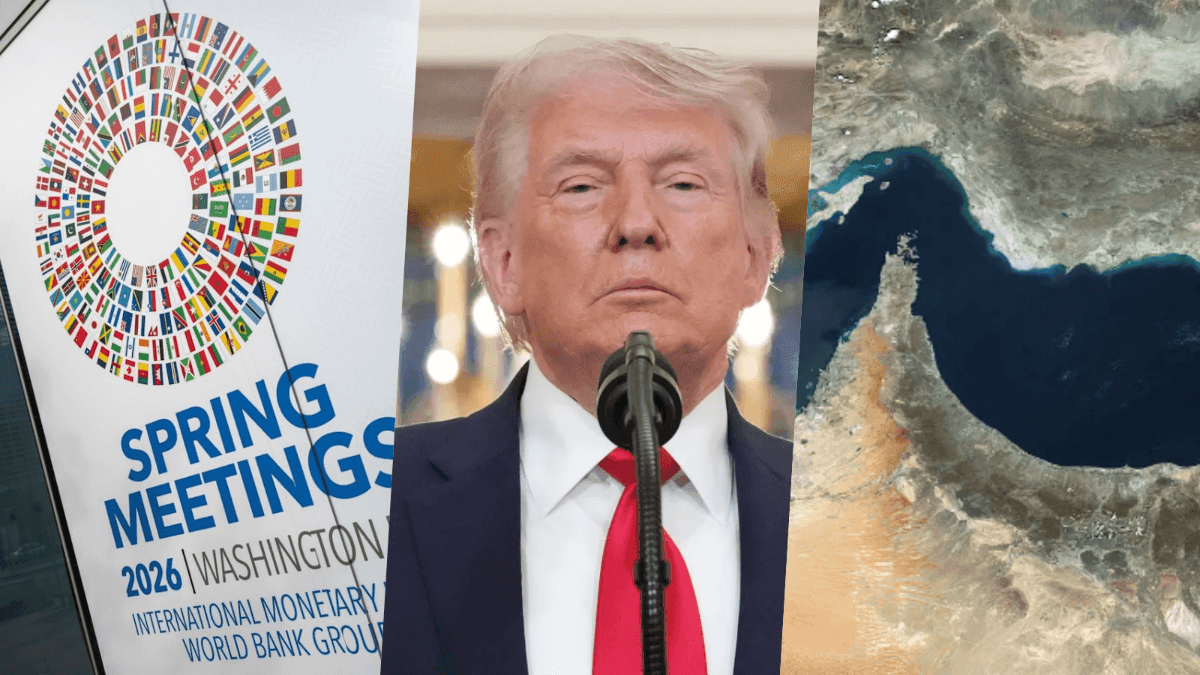
The Hormuz Strait reopened to merchant traffic during a ceasefire involving Israel and Lebanon, but it was later closed again amid ongoing U.S.–Iran negotiations. The episode and the broader geopolitical shock are shaping expectations for energy prices, inflation, growth and financial stability, as reflected in policy and market moves across the week of 12–18 April 2026.
Iran unexpectedly opened the Hormuz Strait to merchant traffic during a ceasefire with Israel and Lebanon. In response, the U.S. said its navy would maintain a blockade on vessels entering Iran’s ports at Hormuz until an agreement is reached.
On 18 April, state media reported that the strait had closed again after the U.S. failed to fulfill its commitments. Despite Iran’s claim, President Donald Trump said he remained confident about the peace process and that discussions would continue while the ceasefire holds. Talks were expected to take place toward the end of the week.
In an interview with Fox Business, Trump expressed optimism about peace talks with Iran, predicting that stock markets would rise after the conflict ends and that oil prices would ease. On 16 April, he reiterated that view, saying he believed an agreement would be reached soon.
The spring meetings of the IMF and World Bank in Washington took place under pressure from the new U.S.–Iran geopolitical shock, with implications for energy prices, inflation, growth and financial stability.
The IMF released its World Economic Outlook for April 2026, lowering global growth to 3.1% from 3.3%. The UK forecast was revised down sharply to 0.8% due to higher energy prices and slower rate cuts by the Bank of England. Germany, France, the United States, China and Italy were also revised downward, while Japan held steady. India, Russia and Brazil were upgraded.
The International Energy Agency warned that Europe could face an aviation fuel shortage in about six weeks unless alternative imports from the Middle East are secured. The IEA also cautioned that the Middle East conflict may dampen demand as energy prices rise and consumption slows.
The White House pressed the Fed to cut rates. Trump also threatened to dismiss Fed Chair Jerome Powell when his term ends, with Kevin Warsh discussed as a potential replacement.
Deutsche Bank, JPMorgan and HSBC projected that the Fed would not cut rates in 2026, citing higher oil prices and a still-strong U.S. economy with a tight labor market. Deutsche Bank said it pushed back its forecast of rate cuts to September. Other banks, including Goldman Sachs, Morgan Stanley and Bank of America, still expected two rate cuts starting in September, while Fed officials remained cautious about the full effects of the energy shock on the U.S. economy.
Market consensus pointed to delaying easing for longer.
Debate intensified around the spread between spot oil prices and futures prices. Physical oil prices rose amid Middle East disruptions, while futures rose more modestly due to cautious trading and heavy selling in the futures market.
OPEC’s March 2026 production fell by more than 27% to 20.79 million barrels per day, attributed to disruptions in Iraq, Saudi Arabia, the UAE and Kuwait.
Taiwan’s stock market, according to Bloomberg data, surpassed the UK in market capitalization on 16 April, reaching $4.13 trillion and becoming the seventh-largest global market. The move was driven by AI investment and the dominance of TSMC.
The World Silver Survey from Metals Focus and the Silver Institute suggested a sixth consecutive annual silver deficit in 2026, with potential for increased volatility.
Norway and the U.S. posted record crude exports in March, supported by higher prices after Hormuz disruptions.
China’s exports in March rose 2.5% year over year, below expectations, while imports surged 27.8%, signaling weak domestic demand and volatile trade conditions.
China’s Q1 2026 GDP rose 5% year over year, supported by strong exports, though domestic demand remained weak and property investment fell.
Japan plans to deploy about $10 billion to help Asian countries weather the energy shock linked to Middle East tensions and Hormuz disruptions.
Harvard economist Linda Bilmes estimated that the Iran conflict could cost the United States up to $1 trillion, citing long-term fiscal and debt-servicing pressures.
Trump warned of revising or terminating the 2025 trade deal with the UK, while UK Prime Minister Keir Starmer said Britain would not be drawn into the Iran conflict.
UBS forecast gold could reach $6,000 per ounce by year-end, supported by central bank buying and geopolitical risk.






Premium gym chains are entering a “golden era” that is ending or already in decline, as rising operating costs collide with shifting consumer preferences toward more flexible, community-based ways to exercise. Long-term memberships are shrinking, margins are pressured by higher rents and facility expenses, and competition from smaller, more personalized…




