According to Muavangbac.vn, the world’s largest gold ETF, SPDR Gold Trust, continued to record net outflows of 2.6 tonnes of gold on April 24, extending a five-session selling streak. For the week as a whole, the fund logged a net sale of 14 tonnes after having bought more than 13 tonnes in the previous week. Total gold holdings stood at just under 1,047 tonnes.
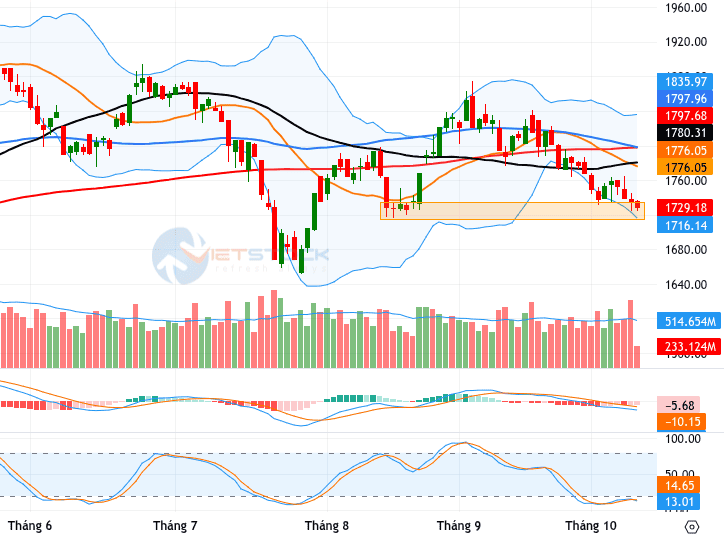
Data from Kitco shows gold closed on April 24 up 0.3% at $4,710 per ounce. During the session, prices briefly dipped to $4,650 per ounce before rebounding on news that talks between the United States and Iran had resumed. Despite the rebound, the weekly performance remained subdued, reflecting a cautious stance among investors.
Gold prices weakened by about 2.5% for the week, ending a four-week rally.
Alongside ongoing volatility tied to ceasefire and peace talks in the Middle East, some analysts said the gold market could test the lower end of a broader trading range next week. They pointed to higher oil prices raising inflation concerns, which could lead the Federal Reserve to keep monetary policy unchanged in the near term.
Ahead of the Federal Reserve meeting next week, forecasts for Fed policy have become highly volatile amid economic and geopolitical uncertainty. Last month, markets reportedly began pricing in a small possibility of a rate hike by year-end, but that scenario has been ruled out. The market is now oscillating between whether the Fed will cut rates: rate-cut expectations were around 50/50 last week, but expectations for a cut have since fallen to below 40%.
Ole Hansen, Head of Commodity Strategy at Saxo Bank, said gold continues to trade within a $200 range—roughly $4,650 to $4,850 per ounce—while remaining well positioned to benefit from longer-term fundamentals.
“Chair Jerome Powell is unlikely to alter his stance significantly as long as the U.S. economy continues to show resilience, albeit modest. More concerning is the trajectory of U.S. fiscal finance, where rising debt tied to tariffs and higher military spending continues to add to the heavy debt burden,” he said.
Hansen added that the basic case for gold remains intact. He said that once geopolitical tensions around Iran ease, investor attention is likely to shift back to the structural drivers that supported gold’s recent gains.