•
•
•
•
•
•
•
•
•
•
•
•
•
•
•
•
•
•
•
•
•
•
•
•
•
•
•
•
•
•
•
•
•
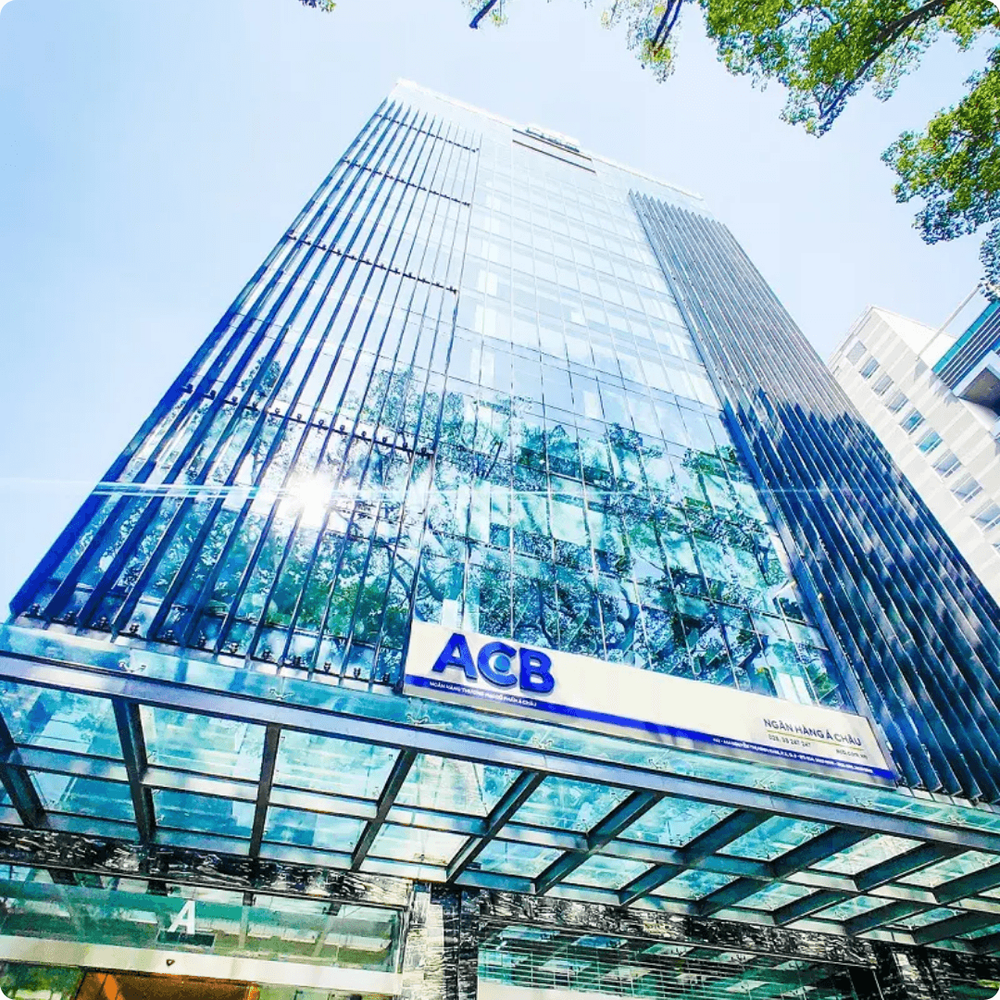
A decade ago, before digital banking expanded rapidly, the Vietnamese financial system still reflected strong regional characteristics. In the Southern market, the private banking “trio” of ACB, Sacombank and Eximbank was widely regarded as dominant.
Founded after the State Council issued the banking decree in 1990, these banks were among the first-generation private banks in Vietnam. Before 2012, they ranked among private-sector leaders in profitability, total assets and brand recognition in the South. However, the “three-pillar” position did not last. After the sector-wide liquidity, gold and real estate shock of 2011–2013, each bank followed a different path.
Ten years on, Sacombank has lost its position as Vietnam’s largest private bank, with other lenders overtaking it.
In 2015, after absorbing Southern Bank, Sacombank’s total assets exceeded VND 292 trillion, the largest among private banks at the time and about 1.5 times higher than SHB, ACB, VPBank and Techcombank. By 2025, Sacombank had slipped to fifth place, behind VPBank, Techcombank, ACB and even behind HDBank.
ACB recorded a fivefold expansion over the decade and remained in the top 3 among private banks by total assets. In 2025, it marked the first time ACB, Techcombank and VPBank all reached total assets above VND 1,000 trillion.
Eximbank’s ranking fell progressively. Over the decade, its total assets rose by a little more than 2x. In 2020, Eximbank officially dropped out of the top 10 largest private banks. Its ranking moved from 6th in 2015 to 14th in 2025.
Unit: VND trillion
2015 / 2025
On profitability, ACB recorded continuous and sustainable earnings growth, rising from VND 1,314 billion in 2015 to a peak above VND 21,000 billion in 2024, before a modest adjustment in 2025.
Sacombank, after a difficult period (profit of VND 156 billion in 2016), staged a strong recovery from 2022 to 2024, but profits fell sharply in 2025.
Eximbank’s profits fluctuated and were often below the scale of its capital. The peak was in 2024 (VND 4,188 billion), then declined to VND 1,512 billion in 2025.
Average employee income rose steadily over the decade for ACB, from VND 14.8 million per month in 2015 to VND 38 million per month, among the highest in the market.
Sacombank’s average employee income also surged in recent years, reaching VND 36 million per month by end-2025.
Eximbank increased from VND 15.0 million (2015) to a peak of VND 31.1 million (2022), then dropped to VND 20.9 million (2023) before recovering to VND 30.2 million (2025).
Regarding dividend distribution, ACB discontinued dividends only in 2017; in other years it distributed cash dividends or stock dividends, notably with cash dividends of 10% annually from 2022 onward.
Eximbank returned to cash/stock dividends in 2023 after stabilizing leadership.
Sacombank, by contrast, has not paid dividends for ten years because it has not completed its restructuring program.
Percentages shown as cash/stock components where provided in the source.
ACB
EIB (Eximbank)
The enduring impression ACB leaves from the past decade is that it has positioned itself as Vietnam’s leading retail bank with a relatively healthy business model.
Eximbank’s decade is described as marked by governance tensions among major shareholders and challenging restructuring efforts.
Sacombank’s 2015–2025 decade is described as a roller-coaster, driven by bold expansion ambitions that left lasting consequences.
The source frames 2026 as the start of a five-year 2026–2030 plan in Vietnam, with GDP growth targets above 10%, while noting headwinds from global geopolitical uncertainties and rising protectionism. In this context, banks are described as needing to balance profit goals with sustainable defensive strategies.
After a year of 2025 profit weakness to support customers and protect market share, ACB enters 2026 with a pre-tax profit target of VND 22,338 billion, up 14%. Q1 results were VND 5,400 billion (about 24% of the plan). The source states the chairman emphasized that sacrificing short-term profits was a deliberate reallocation to invest in stability and long-term resilience.
Before escalation of the Iran conflict, Eximbank announced an ambitious 2026 business plan. In March 2026, it expected pre-tax profits of over VND 4,000 billion, up 169% from 2025 results. However, the plan presented to the AGM proposed lowering the 2026 target to VND 1,515 billion, flat with 2025.
Sacombank targets pre-tax profit of VND 8,100 billion for 2026, up 6.2% from 2025 but below 45% of the prior year’s plan. Total assets are expected to rise by 10.2%, lifting total assets above the VND 1,000 trillion mark.
For 2026, ACB proposed a 20% dividend, comprising 7% cash and 13% stock.
Eximbank would not pay dividends to strengthen capital for growth and sustainable development.
For Sacombank, dividend payout in 2026 and in the coming years is described as unlikely as the bank seeks to extend its restructuring plan to 2030.
The source concludes that 2026 opens with strategic shifts for all three banks: ACB accelerates toward a “Financial Group for Efficiency,” Eximbank is described as surprising with a northern expansion strategy, and Sacombank faces a comprehensive transformation.
It also highlights that the geographic shift in organizing the 2026 AGM reflects each bank’s ambitions and strategic direction, with the three banks—once known as the South’s “three pillars”—holding AGM seats in three different provinces.
Overall, the source states that the health of finances, profitability and scale are ultimately shaped by governance stability and management capability, and that as technology—especially AI and data analytics—becomes a core platform, competition across the banking sector is expected to tighten.

Premium gym chains are entering a “golden era” that is ending or already in decline, as rising operating costs collide with shifting consumer preferences toward more flexible, community-based ways to exercise. Long-term memberships are shrinking, margins are pressured by higher rents and facility expenses, and competition from smaller, more personalized…