•
•
•
•
•
•
•
•
•
•
•
•
•
•
•
•
•
•
•
•
•
•
•
•
•
•
•
•
•
•
•
•
•


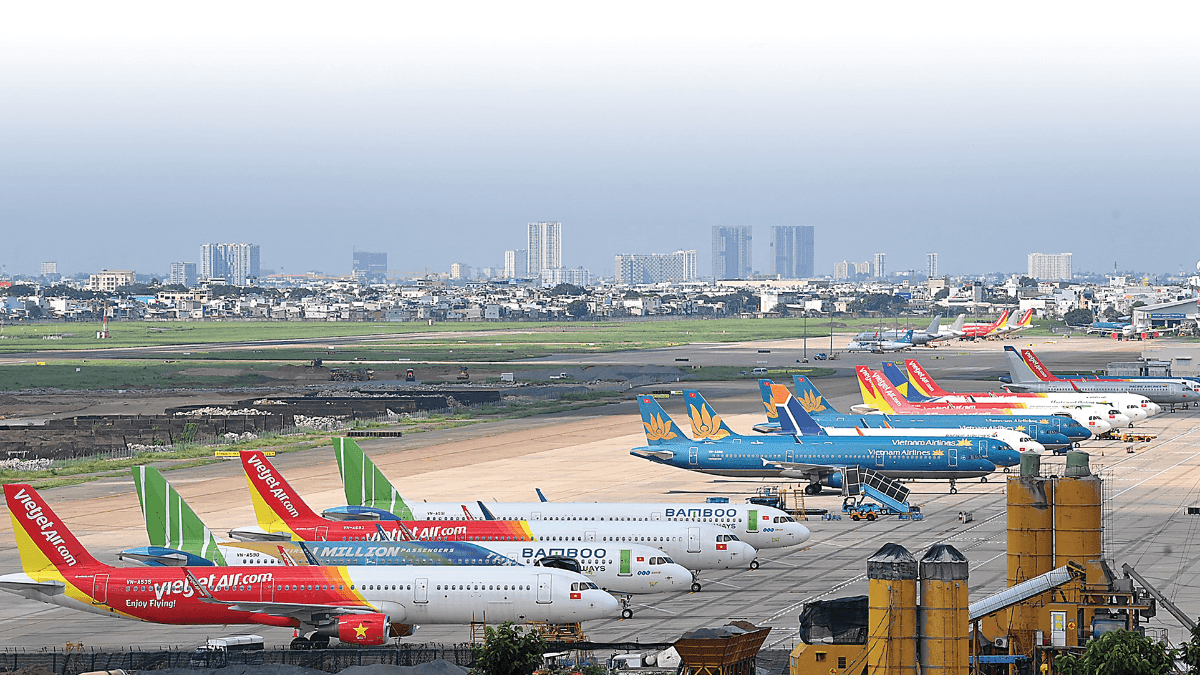
Facing renewed pressure from geopolitical tensions in the Middle East that have driven aviation fuel prices higher again, Vietnam's aviation sector is implementing multiple measures to support airlines in reducing operating costs and maintaining stable transport operations. The Civil Aviation Authority of Vietnam (CAAV) has updated its assessment of the impact of tensions in the Middle East on domestic aviation operations, as global aviation fuel prices have surged again. According to the regulator, to support air transport enterprises through the difficult period while optimizing operations and maintaining market stability, Vietnam Airports Corporation (ACV) is urgently researching a plan to reduce prices for certain aviation services within the state-regulated price framework. The plan is built on reviewing actual operating conditions at airports and calculating the impact on service provision, ensuring a balance of interests between infrastructure providers and the airlines. In parallel, the Vietnam Air Traffic Management Corporation (VATM) has proactively optimized airspace, managed traffic flows flexibly, and strengthened coordination with regional countries to help airlines choose routes that avoid congested areas. The cooperation with military authorities and international air traffic control centers is expected to significantly reduce fuel costs and direct operating costs for airlines. According to the CAAV, the main reason behind the rebound in aviation fuel prices is the renewed escalation of geopolitical tensions in the Middle East after US-Iran talks did not yield results. This development raises concerns about potential global energy supply disruptions, pushing crude oil and refined products higher. Specifically, on April 13, in Asia, Jet A-1 (FOB Singapore) rose to about 214–216 USD per barrel, higher by more than 3 USD per barrel than the previous session; in Korea around 203.55 USD per barrel and in the Gulf region around 205.20 USD per barrel. In the Northwest Europe region, aviation fuel prices rose to around 192 USD per barrel, while in the Mediterranean region around 1,471 USD per ton. On the crude oil market, prices remain high, with WTI around 99.08 USD per barrel and Brent around 99.36 USD per barrel, signaling a clear rebound after earlier declines. 0% tax policy on gasoline, diesel and aviation fuel until end of June 2026 The Tax Department has issued Directive No. 09/CD-CT calling for tax authorities at all levels to implement National Assembly Resolution 19/2026/QH16 on some tax policies for gasoline, oil and aviation fuel, effective from April 16 to June 30, 2026. Under the resolution, environmental protection tax on gasoline (excluding ethanol), diesel, kerosene, fuel oil and aviation fuel is reduced to 0 đồng per liter. These items are not subject to VAT declaration or VAT payment, but input VAT is still deductible. For excise tax, the rate applied to fuels is also set to 0%. CAAV calls for airlines to proactively plan operations and adjust flight schedules. 08:46, 05/04/2026 CAAV requires proactive planning to adjust operations and flight schedules. Fuel costs rising, airlines adjust operational activities. Cost pressures are weighing heavily on the transport sector. Keywords: dầu tư, giá nhiên liệu, hạ tầng - giao thông, hàng không






Premium gym chains are entering a “golden era” that is ending or already in decline, as rising operating costs collide with shifting consumer preferences toward more flexible, community-based ways to exercise. Long-term memberships are shrinking, margins are pressured by higher rents and facility expenses, and competition from smaller, more personalized…