•
•
•
•
•
•
•
•
•
•
•
•
•
•
•
•
•
•
•
•
•
•
•
•
•
•
•
•
•
•
•
•
•



Bitcoin has received indirect support from Japan after the Bank of Japan signaled a more cautious stance on rate hikes, cooling expectations for an increase at the end of April. The shift reduces a key risk weighing on the crypto market by keeping the yen weak and financing conditions relatively cheap, giving risky assets more room to move.
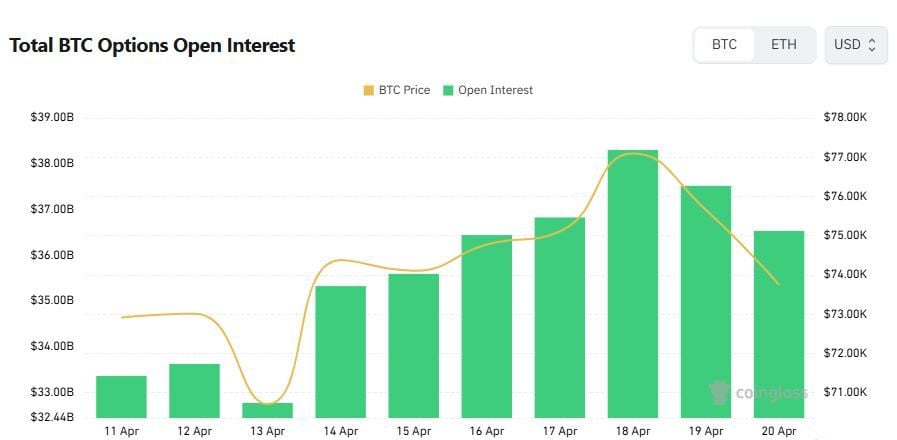
Bitcoin moved above $74,000 in a more favorable macro context. The market response was not only tied to technical momentum, but also to “monetary relief” coming from Tokyo.
Bank of Japan Governor Kazuo Ueda adopted a more cautious tone. Traders linked the change to the added complexity of the Iran conflict and broader energy tensions, which can make a rate hike more difficult to justify.
The memory of August 2024 remains relevant. At that time, the sharp unwinding of the yen carry trade disrupted risky assets and contributed to a rapid drop in Bitcoin over two days. This time, the signal from Japan suggests that the carry trade dynamic is not being abruptly reversed.
The carry trade involves borrowing in yen at low cost and investing elsewhere. When the yen stays weak and interest rates remain low, the mechanism can support leveraged positions. Bitcoin’s recent rally has benefited from speculative flows, which tend to intensify when financing remains cheap.
Even so, the risk is not eliminated—only delayed. If the Bank of Japan later toughens its stance, the crypto market could face another quick correction.
Japan is heavily dependent on imported energy, so tensions around the Strait of Hormuz can directly affect the economy. An oil surge would likely make the situation more sensitive for Japanese policymakers.
Conversely, if negotiations between the United States and Iran ease and oil prices fall, inflationary pressure in Japan could decrease. In that case, the Bank of Japan would have less urgency to raise rates.
For Bitcoin, the implication is straightforward: less pressure on Japanese rates can provide more time for the market to absorb resistance. In crypto markets, even a few weeks can be enough to shift momentum.
This Japanese support does not guarantee a sustained rise for Bitcoin. It primarily removes an important obstacle. The $73,000 threshold had previously limited buyers, with traders citing uncertainty tied to oil, rates, geopolitics, and the U.S. dollar. In that environment, only long-term investors continued to accumulate steadily.
The Bank of Japan’s more cautious tone changes that balance, at least for now.





Premium gym chains are entering a “golden era” that is ending or already in decline, as rising operating costs collide with shifting consumer preferences toward more flexible, community-based ways to exercise. Long-term memberships are shrinking, margins are pressured by higher rents and facility expenses, and competition from smaller, more personalized…