•
•
•
•
•
•
•
•
•
•
•
•
•
•
•
•
•
•
•
•
•
•
•
•
•
•
•
•
•
•
•
•
•


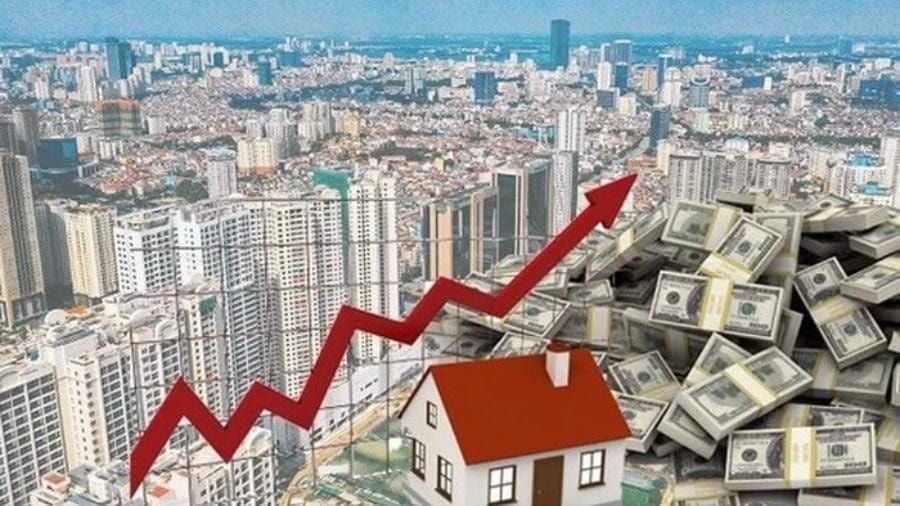
In a newly released report, the Ministry of Construction, citing data from the State Bank of Vietnam (NHNN), shows that as of February 28, 2026, outstanding credit to real estate activities reached more than 2.2 quadrillion dong, up about 11.7% from Q4 2025 (an increase of over 233 trillion dong) and up 43% year on year. Earlier, according to NHNN data, in the first two months of 2026 credit growth to the economy reached 1.4%. Thus, credit growth in real estate lending was more than eight times the average growth of the entire economy. According to the Ministry of Construction, credit for urban development projects and housing development loans totaled nearly 784,000 billion dong; loans for land-use rights purchases were 255,352 billion dong; loans for industrial park and export processing zone projects exceeded 139,000 billion dong; loans for tourism, ecology, and resort projects were 84,281 billion. The data show that capital is most concentrated in urban development and housing projects, accounting for 35% of total real estate lending, up 24.1% from Q4 2025. The Ministry of Construction assessed that this indicates developers are accelerating project implementation, seen as a positive signal, forecasting improved supply in the near term. Additionally, other segments such as industrial parks, tourism and hospitality, and land-use rights also grew but at a slower pace, indicating credit is prioritizing sectors with higher liquidity and better capital recovery potential. What bank leaders say about real estate? During the 2026 annual bank meetings, real estate lending remains a focal topic. In evaluating Vietnam’s real estate sector, VPBank Chairman Ngo Chi Dung said that although interest rates have risen lately and put pressure on the real estate market, in the long run the sector still has significant growth potential. “Indeed, the recent rise in interest rates has greatly affected the real estate industry. However, from a long-term perspective, Vietnam’s urbanization rate is currently not even 40%, while China is around 77%. This indicates that over the next 10–20 years, housing demand in Vietnam will remain very large,” he stressed. According to the VPBank chairman, the core issue is not whether to invest in real estate but choosing the right segment. He noted that real estate is not a homogeneous market but comprises segments such as resort real estate, industrial parks, commercial, and housing; housing itself includes social housing, mid-range, high-end, and ultra high-end. “We cannot view real estate as a single block. There are segments serving investment demand, but there are also segments serving real housing demand. The key is to identify the segments with real social demand,” he said. Based on that, VPBank will continue to regard real estate as an important sector, but will adjust its lending strategy to be more selective, prioritizing segments with real demand and affordability for the broad majority of people. Speaking on this, VPBank CEO Nguyen Duc Vinh said that the State Bank has recently tightened credit to real estate to curb bubble risk and ensure financial security—a policy VPBank views as sound. “However, real estate remains an extremely important sector of the economy. The demand for home ownership remains one of the essential and largest needs of people,” he said. Consequently, VPBank will not “close its door” to real estate but will adjust its credit strategy. The bank will focus funding on housing projects meeting real demand, especially social housing and the middle-income segment. Conversely, resort projects or high-end speculative segments will be restricted from receiving funding. “Lessons from funding projects with weak legality or capital lockups over the past 3–4 years have led us to tighten our risk governance processes further,” he noted. Speaking about the real estate sector, Techcombank Chairman Ho Hung Anh also said it has contributed greatly to Vietnam’s development for many years and will continue to do so: “This is a sector with substantial potential and risks. In the next 5–10 years, real estate will continue to develop in Vietnam. The question is how banks manage risk.” For Techcombank, he said the bank only selects projects with solid liquidity and full legal rights, focusing on leveraging those opportunities with good clients, including corporate and individual clients. Techcombank does not lend to or finance projects with incomplete legal status, or projects that may lack liquidity. The Techcombank chairman emphasized that Techcombank’s non-performing loan ratio in the real estate sector, for both individuals and enterprises, remains below 1%. The actual capital recovery rate is 100%. “Any real estate project, even if it falls into bad debt, Techcombank can recover all the money, at least the principal, after about 2–3 years,” he said. At SHB’s annual meeting this year, responding to shareholders about how real estate lending affects business, SHB Chairman Do Quang Hien said the bank’s real estate lending share is relatively large but remains within the State Bank’s prescribed safety ratios. At the same time, ministries and localities are resolving many stalled projects, helping reduce resource misallocation. Mr. Hien added that real estate development has spillover effects on 41 sectors of the economy, promoting production and business, increasing revenue and economic efficiency. SHB currently finances many national infrastructure projects and key projects in major cities such as Hanoi, Da Nang, Ho Chi Minh City and surrounding areas. “These are high-liquidity projects that also support housing demand, especially for young customers, as well as social housing and industrial real estate segments,” he emphasized. SHB leadership stressed that these projects generate substantial revenue and are expected to contribute positively to the bank’s profit growth in 2026 and in subsequent years. They also affirmed SHB’s adherence to current regulations and system safety. At the ACB’s annual meeting, one notable point highlighted by ACB Chairman Tran Hung Huy was the bank’s loan structure. Specifically, outstanding real estate lending at ACB currently accounts for under 5% of total loans, lower than the industry average among many banks. According to ACB leadership, this ratio acts as a “safe cushion” to help the bank limit risk as the real estate market faces tighter controls. Not only defensive, ACB also sees opportunities in this context. The bank can actively cooperate with real estate developers with solid financial foundations, especially in the mid-range housing segment—an area considered to have real demand and lower volatility. Update on Q1 2026 earnings of 14 banks shows most banks posted positive profits, with only 2 of the 14 reporting profit declines year-on-year; the sector generally remained in positive territory. Xem thêm






Premium gym chains are entering a “golden era” that is ending or already in decline, as rising operating costs collide with shifting consumer preferences toward more flexible, community-based ways to exercise. Long-term memberships are shrinking, margins are pressured by higher rents and facility expenses, and competition from smaller, more personalized…