•
•
•
•
•
•
•
•
•
•
•
•
•
•
•
•
•
•
•
•
•
•
•
•
•
•
•
•
•
•
•
•
•



Halfway through Q2, markets are already pricing end-of-quarter targets. Bitcoin’s roughly 10% move so far could be an early leg of a setup similar to 2025, when Q2 ended with 30% gains. If that pattern repeats, BTC could still finish Q2 in the $85,000–$90,000 range, with the $65,000–$70,000 area likely acting as a local bottom for this cycle. The immediate question is whether on-chain signals support that range as a potential local trough.
At the macro level, BTC began the week by breaking below the $75,000 level as uncertainty around the Strait of Hormuz picked up, adding pressure to the “bottom is in” narrative. That pressure is now starting to appear in on-chain metrics as well.
From a long-term holder (LTH) perspective, only 28.89% are currently sitting in unrealized losses. Historically, that figure has tended to trigger panic only once it moves into the 40%–45% range, which typically marks the start of an accumulation phase. On that basis, the data suggests BTC may still have room for further downside before a bottom is confirmed, particularly with macro “FUD” (fear, uncertainty, and doubt) still present.
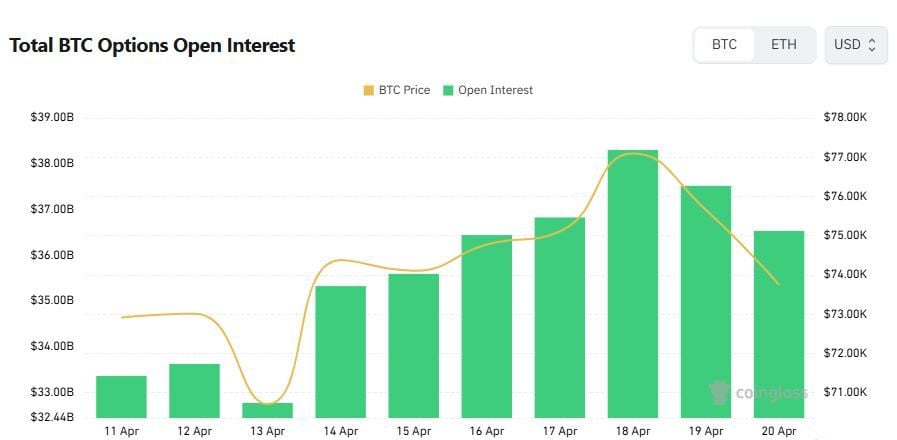
Derivatives positioning also appears stretched. Coinglass data shows BTC longs outnumber shorts by about 3:2, indicating the market remains tilted toward leverage. Combined with macro FUD, weak technical conditions, and crowded long exposure, the market remains vulnerable. With LTHs still underwater in parts of the move, capitulation risk has not been ruled out, keeping the $65,000–$70,000 zone under pressure.
Liquidity in a risk-off environment can cut both ways depending on positioning. Stablecoin market cap recently hit a new high at $320 billion, up about $5 billion over the week. In risk-off conditions, that can mean capital is parked on the sidelines as “dry powder.”
However, during the same period, Bitcoin rallied 4.35%, suggesting liquidity may be rotating back into BTC rather than remaining defensive. Stablecoin dominance has fallen by more than 1%, printing four consecutive red candles and pulling back to early March levels, while BTC dominance has risen by more than 1% over the same window.
According to AMBCrypto, this divergence between stablecoin dominance and BTC dominance is worth monitoring. Historically, such setups have been associated with capital moving out of defensive positioning and back into risk, a structure that can support continued upside momentum for Bitcoin.
In this context, rising BTC long leverage may reflect strategic positioning. The combination of falling stablecoin dominance, rising BTC dominance, and continued growth in overall stablecoin liquidity suggests capital may already be rotating back into Bitcoin. If the trend holds, BTC could potentially move through the FUD, spark renewed demand, and help establish a stronger bottom—an important factor for the $85,000–$90,000 Q2 target.





Premium gym chains are entering a “golden era” that is ending or already in decline, as rising operating costs collide with shifting consumer preferences toward more flexible, community-based ways to exercise. Long-term memberships are shrinking, margins are pressured by higher rents and facility expenses, and competition from smaller, more personalized…