•
•
•
•
•
•
•
•
•
•
•
•
•
•
•
•
•
•
•
•
•
•
•
•
•
•
•
•
•
•
•
•
•



The Crypto Fear & Greed Index rose by two points to 29 out of 100 on Monday, its highest reading since late January. Despite the uptick, the score still indicates fear among Bitcoin investors, as markets digested fresh uncertainty after a rough weekend.
The index’s movement reflects a clear catalyst: a two-week ceasefire between the US and Iran, which had provided a brief lift to financial markets and helped keep oil prices in check, is now under serious strain and is set to expire Wednesday.
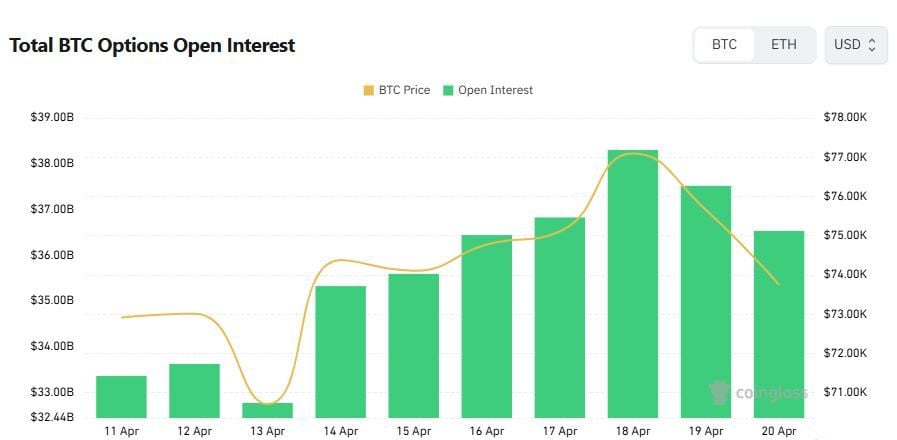
Bitcoin, which had climbed to $78,300 on Coinbase late Friday—its strongest level since early February—quickly surrendered those gains. By Saturday and into early Sunday, it had slid to a range of $75,000 to $76,000.
Sunday night brought a sharper turn. The US military opened fire on an Iranian cargo ship and later took control of it, saying the vessel attempted to break through a US blockade of Iranian ports. Tehran called the move a ceasefire violation and vowed retaliation. Iran also pulled out of peace talks scheduled for Monday in Islamabad, Pakistan.
Following the developments, Bitcoin dropped sharply and briefly fell below $74,000. At last check, it was trading near $75,098.
Crypto was not the only market reacting. Stock futures fell after the weekend’s escalation:
Oil moved in the opposite direction. With Iran threatening to close the Strait of Hormuz—one of the world’s most critical shipping corridors for crude—oil futures surged more than 4.5%, pushing above $95 a barrel.
Traders are focused on the next few days as the ceasefire window closes quickly. The brief rally Bitcoin experienced last week, supported in part by hopes that US-Iran tensions were cooling, has been largely erased by the renewed escalation. At last check, Bitcoin remained near $75,098.





Premium gym chains are entering a “golden era” that is ending or already in decline, as rising operating costs collide with shifting consumer preferences toward more flexible, community-based ways to exercise. Long-term memberships are shrinking, margins are pressured by higher rents and facility expenses, and competition from smaller, more personalized…