•
•
•
•
•
•
•
•
•
•
•
•
•
•
•
•
•
•
•
•
•
•
•
•
•
•
•
•
•
•
•
•
•
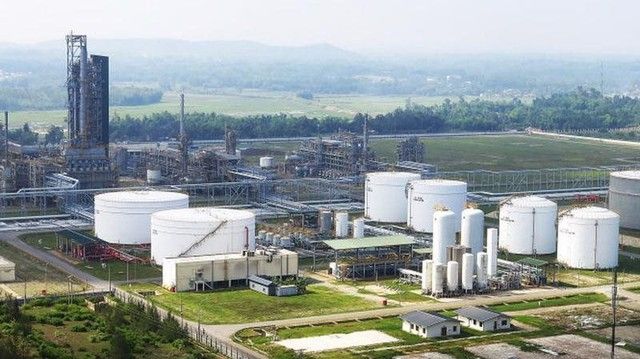
BSR shares hit the ceiling at 25,250 dong per share in the morning session on May 4, 2026, as buying demand nearly saturated the order book with about 5 million shares at the ceiling price. Liquidity also improved quickly, with matched volume exceeding 7 million shares in the morning.
As a result, BSR’s market capitalization rose to 126,400 billion dong (about $4.8 billion).
BSR’s positive momentum was not isolated, coinciding with an upturn across the oil and gas sector. Several sector stocks, including PLX, OIL, and GAS, rose 3–4%, making the group one of the strongest performers on the market early in the trading day.
The rise followed BSR’s reported solid first-quarter 2026 earnings. In the consolidated Q1 2026 financial statements, BSR recorded net profit after tax of 8,265 billion dong.
Compared with Q1 2025, revenue increased by more than 14,000 billion dong, while net profit grew 20.7 times.
During the quarter, BSR maintained high capacity utilization at the Dung Quất refinery, averaging 124% to 125% of converted capacity. By maximizing throughput, the company increased production to benefit from the price spread between crude inputs and refined outputs.
In the first three months of 2026, total production reached more than 1.99 million tons of various products. This supported domestic gasoline supply and contributed over 3,953 billion dong to the State budget.
As of March 31, 2026, BSR’s total assets were 106,786 billion dong, up more than 21,000 billion dong from the start of the year. Inventory value rose to 21,573 billion dong, nearly double the beginning-of-year level.
The company’s decision to proactively increase inventory was described as a measure to help stabilize input supply amid geopolitical factors in the Middle East affecting the global crude supply chain.
On capital structure, BSR’s equity stood at 68,778 billion dong, increasing in line with improved business results. Total liabilities were over 38,000 billion dong, largely short-term borrowings used to fund input purchases and ongoing operations.
Premium gym chains are entering a “golden era” that is ending or already in decline, as rising operating costs collide with shifting consumer preferences toward more flexible, community-based ways to exercise. Long-term memberships are shrinking, margins are pressured by higher rents and facility expenses, and competition from smaller, more personalized…