•
•
•
•
•
•
•
•
•
•
•
•
•
•
•
•
•
•
•
•
•
•
•
•
•
•
•
•
•
•
•
•
•


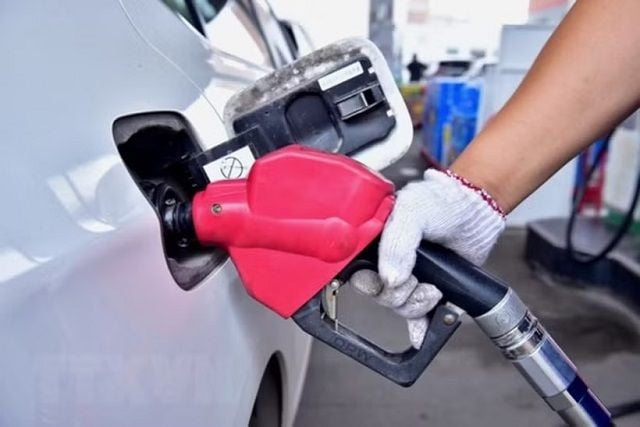
China announced on April 21 that it would cut domestic price ceilings for gasoline and diesel after recent volatility and declines in global oil markets, marking the first fall in refined-oil prices this year.
Under China’s refined-oil pricing mechanism, gasoline and diesel prices are adjusted every ten working days based on changes in international crude prices. After the latest adjustment, the price ceilings for gasoline and diesel will be lowered by 555 yuan per ton and 530 yuan per ton, respectively, effective April 22.
Following the change, nationwide average prices for gasoline 92 and 95 are expected to fall by 0.44 yuan and 0.46 yuan per liter, respectively, while diesel No. 0 will drop by 0.45 yuan per liter.
China’s refined-oil prices are indexed to international crude prices. The government applies price-control measures when international crude prices are above $130 per barrel or below $40 per barrel during the ten working days preceding an adjustment.
To limit the impact of international oil prices on the domestic market, China intervened on March 23 and April 7 to cap increases in gasoline and diesel at around half of the normal increases.
Escalation of the US-Israel-Iran conflict at the end of February 2026 disrupted shipping through the Hormuz Strait, affecting global energy supplies and contributing to volatility in international oil prices. After the US and Iran reached a temporary ceasefire on April 7, oil prices fluctuated and generally returned to around $90–$100 per barrel.
CCTV Finance, citing analysis from China’s National Development and Reform Commission Price-Monitoring Center, said the current dynamics of the US-Iran conflict are a key factor influencing international oil prices. It added that monitoring the interaction between the parties, the maritime situation in the Hormuz Strait, and potential damage to energy facilities—as well as production declines in Gulf states—will be important.
The US-Iran ceasefire is set to expire on April 22, and the outlook for negotiations remains unclear. Reuters, citing Citi analysts, reported that if shipping through the Hormuz Strait is disrupted for another month, international oil prices could rise to about $110 per barrel in Q2.
Fitch Ratings outlined three scenarios for international oil-price trends:
At a Beijing press conference on April 21, Fitch Ratings’ Senior Director of Asia-Pacific Corporate Ratings, Hoang Tieu Ding, said the pricing mechanism generally transmits international oil-price changes to Chinese consumers at a moderate pace and magnitude, which could lessen the impact on purchasing power.
Separately, Fitch Ratings’ lead sovereign analyst for China, Jeremy Zook, argued that higher inflation relative to other economies is not necessarily negative for China. He pointed to GDP deflation indicators suggesting China is exiting a deflationary phase lasting around three years, with GDP deflation only slightly negative in Q1.
Zook also noted that higher energy costs drove a swift rebound in the Producer Price Index (PPI) in March, ending 41 months of decline. He added that while an oil-price shock could support China’s economic recovery, it could also have negative effects: with weak domestic demand, firms may not be able to pass higher costs through to consumers, narrowing profit margins.
Premium gym chains are entering a “golden era” that is ending or already in decline, as rising operating costs collide with shifting consumer preferences toward more flexible, community-based ways to exercise. Long-term memberships are shrinking, margins are pressured by higher rents and facility expenses, and competition from smaller, more personalized…