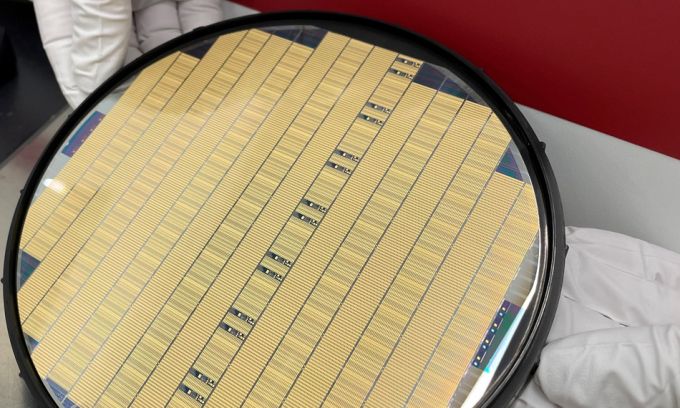
Indium Phosphide (InP) – the core compound in optical data-transmission technology, China is influencing the semiconductor supply chain serving AI. In 2025, chip designer Marvell acquired Celestial AI to leverage the photonics technologies of the startup. By March, Nvidia announced it would invest $2 billion in two photonics device makers, Coherent and Lumentum. As major US semiconductor players race to invest in technologies that serve the AI data-center wave, demand for Indium Phosphide (InP) has surged. InP is the core material with no substitute in photonics for data transmission over optical fibers (photonics). However, this compound is a major obstacle to developing the fastest and most energy-efficient components for AI data centers, because Beijing restricted exports from February 2025. The US Geological Survey notes that China is the world's largest indium producer, accounting for about 70% of global output in 2024. “InP is one of the bottlenecks in the supply chain, hindering the construction of AI data centers,” said Konrad Wang, a research analyst at SemiAnalysis. In early May, Coherent warned of InP shortages. Their supplier, AXT, the world's second-largest InP wafer substrate producer, acknowledged that “the export license for InP is the biggest challenge” they face. Less than a week later, Coherent CEO Jim Anderson, along with a U.S.
business delegation accompanying President Donald Trump on a visit to China, reportedly aimed to highlight delays in InP export licenses from China. AXT produces most InP substrates in China but only received its first export license in June 2025, while backlogs of orders are large. According to SemiAnalysis, these restrictions are creating ripple effects across the photonics supply chain. Lumentum has filled orders through 2028 despite quadrupling production. Taiwanese photonics equipment makers such as VPEC and LandMark Optoelectronics are also experiencing disruptions in InP substrate supply. Since the InP export restrictions, the average price of a 6-inch InP wafer has surged about 250%, to around $5,000. Experts say Beijing’s control over InP indicates the country is willing to broaden its strategy of controlling rare earths, which previously disrupted automotive, semiconductor, and aerospace supply chains when competing with Washington. Paul Triolo, a senior analyst at Albright Stonebridge, says China is developing a more sophisticated toolkit of controls based on “materials bottlenecks.” “Instead of banning finished products outright, Beijing could slow or attach conditions to exporting compounds, substrates, metals... at upstream stages,” he notes. Facing rising costs and prolonged disruption, at least two major American photonics chip makers have sought assistance from organizations to obtain export licenses. They are also pursuing in-house production of InP substrates and sourcing outside China. For example, LandMark signed a long-term InP supply contract with Sumitomo Electric Industries of Japan in April. However, switching suppliers often requires lengthy qualification, testing and quality certification, making it difficult to change supply chains quickly. Coherent plans to double wafer InP production capacity at its Texas plant this year and then more than double capacity again by the end of 2027. But overall industry capacity growth is slow, as a new plant typically takes 2-3 years to come online. In China, domestic firms are rapidly expanding production. In April, Yunnan Germanium announced an investment of 189 million yuan ($28 million) to raise output to 450,000 single-crystal InP wafers per year. The company’s 2025 annual report shows InP wafer shipments up 74%. Guangdong Xiandao also launched a new project this year with expected capacity of 40 tons of InP crystals per year, the raw material used to manufacture InP substrates. Both Yunnan Germanium and Guangdong Xiandao are applying for export licenses, but there is no sign Beijing will favor domestic firms. Therefore, some players are focusing on supplying the domestic market for now. Edition: Reuters. AI giants are about to enter a harsh phase.