•
•
•
•
•
•
•
•
•
•
•
•
•
•
•
•
•
•
•
•
•
•
•
•
•
•
•
•
•
•
•
•
•


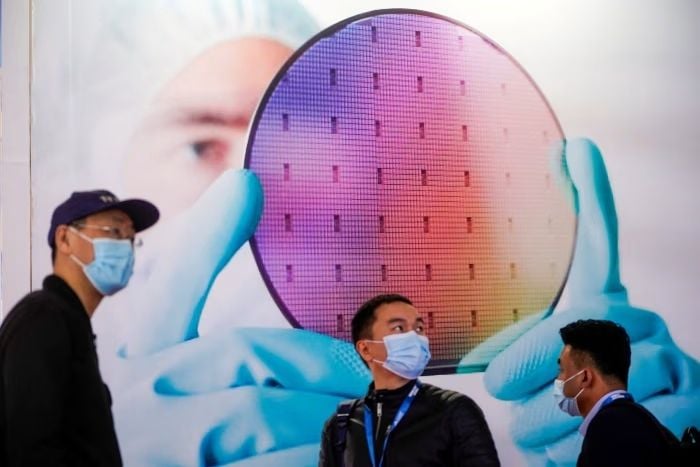
China’s policy spending to support its semiconductor industry totaled about $142 billion over 2014–2023, according to a report from the Center for Strategic and International Studies (CSIS). That figure is roughly 3.6 times the $39 billion the United States committed over the same period.
The CSIS report argues that China’s investment at this scale has helped improve its international standing, including in influence and technological capability. In CSIS’s ranking of policy spending, South Korea is second at about $55 billion, followed by the European Union at $47 billion, Japan at $17.5 billion, and Taiwan at $16 billion.
The report also notes that the investment gap between China and the United States for 2014–2023 may not fully capture the larger level of US disbursements in more recent years, particularly after the CHIPS and Science Act was enacted in August 2022.
In addition, the CSIS report does not include phase three of China’s Integrated Circuit Industry Investment Fund, known as Big Fund III, launched in May 2024 with a size of about $47.5 billion.
By headquarters location, US-based semiconductor companies still hold more than 50% of global market share, while Chinese companies account for about 4.5%. The report projects that SMIC’s global share of semiconductor production by mid-2025 will be about 6%, placing it third behind TSMC and Samsung.
However, analysts estimate that SMIC lags TSMC by two to three generations of technology. The manufacturing performance attributed to SMIC is described as about 20% with a 5nm process and between 25% and 46% with a 7nm process. Competitors such as Intel, Samsung, and TSMC are described as having advanced to 2nm technology, with yield rates up to 90%.
The report states that SMIC is “almost blocked” at processes below 7nm because it cannot access ASML’s EUV lithography system. It adds that access to advanced DUV technology could also face restrictions in the near future.
According to Scott Kennedy, this technology gap has not narrowed and could widen further. The report also notes that Chinese laboratories have attempted to develop EUV systems independently, but have not yet been able to manufacture a complete chip, indicating that technical barriers remain substantial.
In the design space, Nvidia accounts for more than 90% of the global GPU market by revenue. The report says Chinese firms including Huawei and Alibaba, as well as Cambricon and Moore Threads, remain behind in computing capability.
Another constraint highlighted by Kennedy is the intensity of investment in research and development. US chip companies reinvest on average 17.7% of revenue into R&D, while Chinese companies invest about 9.2%.
Big Fund III, launched in 2024, is expected to narrow gaps in areas including chip fabrication equipment, EDA software design, and AI accelerators.
The report cites analyst Jimmy Goodrich’s view that China is likely to catch up quickly in the long term, while facing many challenges to catch up with leading countries in the near term. Kennedy’s assessment aligns with this view, particularly in light of the US tightening export controls on advanced lithography technology.






Premium gym chains are entering a “golden era” that is ending or already in decline, as rising operating costs collide with shifting consumer preferences toward more flexible, community-based ways to exercise. Long-term memberships are shrinking, margins are pressured by higher rents and facility expenses, and competition from smaller, more personalized…