•
•
•
•
•
•
•
•
•
•
•
•
•
•
•
•
•
•
•
•
•
•
•
•
•
•
•
•
•
•
•
•
•


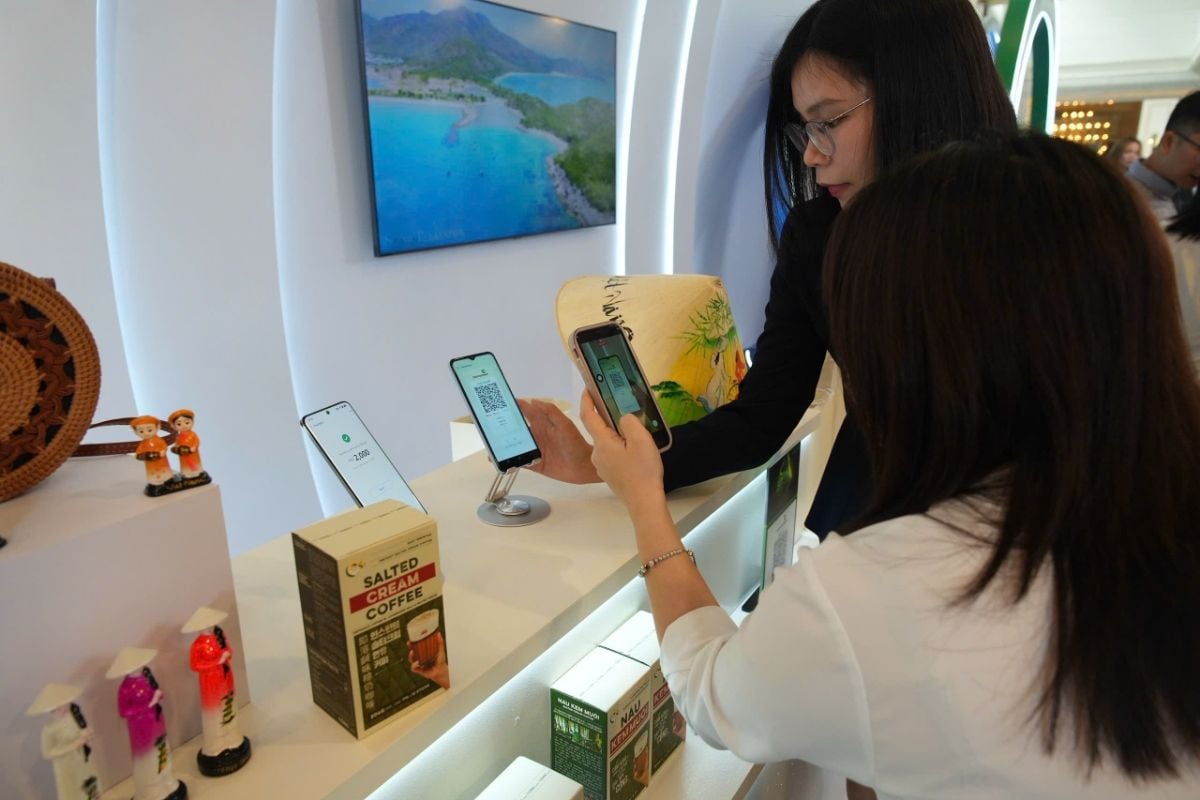
From 3 April 2026, Chinese visitors can pay directly for goods and services in Vietnam by scanning QR codes without exchanging money. This convenience opens opportunities for Vietnamese retailers, service providers, and the tourism sector to welcome spending from a market of more than one billion people. Under a cooperation framework among NAPAS, Ant International and Vietcombank, Alipay users are accepted for payments across the entire VIETQRGlobal network operated by NAPAS member institutions, covering everything from shopping malls and retail stores to restaurants, hotels and sightseeing sites. In terms of infrastructure, transactions are processed on a platform linking NAPAS and Ant International, while Vietcombank serves as the settlement bank. This model enables settlements in both Chinese yuan and Vietnamese dong (VND), helping to enhance the experience for travelers and enabling Vietnamese businesses to expand revenue from the Chinese market. Transactions are processed on the platform that connects NAPAS and Ant International; Vietcombank acts as the settlement bank. This arrangement allows direct settlement in yuan and VND, eliminating the need for cash exchange. At the launch on 3 April, Pham Anh Tuan, Director of the Payments Department at the State Bank of Vietnam, noted that in 2025 Vietnam welcomed over 21.2 million international visitors, up 20% from the previous year. Among them, China was the largest feeder market with nearly 5.28 million visitors, up 41.3% and accounting for 25% of total international arrivals. Vietnam is also among the top five countries with visitors to China. "With these impressive figures, the cross-border QR payment connection between Vietnam and China will bring significant convenience for travelers from both sides, contributing to the goal of a cashless society for both nations," Pham Anh Tuan emphasized. Nguyen Quang Minh, CEO of NAPAS, said that connecting Vietnam's national retail payments infrastructure directly to China's leading payments ecosystem, with more than one billion users, will help Chinese visitors experience a familiar, convenient and safe payment experience as at home. "Our objective is to deliver an 'at-home' payment experience for Alipay users in Vietnam, while creating additional business momentum for millions of retailers, small businesses and domestic enterprises," Le Quang Vinh, CEO of Vietcombank, said. Douglas Feagin, President of Ant International, said cross-border payments are the gateway to digital commerce, where fintech acts as a lever for inclusive growth and competitiveness for both economies. When payment barriers are removed, Vietnamese businesses, especially SMEs, can access a larger international customer base, increase revenue from tourism, services and retail, and broaden into value-added services such as digital trade, cash flow management and smart financial solutions. In the next phase, NAPAS and Ant International expect to complete two-way payments soon, enabling Vietnamese users to scan Alipay using domestic banking apps when paying in China. When two-way connectivity is completed, the system is expected to accelerate travel, commerce and cross-border digital payments between the two economies. To date, NAPAS has already deployed bilateral QR payment connections with Thailand, Laos, Cambodia and China, and continues to expand to other markets in the region. Chung tay mo rong thanh toan noi dia va xuyen bien gioi (Joint effort to expand domestic and cross-border payments) Mở xa lộ thanh toán số (Opening the highway to digital payments) Cần thiết lập cơ chế cạnh tranh công bằng khi chuyển đổi QR thanh toán (Need to establish a fair competition mechanism when converting QR payments) Từ khóa: hạ tầng thanh toán quốc gia, kết nối thanh toán xuyên biên giới, thanh toán không dùng tiền mặt, thanh toán QR Việt Nam Trung Quốc, thương mại số






Premium gym chains are entering a “golden era” that is ending or already in decline, as rising operating costs collide with shifting consumer preferences toward more flexible, community-based ways to exercise. Long-term memberships are shrinking, margins are pressured by higher rents and facility expenses, and competition from smaller, more personalized…




