•
•
•
•
•
•
•
•
•
•
•
•
•
•
•
•
•
•
•
•
•
•
•
•
•
•
•
•
•
•
•
•
•


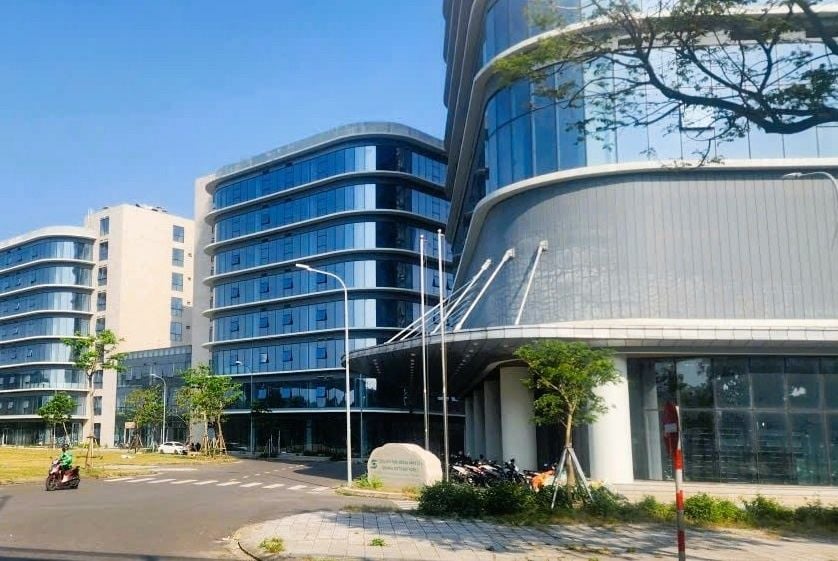
Da Nang prepares resources for the dream of an international financial center "Soft" key for digital finance Not only pursuing the ambition to develop a regional-scale financial center, Da Nang also aims to welcome about 8.5 million international visitors in 2026. This figure not only motivates the tourism sector but also drives the demand for a transparent, safe financial system that complies with international standards to serve the legitimate, convenient spending needs of visitors. This further highlights the role of training a new generation of human resources — those who understand finance but are also proficient in technology and well-versed in compliance standards within a digital environment. According to Mr. Tran Viet Hung, former Deputy Chief of the Office of the Party Central Committee and senior advisor to the Vietnam Blockchain and Digital Assets Association, building a high-quality workforce is a prerequisite for digital financial models to operate efficiently and transparently. He argues that collaboration between professional associations and training institutions will play a crucial role in forming a workforce that understands technology, finance, and compliance standards, supporting long-term development goals including the establishment of an IFC in Vietnam. Similarly, Mr. Tran Huyen Dinh, Head of the Fintech Applications Committee of the Vietnam Blockchain and Digital Assets Association, also emphasizes that Da Nang’s IFC story is not only about a special regime but, more importantly, about the ability to form a digital financial infrastructure capable of operating in practice. In this context, the workforce is the foundation for creating a complete digital financial ecosystem that meets the complex operational demands of an international financial center. In reality, digital finance is no longer a standalone field but a convergence of multiple professions. This requires a strong reform in training thinking, from knowledge acquisition to program organization. Training cannot stop at traditional financial knowledge but must incorporate interdisciplinary thinking, data analytics, technology, and financial services… Linking training with market realities One key solution to the human-resource puzzle for the IFC is to strengthen the link between schools and business. If training is not aligned with market needs, it will be difficult to produce a workforce that meets practical requirements, especially in the fast-changing field of digital finance. Prof. Dr. Le Van Huy, Rector of the University of Economics at Da Nang University, believes that cooperation with entities in fintech and digital assets will help shorten the gap between education and market needs. In the context of rapid development of digital finance models, students should have early exposure to interdisciplinary knowledge and industry-linked learning environments, thereby enhancing employability. A clear example of this trend is that the University of Economics - Da Nang University and the Vietnam Blockchain and Digital Assets Association recently signed a Memorandum of Understanding to strengthen ties in training, research, and development of human resources. This collaboration will not only enable students to access practical realities sooner but also contribute to forming a training ecosystem aligned with the needs of the digital-finance market. However, the challenge lies not only in providing knowledge but in translating it into applied capabilities. According to Assoc. Prof. Dr. Dang Huu Man, Head of Training at the University of Economics - Da Nang University, in the fast-changing digital-finance market, students cannot study using traditional approaches; they must strengthen interdisciplinary thinking, data capabilities, and adaptability. The university’s role is to shorten the distance between theory and practice, enabling students to access new career models early. From the business side, demand for talent is also changing clearly. Today it is not only blockchain developers that are needed but many specialized roles such as digital product development, transaction data analysis, risk management, legal compliance, and market communications… This opens up broad career opportunities for economics students but also raises the bar for practical competencies. Therefore, to seize opportunities in the digital-finance era, students should actively acquire interdisciplinary knowledge about blockchain, finance, and technology, and develop the mindset to work in an international environment. This is the essential foundation to participate in the development and operation of financial products and services serving users globally. It can be seen that the journey to build an international financial center in Da Nang is not only about infrastructure or policy; it is, more deeply, a question of human capital. When the workforce is well prepared, of high quality, and highly adaptable, the IFC dream will no longer be a distant goal but gradually become a reality in the near future. Source: Thoi Bao Ngan Hang
Premium gym chains are entering a “golden era” that is ending or already in decline, as rising operating costs collide with shifting consumer preferences toward more flexible, community-based ways to exercise. Long-term memberships are shrinking, margins are pressured by higher rents and facility expenses, and competition from smaller, more personalized…