•
•
•
•
•
•
•
•
•
•
•
•
•
•
•
•
•
•
•
•
•
•
•
•
•
•
•
•
•
•
•
•
•


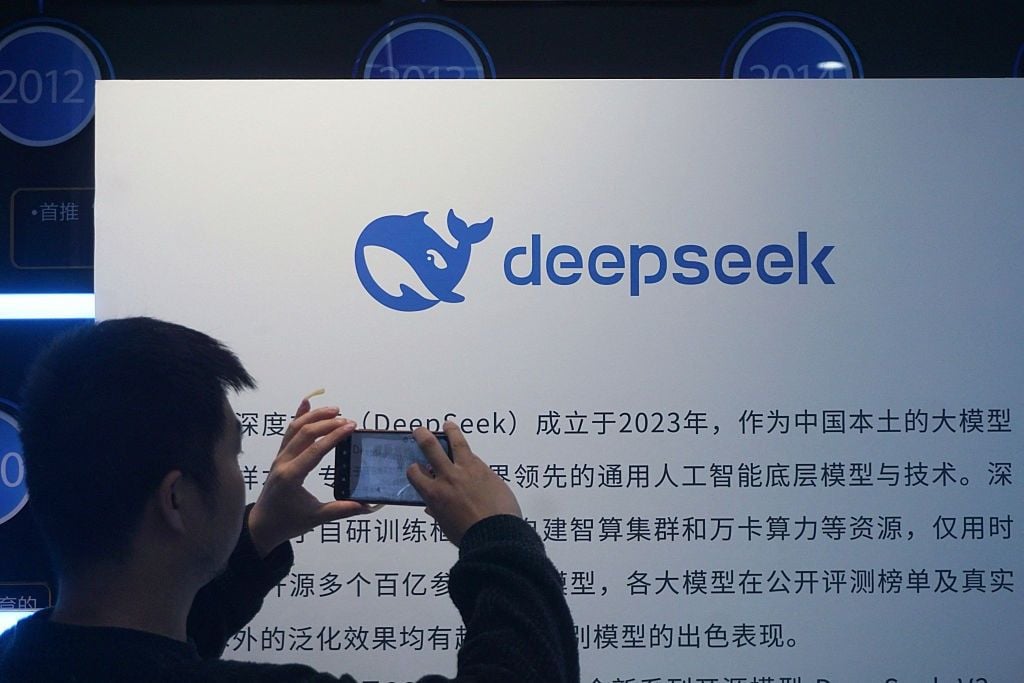
DeepSeek has released two preview-generation large language models, V4 Flash and V4 Pro, positioning them as the largest open-source models to date and pricing them well below commercial rivals. Both models are built on a cost-saving mixture-of-experts architecture, which activates only a subset of parameters per inference rather than using all parameters at every step.
DeepSeek says both V4 Flash and V4 Pro support a context window of up to 1 million tokens, enabling users to load a long document or a large codebase in a single prompt.
V4 Pro is described as the largest open-source model available, with 1.6 trillion parameters. Of those, 49 billion are activated per inference. DeepSeek compares the scale with other open-source models including Moonshot AI’s Kimi K 2.6 (1.1 trillion), MiniMax’s M1 (456 billion), and notes V4 Pro is nearly double DeepSeek V3.2 (671 billion).
The smaller model, V4 Flash, has 284 billion parameters, with 13 billion activated per inference.
DeepSeek states that both models perform better than V3.2 due to architectural improvements and that they have narrowed the gap to leading open-source and commercial models on reasoning benchmarks.
For the top variant, DeepSeek’s V4-Pro-Max is claimed to outperform open-source rivals and to surpass OpenAI’s GPT-5.2 and Google’s Gemini 3.0 Pro on some tasks.
On programming benchmarks, DeepSeek says V4 Flash and V4 Pro are on par with GPT-5.4. However, the company says the models still lag behind the most advanced systems in general-knowledge tests, particularly GPT-5.4 and Gemini 3.1 Pro. DeepSeek attributes the gap to a development path roughly 3 to 6 months behind the pioneers.
DeepSeek also notes that both models currently handle only text, while many commercial models at a similar tier have added support for audio, video, and images.
DeepSeek’s pricing is presented as a key differentiator.
The release comes one day after the United States accused China of using thousands of fake accounts to steal intellectual property from U.S. AI labs on a large scale.
Separately, DeepSeek is facing copyright accusations from Anthropic and OpenAI alleging that it copied, or distilled, AI models from those companies.
Source: Thanh Niên Việt






Premium gym chains are entering a “golden era” that is ending or already in decline, as rising operating costs collide with shifting consumer preferences toward more flexible, community-based ways to exercise. Long-term memberships are shrinking, margins are pressured by higher rents and facility expenses, and competition from smaller, more personalized…