•
•
•
•
•
•
•
•
•
•
•
•
•
•
•
•
•
•
•
•
•
•
•
•
•
•
•
•
•
•
•
•
•


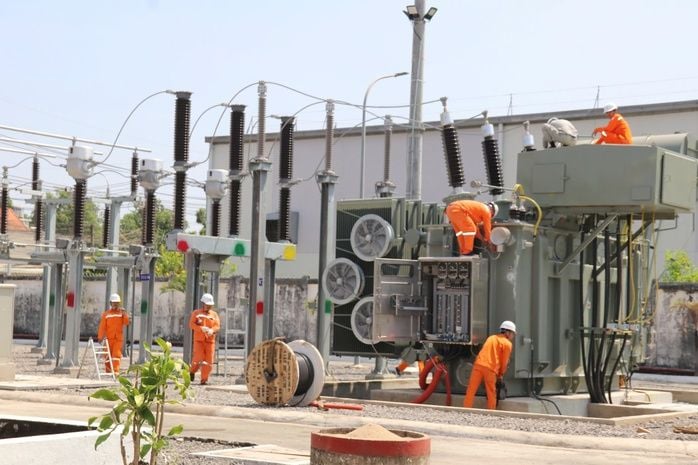
The commissioning of a third transformer to increase electricity-supply capacity will serve key industrial zones in Long Thành, Đồng Nai. The third transformer has a capacity of 63 MVA, bringing the total capacity of the An Phước 110 kV substation to 189 MVA.
The project, led by Đồng Nai Power Company, is designed to meet rising load demand in the region and ensure safe, continuous electricity supply for the An Phước Industrial Park and nearby industrial zones including Long Đức, Tam Phước, and Long Thành. It also helps reduce the load on existing transformers at the station and on nearby 110 kV substations, supporting the power system’s N-1 operating criterion.
According to Đồng Nai Power Company, in this phase the substation was equipped with the new third 63 MVA transformer and supporting equipment, including circuit breakers, isolators, current transformers, surge arresters, medium-voltage switchgear, capacitor banks, and cable systems.
The total investment for the project is 39.85 billion dong.
The 110 kV An Phước Substation was built and put into operation in January 2015 to meet electricity demand for the An Phước Industrial Park as the area began attracting significant production investment. In the initial phase, the substation was commissioned with basic infrastructure, including a 63 MVA transformer bank (T1), 110 kV and 22 kV busbars, and a SCADA system for unmanned operation.
As neighboring industrial zones and urban areas developed rapidly, in October 2015 Đồng Nai Power Company continued investing to install a second 63 MVA transformer. This raised the station’s capacity to 126 MVA to meet growing load demand in the Long Thành – Nhơn Trạch area.
With continued rapid development of industrial zones—particularly linked to the Long Thành airport project and multiple major transport infrastructure projects under construction—electricity demand has continued to grow quickly. This has created the need to further increase the substation’s capacity by installing the third transformer.




Premium gym chains are entering a “golden era” that is ending or already in decline, as rising operating costs collide with shifting consumer preferences toward more flexible, community-based ways to exercise. Long-term memberships are shrinking, margins are pressured by higher rents and facility expenses, and competition from smaller, more personalized…




