•
•
•
•
•
•
•
•
•
•
•
•
•
•
•
•
•
•
•
•
•
•
•
•
•
•
•
•
•
•
•
•
•


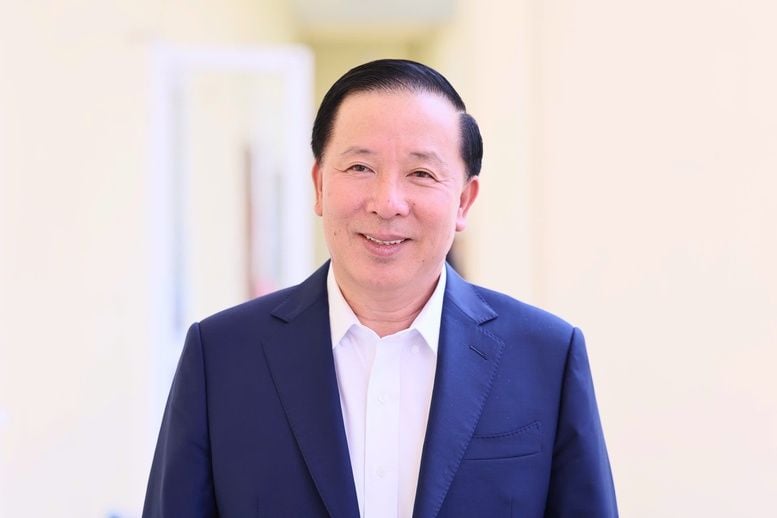
Dong Nai is preparing to seek central-city status through a package of measures spanning infrastructure, institutional reform, and human-resource development, while maintaining a focus on social welfare and living standards.
The province’s strategic infrastructure plan centers on Long Thanh International Airport and a modern logistics system as key growth drivers. It also emphasizes inter-regional transport corridors—Ring Roads 3 and 4, the Bien Hoa–Vung Tau Expressway, and the Dau Giay–Lien Khuong route—to help remove bottlenecks and support urban expansion.
Urban technical infrastructure is being upgraded to align with standards for a modern, sustainable Class I city. The measures include improvements to green space, public lighting, and centralized wastewater treatment systems.
Dong Nai links the quality of civil-service capacity to the performance of a modern urban administration, including its ability to adapt and improve governance efficiency. The province is therefore prioritizing solutions to strengthen human resources.
A resolution on attracting and employing talented, high-quality local human resources is being finalized. It targets top graduates, master’s and doctoral degree holders, specialists, and senior experts to work in local agencies. Beyond recruitment, the province aims to retain high-quality talent through incentives such as initial financial support of up to VND 1.1 billion, annual income support tied to performance, housing and commuting support, and priority in recruitment, job placement, training, and recognition.
“The overarching principle is to link talent attraction with planning and the scientific management of civil servants to align with the province’s long-term development goals, enhancing the quality of human resources and ensuring the capacity to formulate and implement policies and to govern effectively,” the Chairman stated.
Dong Nai is also developing a development program for attracting high-quality human resources for 2026–2030, with a long-term view to mobilize, fully utilize, and optimize human resources across society as the economy and society grow. The draft program is based on an assessment of current workforce conditions, including scale, structure, and quality, and analysis of new contexts. It outlines workforce development methods and scenarios by sector to support a growth model tied to governance and social welfare.
Implementation responsibilities are assigned to each agency under six principles: clear people, clear tasks, clear timing, clear responsibilities, clear products, and clear authorities. The province also emphasizes inter-ministerial and inter-level coordination to address emerging situations promptly.
In administrative reform, Dong Nai plans to streamline the two-tier government to speed up administrative procedures and reduce red tape for residents and enterprises.
For the local government apparatus, the province will continue to streamline and clarify functions and responsibilities, reduce intermediate levels, and strengthen decentralization with strict oversight. It will standardize procedures through a modern one-stop portal and accelerate digital transformation to shorten processing times, promote transparency, and minimize inconvenience for people and businesses. The stated goal is a service-oriented, professional, and efficient administration that supports business development.
The central objective is to attract new investment flows. The Chairman said that central government approval of Dong Nai as a central city is a strategically important milestone.
To attract new investment waves, Dong Nai has defined a growth model anchored on science, technology, innovation, digital transformation, and a highly skilled workforce. Priority sectors include aviation, logistics, high-tech industries, digital technology, and modern financial services. The province also plans to develop high-tech agriculture, biotechnology, and digitized value chains.
Dong Nai has planned 89 industrial zones covering more than 43,000 hectares to attract high-tech and eco-friendly projects. The province will transform existing zones into eco-friendly, high-tech zones and establish a centralized digital technology park, a startup and innovation center, and an artificial intelligence hub.
Dong Nai said it remains committed to sustainable development and is pursuing measures to reduce greenhouse gas emissions. The province is working toward a Net Zero roadmap by 2045, which it described as five years earlier than the national target, prioritizing clean energy and renewables.
Social welfare and living standards are also part of the central-city preparation. The province will ensure resettlement with improved living conditions and invest in both technical and social infrastructure in resettlement areas, including social housing and housing for workers.
Dong Nai will provide training and job-transition support for people affected by land acquisitions, aligned with workforce needs of industrial parks, service zones, and new urban areas. It will also continue poverty reduction efforts, support vulnerable groups, and expand access to basic social services and stable employment.
In addition, the province will invest in education, healthcare, culture, and sports to improve overall living standards and attract high-quality human resources to live and work in the province long term.
With a comprehensive approach covering infrastructure, urban development, the economy, and society, Dong Nai aims to become a modern, livable city and to achieve central-city status in the near future.








Premium gym chains are entering a “golden era” that is ending or already in decline, as rising operating costs collide with shifting consumer preferences toward more flexible, community-based ways to exercise. Long-term memberships are shrinking, margins are pressured by higher rents and facility expenses, and competition from smaller, more personalized…