•
•
•
•
•
•
•
•
•
•
•
•
•
•
•
•
•
•
•
•
•
•
•
•
•
•
•
•
•
•
•
•
•


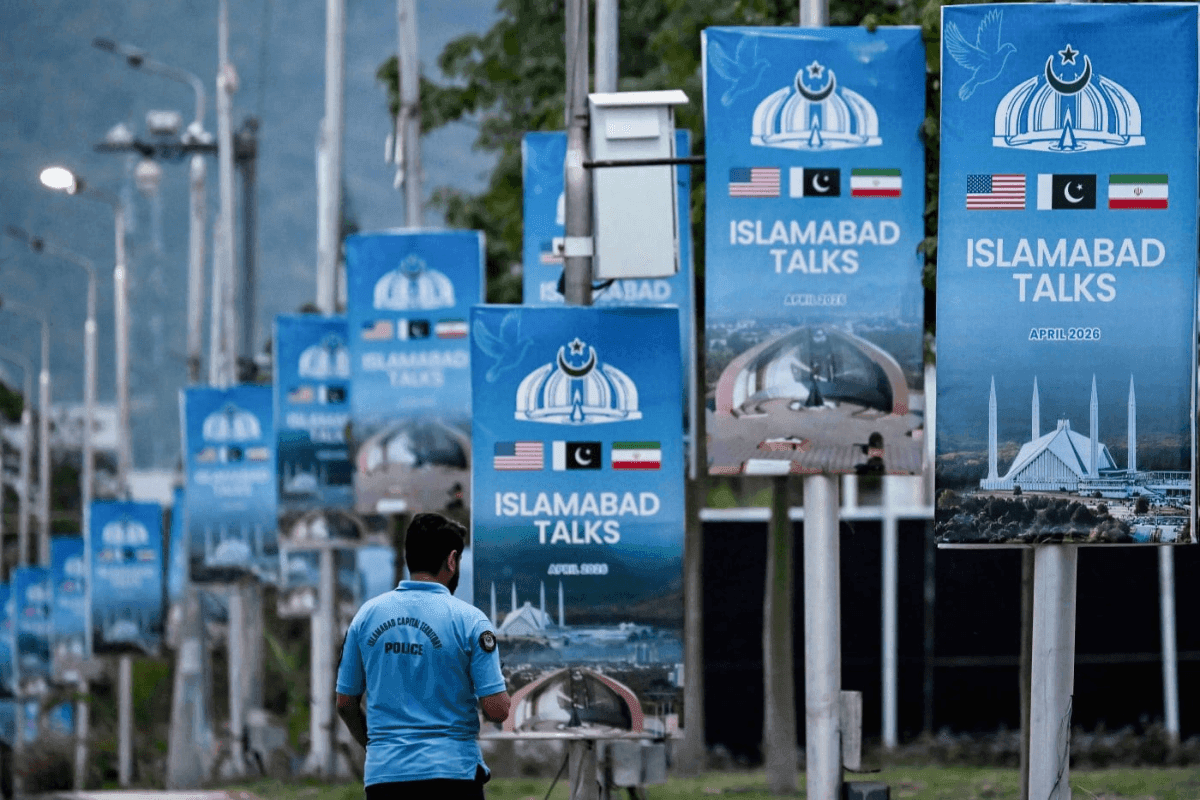
European allies are concerned that Washington’s negotiating team is moving too quickly toward a framework agreement with Iran, potentially turning the talks into a “media-ready” narrative while leaving core issues unresolved. Experienced diplomats warn that an initial deal lacking robustness could trigger further, technically complex negotiations over months or even years.
Diplomats interviewed by Reuters said the United States may be seeking a diplomatic win for President Donald Trump by accepting an agreement that addresses only the surface of Iran’s nuclear program and eases sanctions. A senior European diplomat said the risk is not simply failing to reach a deal, but that a weak first agreement could lead to “a cascade of problems later on.”
The White House rejected the criticisms. White House spokesperson Anna Kelly said Trump would only accept an agreement that puts American interests first.
French, British and German diplomats—countries that began negotiating with Iran in 2003—said they feel sidelined from the current nuclear talks. Reuters noted that during 2013-2015, the three worked with the United States to reach the Joint Comprehensive Plan of Action (JCPOA), under which Iran limited its nuclear program in exchange for sanctions relief. The United States withdrew from the JCPOA in 2018 during Trump’s first term.
After 40 days of fighting, American and Iranian negotiators resumed dialogue in Islamabad, Pakistan, at the start of this month. Reuters reported that on Sunday, 19 April, there were signs in Pakistan that the two sides were preparing to return to the negotiating table.
European diplomats said deep distrust and wide divergences in negotiating approaches are increasing the risk that the sides will only reach a fragile framework that may be difficult to sustain politically.
Federica Mogherini, who coordinated nuclear talks in 2013-2015, said: “We spent 12 years and a massive amount of technical work to reach the JCPOA. Does anyone really believe this can be completed in just 21 hours?” She referenced that the first round of US-Iran talks earlier this month lasted about 21 hours.
Diplomats said the sides could reach a broad framework in two parts—nuclear and economic—but that the nuclear file remains the biggest sticking point. One European diplomat said the US view that closing “3-4 points in a five-page document” is sufficient may not work for the nuclear issue, where each clause could trigger further disputes.
The current focus includes Iran’s stockpile of roughly 440 kg of uranium enriched to 60%, described as highly sensitive because continued enrichment could be used for a nuclear weapon.
The preferred plan discussed is to dilute the uranium on Iranian soil under International Atomic Energy Agency (IAEA) supervision. Another option is to transfer some of the material abroad. Reuters reported that Turkey and France are among sites being considered, while transferring material to the United States is politically unacceptable to Iran and sending it to Russia is not Washington’s preferred option.
Even if agreed, diplomats said these options would require prolonged negotiations, including recovering material possibly buried after US and Israeli airstrikes, verifying remaining quantities, and ensuring safe transport. Iran has also mentioned storing the material abroad for a period.
A Western diplomat who participated in nuclear talks said: “Regardless of the outcome, this is only the starting point. That is why JCPOA 2015 stretched to 160 pages.”
Beyond the uranium stockpile, the larger dispute involves Iran’s right to enrich uranium. Reuters reported that Trump publicly demanded zero enrichment, while Tehran asserts its right to enrich for civilian purposes and rejects accusations that it seeks a nuclear weapon.
A possible compromise described by diplomats is that Iran would suspend enrichment for a period and then resume at a very low level under strict monitoring.
European diplomats said the IAEA must play a central role in any deal, with a robust verification mechanism and unrestricted access. Gérard Araud, former head of France’s delegation in 2006-2009, said: “Negotiating with Iran requires caution and nuance—every word matters. This is not a deal you can rush.”
On the economic front, the focus is on lifting sanctions and unfreezing Iran’s assets frozen abroad. In the short term, Tehran seeks access to a portion of overseas funds.
US officials said relief could be modest in the near term. Reuters reported that broader relief aimed at restoring economic and diplomatic ties—especially with Europe—would require European support.
European diplomats said Washington appears to be using a principle-first approach, leaving more intricate details for later negotiations. A senior Middle East diplomat said this may not match Iran’s negotiating style, noting that the talks involve sequencing, the extent of sanctions relief, and steps to de-escalate broader regional tensions.
Reuters highlighted that two pivotal figures in the US-Iran talks are Steve Witkoff, formerly a real estate developer, and Jared Kushner, Trump’s son-in-law and former senior White House adviser in his first term. Neither comes from a traditional diplomacy or nuclear background.
One European diplomat said the US team lacks sufficient expertise, adding that the 2015 talks involved around 200 diplomats plus financial and nuclear experts. Reuters also reported that a White House official said representatives from the National Security Council, the State Department and the Defense Department were in Pakistan to participate in talks with Iran.
Diplomats said the conflict has hardened Iran’s stance. Tehran continues to seek relief from economic pressure but is also prepared to endure it. Reuters reported that Iran’s most important current demand is a commitment not to be attacked again after past military strikes by the US and Israel.
Iran also views its remaining ballistic missile capability as a key deterrent, especially after the conflict with the US and Israel weakened its forces. Diplomats said it would not be realistic to demand Iran give up that capability entirely without broader security guarantees.
Meanwhile, a senior official in Trump’s administration said Washington has set non-negotiable demands, including Iran ending uranium enrichment, dismantling key enrichment facilities, recalling highly enriched uranium, and participating in a broader de-escalation framework with regional allies.







Premium gym chains are entering a “golden era” that is ending or already in decline, as rising operating costs collide with shifting consumer preferences toward more flexible, community-based ways to exercise. Long-term memberships are shrinking, margins are pressured by higher rents and facility expenses, and competition from smaller, more personalized…


