•
•
•
•
•
•
•
•
•
•
•
•
•
•
•
•
•
•
•
•
•
•
•
•
•
•
•
•
•
•
•
•
•


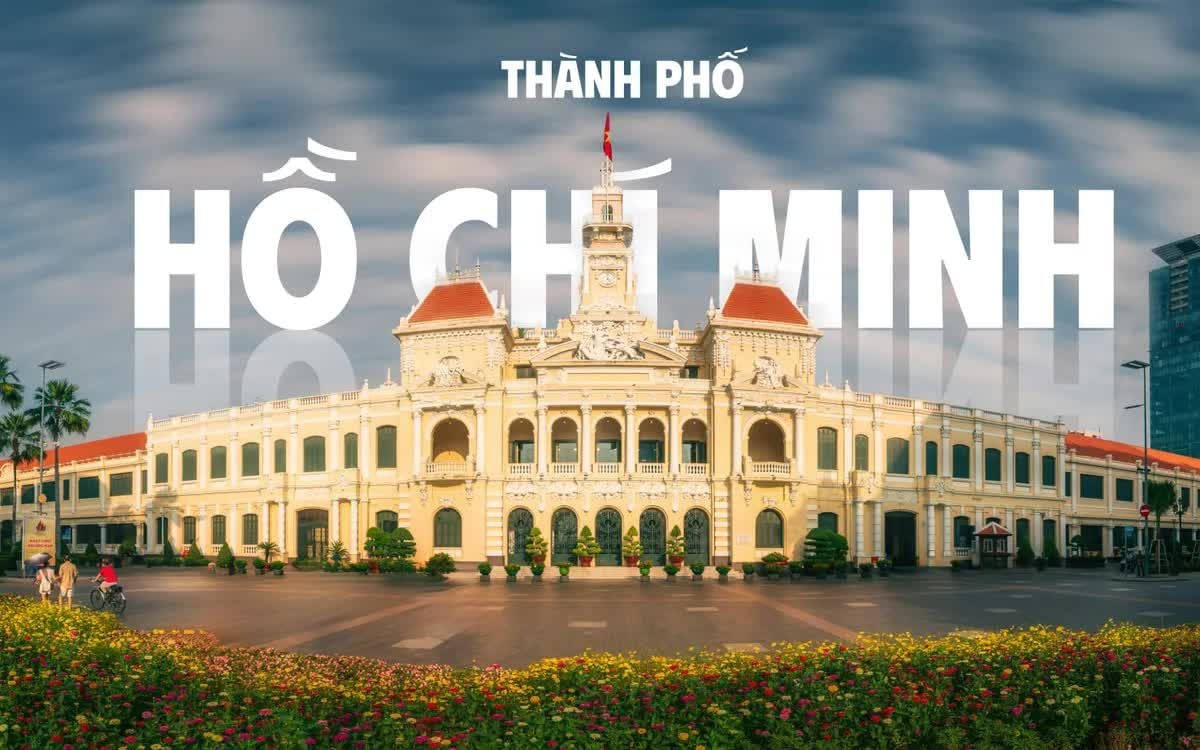
Ho Chi Minh City is crossing a historic development threshold. For decades, the city has served as the country’s economic engine, a hub of finance, commerce, services, education, health and corporate administration. But the central-city model—concentrating too many functions in a single core—has shown its limits as central land becomes increasingly scarce, infrastructure is overloaded, the cost of living rises, logistics face congestion, and population, production and services continue to spread beyond the old administrative boundaries.
Many experts say Ho Chi Minh City is not only expanding in scale but reorganizing its development space to become the nucleus of a regional megacity. The city is positioned as the hub coordinating capital flows, labor, goods, technology and services across the southern region.
The expansion is most evident after the consolidation of Ho Chi Minh City, Binh Duong and Ba Ria - Vung Tau into the new Ho Chi Minh City, which began operating on July 1, 2025. The new structure creates an urban–industrial–port space. The old core remains focused on finance, services, consumption and governance; Thu Duc is the innovation and higher education hub; the North-West district opens up space for large-scale industry, logistics and high-tech agriculture; and the South-East and South areas connect to ports, the blue economy, coastal tourism and international integration. In this view, the city is not merely combining borders, but combining competitive advantages across the region.
In urban economics, this represents a shift from a single overburdened core to a multi-core, multi-centre development model. The existing center continues to serve finance, commerce, culture and governance; Thu Duc becomes the innovation hub for higher education, technology and the knowledge economy; the North-West corridor supports industrial, logistics and advanced agricultural development; and the South and South-East link to ports, maritime economy, ecotourism and coastal urban networks. If coordinated effectively, the structure is expected to reduce pressure on the old core while creating new growth nodes rather than allowing expansion to occur haphazardly.
However, space expansion alone does not guarantee development. A regional megacity can become a national engine, but it can also turn into a fragmented metropolis without proper coordination. The first risk is infrastructure lag behind urbanization, with ring roads, metro, intercity rail, inland ports, logistics, drainage, waste treatment, water supply and social housing needing to be prioritized. The second risk is intra-regional competition, as each area seeks to become the financial center, logistics hub or technology center, potentially leading to diffuse investment. The third risk is spatial inequality, where the center offers high-end services while the outskirts face affordable housing pressures, industrial zones, pollution and limited amenities.
Therefore, the key in this new phase is regional governance rather than planning alone. The city needs a mechanism capable of assigning roles to different growth poles, prioritizing investment in strategic infrastructure, controlling real estate development around public transport, and ensuring that industrial zones, logistics zones and new urban areas are paired with worker housing, schools, clinics, green space and appropriate public transport.
Ho Chi Minh City is expected to grow through a multi-centric, cross-regional structure that links production with services and connects the urban core with ports and the airport, industry and innovation, and growth with living standards. This is why a special urban law for Ho Chi Minh City is described as essential.
Dr. Nguyen Sĩ Dũng, former Vice Chairman of the National Assembly, said the megacity issue is not a lack of resources, but the absence of a compatible institutional framework to unleash those resources. He noted that a Special Urban Law should not only provide legal clarity, but also design a new institutional model positioning Ho Chi Minh City as a growth engine and global connector. The law is expected to matter by establishing a governance system for the metropolis based on five pillars: a special urban government, genuine decentralization, a finance and budget-specific framework, a policy experimentation mechanism, and checks and accountability.
Economist Prof. Dr. Tran Hoang Ngan added that Ho Chi Minh City already has resolutions intended to unlock bottlenecks, including Resolution 54 (2017), Resolution 98 (2023) with 44 mechanisms for seven sectors, and Resolution 260 (2025). He said these policies remain short-term and that the city needs a stable, long-term institutional framework to harness growth after the merger of the three localities. Experts emphasized that a megacity cannot operate with the governance mindset of a standard locality.
Professor Vu Minh Khuong of the Lee Kuan Yew School of Public Policy, National University of Singapore, framed the issue at the national level, suggesting that investment in Ho Chi Minh City is investment for the country. He proposed that the city pursue “Hope, Integration, Synergy,” and outlined five development channels: development positioning, regional linkages, leveraging internal resources, upgrading the economic structure, and promoting innovation and AI adoption.
Ho Chi Minh City’s growth indicators after the merger were highlighted as evidence of resilience. In 2025, the city’s GRDP is estimated to grow 8.03%, reaching 2.74 quadrillion dong, accounting for 23.5% of national GDP. Revenue collection is reported at 748.438 trillion dong. Foreign direct investment (FDI) reached 8.16 billion USD, up 21.1%.
In Q1 2026, GRDP grew by 8.27%. Services increased by 8.91%, contributing 56% to GRDP growth. Transport and warehousing rose by 12.18%, reflecting the growing role of logistics. FDI in Q1 2026 was near 2.9 billion USD, up more than 200% year-on-year for the combined three former localities.
Mr. Nguyen Hoang An, Deputy Head of the Policy Office, Sở Tài chính, said these results demonstrate the city’s resilience to global volatility.







Premium gym chains are entering a “golden era” that is ending or already in decline, as rising operating costs collide with shifting consumer preferences toward more flexible, community-based ways to exercise. Long-term memberships are shrinking, margins are pressured by higher rents and facility expenses, and competition from smaller, more personalized…



