•
•
•
•
•
•
•
•
•
•
•
•
•
•
•
•
•
•
•
•
•
•
•
•
•
•
•
•
•
•
•
•
•


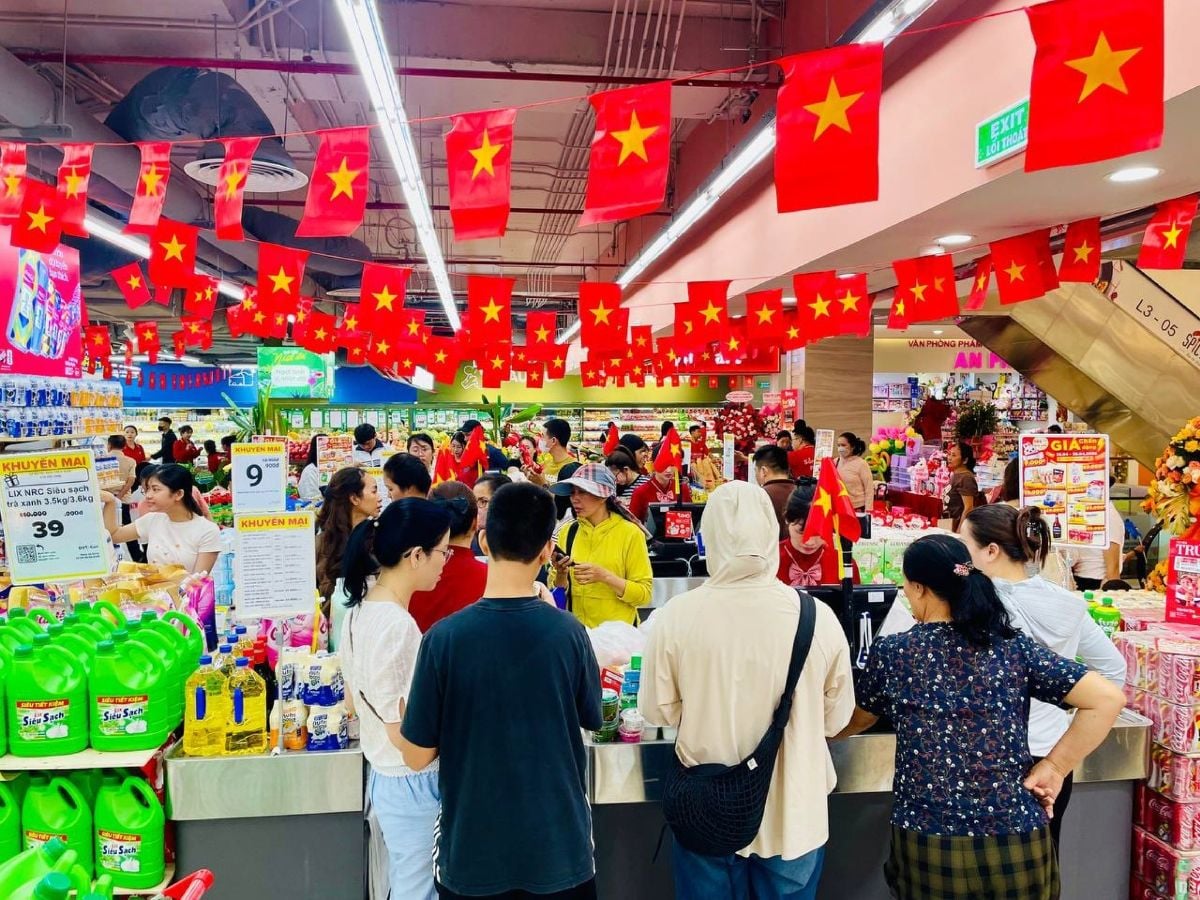
During the extended public holiday, foot traffic in supermarkets and shopping centers in Hanoi and Ho Chi Minh City rose clearly compared with ordinary days, especially around lunchtime and in the evening. Fresh foods, prepared foods, beverages, and essential goods were in high demand, while promotional sections were crowded with shoppers.
To meet the rising demand, many retail chains increased staff, opened additional checkout counters, and extended service hours. Retailers said the longer holiday, with adjacent days off, boosted demand for meals, travel, and family gatherings, prompting earlier and larger-scale promotions.
At Coopmart, more than 10,000 products were discounted up to 50% in a large-scale nationwide promotion running from April 23 to May 13, 2026. In addition to price cuts, the store offered bundles and savings combos. A highlight was the “7 Golden Days” from April 23 to 29, when 25,000 boxes of Dutch Lady milk were gifted to the 30 earliest shopping members each day.
At GO! supermarkets, a promotion themed “Vietnamese products matter every day” ran from April 23 to May 6, featuring major discounts on Vietnamese-made products from across the country, including local specialties and produce. GO! also organized experiential programs and activities throughout the day, including offers such as free weekend breakfasts and culinary workshops, aimed at enhancing the shopping experience beyond basic procurement.
Similarly, MM Mega Market Vietnam ran a large-scale promotion from April 23 to May 6, with a special focus on the OCOP space for local specialty goods. The display space featured products rated 3–5 stars with discounts ranging from 10% to nearly 20%, covering spices, dried goods, confectionery, and premium teas from reputable brands.
From now until May 5, Lotte Mart launched a promotion titled “Celebrate Unity, Sell Ultra,” offering numerous discounts up to 50% on items including beef, imported apples, seasonings, fish sauce, and laundry products. The retailer also introduced an “ultra-cheap” price program for weekend purchases for member customers, applicable to orders over 500,000 VND.
In April 2026, Vietnam’s retail market showed a mixed picture. On the surface, consumer indicators were still improving and purchasing activity remained steady. However, reports indicate that up to 80% of suppliers are seeking price increases due to rising input costs, which is exerting downward pressure on retailers’ margins.
Alongside cost pressures, competition is becoming more focused on innovation in business models and customer experience. While scale and price used to be key advantages, retailers are increasingly viewing customer experience as the decisive differentiator.
Reputa data shows that online discussions about retail cluster around three areas: staff, goods, and services. The human element—service attitude and expertise—is mentioned most, highlighting the growing role of staff in shaping brand image. On the goods side, price and promotions remain central, reflecting that Vietnamese consumers are highly price-sensitive and value-oriented. In services, delivery fees, delivery times, and payment methods continue to draw attention, indicating rising expectations for speed and convenience.
A Winmart representative in Hanoi said that persisting with deep discounting could undermine profitability, requiring a restructuring of the product mix to prioritize stable supply, reasonable costs, and stronger margins.
In the longer term, domestically produced goods, regional specialties, and OCOP products are emerging as important pillars, offering favorable pricing, quality, provenance, and local authenticity. Mr. Ta Van Tuong, Deputy Director of Hanoi’s Department of Agriculture and Environment, noted that when input costs fluctuate, shortening supply chains and increasing domestic content can help reduce risk. If supported appropriately, this trend could become a “double lever,” enabling retailers to improve performance while supporting local economic development and increasing the value of Vietnamese goods—contributing to greater resilience and stable growth for Vietnam’s retail sector amid global economic volatility.


Premium gym chains are entering a “golden era” that is ending or already in decline, as rising operating costs collide with shifting consumer preferences toward more flexible, community-based ways to exercise. Long-term memberships are shrinking, margins are pressured by higher rents and facility expenses, and competition from smaller, more personalized…