•
•
•
•
•
•
•
•
•
•
•
•
•
•
•
•
•
•
•
•
•
•
•
•
•
•
•
•
•
•
•
•
•


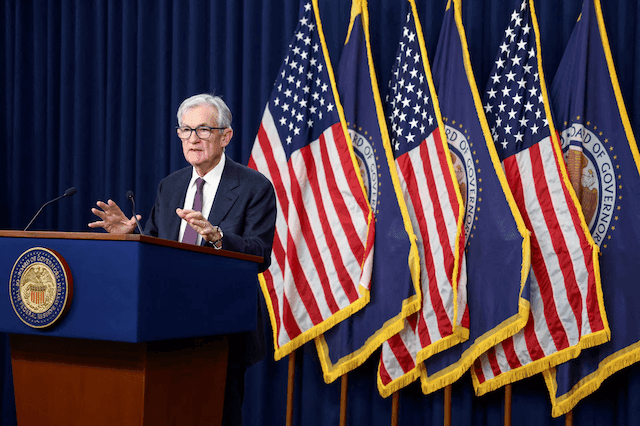
On the morning of April 30 (Vietnam time), the Federal Reserve held the federal funds rate target range at 3.5%–3.75%, as policymakers weighed persistent inflation and awaited an upcoming leadership transition amid internal divisions not seen in more than 30 years.
In what could be his last FOMC meeting as chair, Jerome Powell presided over a decision by the Federal Open Market Committee (FOMC) to keep the target range unchanged. Markets had largely priced in no policy change.
The meeting was unusual because an increasing number of officials objected to the statement’s implication that rate cuts could occur in the near term. Instead of a unanimous decision, the FOMC vote was split 8–4, with members citing different reasons for their positions.
The last time four FOMC members dissented was October 1992.
At the post-meeting press conference, Powell said he would remain on the Board of Governors for an unspecified period, at least until the investigation related to the Fed headquarters renovation project is resolved transparently and decisively.
“In a tenure traditionally marked by consensus and few disagreements, Powell ends his term with four dissents,” said Brent Schutte, Chief Investment Officer at Northwestern Mutual. “This signals that division is likely to persist in the months ahead as a new chair with a different approach to the Fed takes the helm, while the near-term economic outlook remains uncertain due to mixed signals from the labor market and growth, with inflation staying above 3% since late 2023.”
Governor Stephen Miran continued to dissent, supporting a 0.25 percentage point rate cut.
The other three dissenters were regional Fed presidents Beth Hammack (Cleveland), Neel Kashkari (Minneapolis) and Lorie Logan (Dallas). They voted to hold rates but opposed including language in the statement that signaled a more accommodative stance.
The debate centered on the sentence: “When considering the extent and timing of further adjustments to the target range for the federal funds rate, the Committee will carefully assess new data, the outlook, and the balance of risks.”
The phrase “further adjustments” was interpreted as leaving open the possibility of a next move that could be a rate cut, given that recent policy actions had largely involved cuts. However, Hammack, Kashkari and Logan, along with other officials, warned about persistent inflation risks.
In its post-meeting statement, the Fed emphasized: “Inflation remains elevated, partly reflecting the recent rise in global energy prices.”
Market expectations currently call for rates to remain unchanged for the remainder of this year and into 2027. At the March meeting, officials projected one cut this year and another in 2027, bringing the rate back to a neutral level of about 3.1%.
U.S. stocks fell on the session, while oil prices rose sharply as investors awaited earnings from the “Magnificent Seven.”
The decision marked the third consecutive meeting in which the Fed held rates, following three straight cuts last year.
The Fed faces a complex environment in which inflation remains above the 2% target, while tariffs from the Trump administration and higher energy prices make monetary policy more challenging. The persistence of these shocks is raising concerns about longer-term impacts on consumers.
On the labor front, concerns have eased. Nonfarm payrolls in March rose by 178,000, above expectations, and the unemployment rate fell to 4.3%. ADP data showed private sector employment growth of around 40,000 per week in April, indicating labor market strength, though not overly robust.
On the same day, the Senate Banking Committee approved Kevin Warsh’s nomination to be the next Fed chair. The Senate is expected to confirm him in due course, marking the first leadership change since Powell took office in 2018.
Powell congratulated Warsh at the press conference. Normally, the Fed chair leaves the Board of Governors when a successor is appointed, but Powell said he might stay on the Board until the renovation-project investigation is complete. His term would run through January 2028.
If Powell remains, it would be the first time since 1948 that a Fed chair does not depart the Board of Governors after stepping down from the leadership post.
Powell has repeatedly stressed Fed independence. Staying on the Board would allow him to maintain influence as a member, and it would also mean President Trump would not yet be able to appoint another member. Including Warsh, Trump would have three representatives on the Board alongside incumbents Christopher Waller and Michelle Bowman.
According to Josh Jamner, an analyst at ClearBridge Investments, Warsh’s addition is not expected to change the balance between the “dovish” and “hawkish” camps on the FOMC, since Warsh would replace Stephen Miran, while Powell’s seat remains open for now.







Premium gym chains are entering a “golden era” that is ending or already in decline, as rising operating costs collide with shifting consumer preferences toward more flexible, community-based ways to exercise. Long-term memberships are shrinking, margins are pressured by higher rents and facility expenses, and competition from smaller, more personalized…




