•
•
•
•
•
•
•
•
•
•
•
•
•
•
•
•
•
•
•
•
•
•
•
•
•
•
•
•
•
•
•
•
•


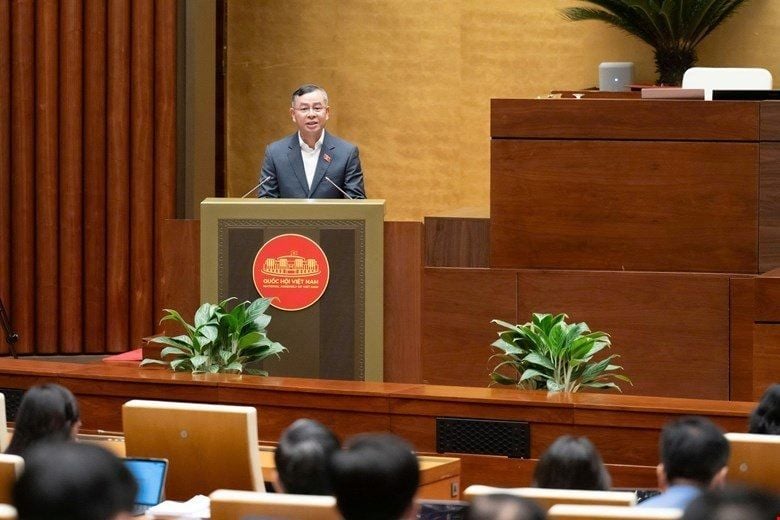
On April 23, 2026, during the first session of the 16th National Assembly, lawmakers discussed proposed amendments to four tax laws: the Personal Income Tax Law, the Value-Added Tax Law, the Corporate Income Tax Law, and the Special Consumption Tax Law. The session was chaired by Deputy Speaker Nguyen Thi Hong, who urged the bill sponsor to finalize the draft—particularly the non-taxable threshold—so it can be submitted to the Standing Committee for its opinion before the National Assembly considers the package.
Finance Minister Ngo Van Tuan said the Ministry of Finance has prepared a decree and submitted it to the Ministry of Justice for appraisal, aiming to issue guidance promptly after the amended laws take effect to maximize their effectiveness.
On the non-taxable threshold for exemption and non-payment, the minister said the level has been carefully weighed due to its effects on both the state budget and taxpayers. He stated: “With a threshold of 1 billion dong, we believe this threshold is balanced with the current conditions. The law will also specify the threshold and the government will set rules aligned with socio-economic developments.”
The minister noted that the proposed 1-billion dong threshold is double the current level and would affect the budget by about 7,000 billion dong. For households and individual traders, exemption up to 1 billion dong would reduce tax revenue by about 4,800 billion dong. Approximately 256,000 small enterprises would benefit by about 2,100 billion dong.
Minister Tuan also emphasized that tax law design should be neutral and efficient, with low costs for tax collection and taxpayer compliance.
Regarding extending tax incentives for electric vehicles beyond their current expiry, he said proposals would be seriously considered to reduce policy shocks that could affect production and market demand when incentives end.
In closing, Deputy Speaker Hong said the four tax law amendments have attracted significant attention and that opinions reflect a high sense of responsibility. On assigning the government the role of setting the non-taxable threshold, she said most opinions support this approach to provide a legal basis for flexible government policy in line with socio-economic realities.
Some opinions, however, urged further review to ensure policy flexibility and system-wide consistency. Suggestions included establishing a “hard framework” in the law or specifying explicit criteria tied to indicators such as per-capita income, living standards, or the consumer price index.
Lawmakers discussed the need to calculate the non-taxable threshold carefully to support household activity and small businesses while ensuring fairness for wage earners through alignment with personal deductions.
There was broad agreement on including a corporate income tax exemption for small enterprises to safeguard fairness and encourage transitions to corporate forms, alongside controls to prevent abuse.
Other recommendations included reviewing volatile tax provisions, pursuing comprehensive tax reform to improve policy stability, accelerating administrative reforms, and clarifying control mechanisms to prevent misuse.
On extending special consumption tax relief for passenger vehicles powered by electricity and with fewer than 24 seats, lawmakers advised cautious timing, a comprehensive impact assessment, and coordinated implementation to promote environmentally friendly transport.
For enforcement provisions, revisions to effective dates and retroactivity were suggested to protect taxpayers’ rights.
The Standing Committee will compile all views for submission to the Government. The Government is expected to direct drafting agencies to absorb and explain proposals—especially those related to the non-taxable threshold—before the National Assembly’s review and approval.
Premium gym chains are entering a “golden era” that is ending or already in decline, as rising operating costs collide with shifting consumer preferences toward more flexible, community-based ways to exercise. Long-term memberships are shrinking, margins are pressured by higher rents and facility expenses, and competition from smaller, more personalized…