•
•
•
•
•
•
•
•
•
•
•
•
•
•
•
•
•
•
•
•
•
•
•
•
•
•
•
•
•
•
•
•
•


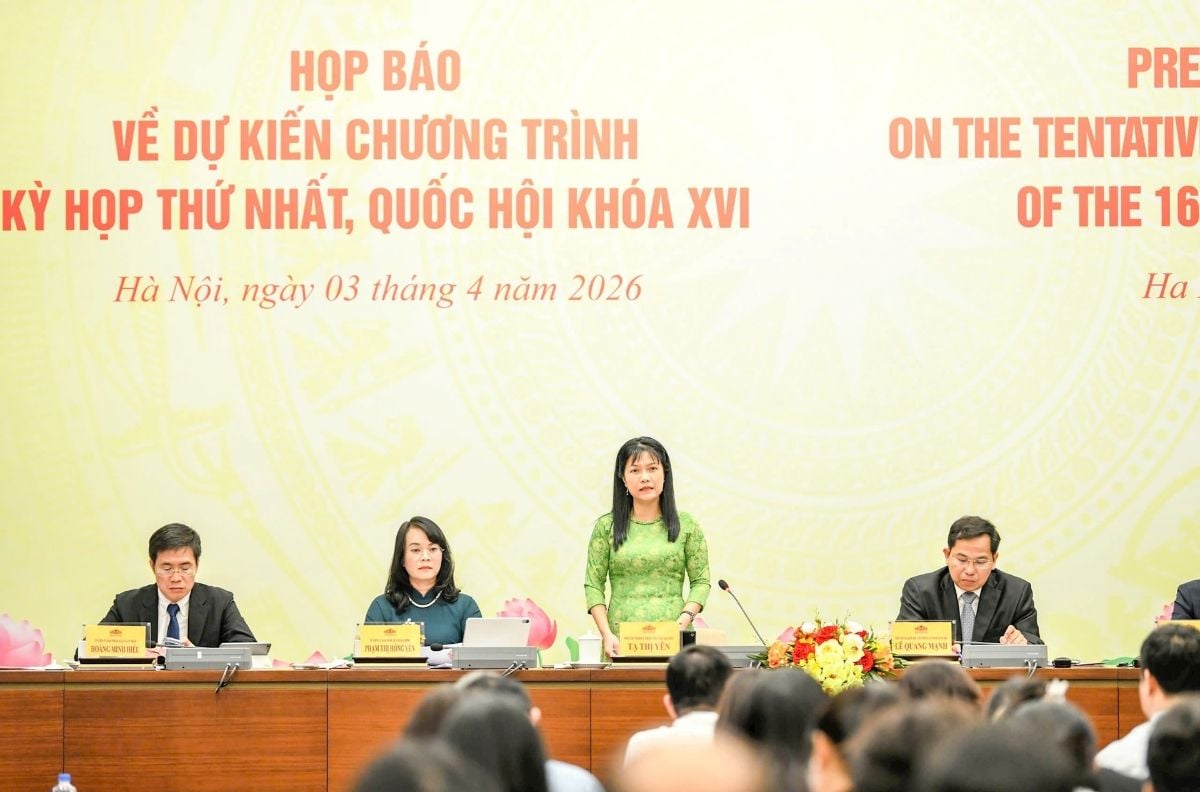
On the afternoon of April 3, at a press conference on the planned agenda for the first session of the 16th National Assembly, representatives from National Assembly agencies said personnel work has been prepared thoroughly and in accordance with procedures. They stated that 39 positions will be submitted to the National Assembly for election or approval within its competence.
Deputy Chief of the Committee for Delegate Affairs of the National Assembly Ta Thi Yen addressed questions from reporters at the briefing.
Deputy Chief Ta Thi Yen said the personnel work at the first session will be carried out methodically, under the direct leadership of the Party, and in line with the Constitution and the law.
She added that the Politburo has developed a comprehensive plan for organizing the apparatus and introducing personnel for top State leadership positions. The plan will be refined and submitted to the National Assembly for decision according to its authority, following the Politburo’s report to the Central Committee for opinions.
At the first session, the National Assembly will directly elect the following positions: Chairman of the National Assembly; Vice Chairmen of the National Assembly; Members of the Standing Committee of the National Assembly; President; Vice President; Prime Minister; Chief Justice of the Supreme People’s Court; Procurator General of the Supreme People’s Procuracy; and the State Auditor General.
In parallel, the National Assembly will also approve appointments for Government positions, including Deputy Prime Ministers and Ministers, as well as other positions within its jurisdiction.
According to the briefing, the total number of personnel to be elected or approved by the National Assembly at this session is 39 positions covering high-level leadership roles of the State, aimed at ensuring coherent institutional arrangements under the new term.
Deputy Chief Ta Thi Yen said this is a central item of the first session with particularly important significance for stabilizing the State leadership apparatus to implement the country’s development tasks in the new period.
Responding to questions about economic-social matters to be considered at the session, Pham Thi Hong Yen, a member of Parliament serving on the Economic and Financial Committee, said the National Assembly will consider and pass major resolutions related to the five-year economic-social development plan for 2026–2030; the five-year national financial plan for 2026–2030; the plan for debt borrowing and repayment for 2026–2030; and the mid-term public investment plan for 2026–2030.
Pham Thi Hong Yen said these resolutions are intended to concretize and institutionalize the goals and directions from the 14th National Congress and the conclusions of the second Central Conference. They will provide a basis for the National Assembly to set targets and solutions for development in the coming period.
She further noted that the National Assembly will discuss goals through 2030 for Vietnam to become a developing country with modern industry and a high-middle income. The agenda also includes developing infrastructure comprehensively; strengthening scientific and technological capacity, innovation, and the quality of human resources; and ensuring social security, national defense, and international standing.
On policy governance, the briefing said the 16th National Assembly is expected to consider and decide on key fiscal and monetary policy measures to achieve high growth. The focus includes effective and efficient government budgeting; reform of tax policy to broaden revenues and create fiscal space; and proactive, flexible monetary policy in close coordination with fiscal policy to ensure macroeconomic stability and support growth.
The briefing also stated that the National Assembly of the 16th term will elect the President of the country, the Prime Minister, and the Chairman of the National Assembly.






Premium gym chains are entering a “golden era” that is ending or already in decline, as rising operating costs collide with shifting consumer preferences toward more flexible, community-based ways to exercise. Long-term memberships are shrinking, margins are pressured by higher rents and facility expenses, and competition from smaller, more personalized…



