•
•
•
•
•
•
•
•
•
•
•
•
•
•
•
•
•
•
•
•
•
•
•
•
•
•
•
•
•
•
•
•
•


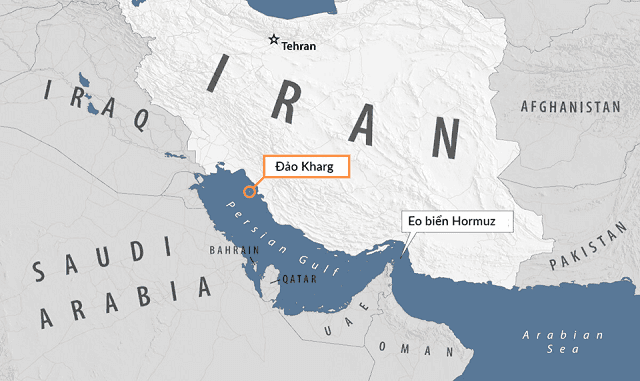
Military confrontation between the United States, Israel and Iran in early 2026 highlights how, in a 21st-century war, battlefield power is tightly constrained by economic and financial factors. The conflict has produced four paradoxes in how the sides operate.
Kharg Island is described as the “heart” of Iran’s economy, hosting facilities that process up to 90% of the country’s crude oil exports. In early March 2026, the U.S. launched a large-scale air campaign targeting the island.
Under traditional military logic, the most important targets are those that matter most to the opponent. The article says the U.S. and Israel have repeatedly attacked Iran’s nuclear facilities and also struck dozens of Tehran’s senior leaders, including Supreme Leader Ayatollah Ali Khamenei. However, the article argues that the U.S. avoided destroying oil infrastructure on Kharg.
It states that destroying Kharg’s storage tanks and pumping stations would choke Iran’s foreign exchange earnings and disrupt the “lifeblood” feeding Tehran’s war machine, potentially forcing faster concessions. Instead, the U.S. bombed air defenses and radar infrastructure while exercising “extreme caution” to avoid oil-related facilities.
The restraint is attributed not to compassion, but to domestic inflation concerns. The article warns that any disruption to Iran’s oil supply would trigger a panic shock in energy markets, pushing Brent crude to the $150–$200 per barrel range and leading to a “Trumpflation” episode.
It also cites an earlier example: with only initial disruptions in the Hormuz Strait, U.S. gasoline prices surged by about 32%, and the incumbent government’s economic policy popularity fell to a low of 32%. As a result, the article says Washington refrained from destroying Iran’s oil infrastructure and even temporarily eased the oil embargo, with oil redirected to Asian partners such as India and China.
In a globally integrated oil market, the article argues that Iranian supply still helps cool energy prices in the U.S. It adds that if Iranian supply were blocked entirely, China and India would have to bid for oil from other sources, driving global prices to “unimaginable highs.”
The article says preserving Iran’s oil infrastructure on Kharg gives Iran an economic tool to retaliate. Rather than relying solely on passive defense, Iran is described as shifting to controlling the route of oil shipments through the Hormuz Strait, which transports about 20% of global oil daily.
It states that the U.S. Navy has deployed heavily to the Gulf to ensure freedom of navigation. At the same time, Iran’s Revolutionary Guards Corps (IRGC) uses asymmetric tactics, deploying fast attack crafts to lay mines in the Hormuz area and attack merchant ships.
Despite a defense budget above $800 billion and large carrier groups, the article argues the U.S. faces strategic deadlock and must rely on allies for mine-sweeping ships. It attributes this to an “inverted cost pyramid” in military spending: the U.S. war machine is described as designed for large-scale Cold War-era confrontations, with emphasis on air power and expensive carrier groups, while coastal mine countermeasure capabilities have been neglected.
The article points to aging Avenger-class ships and repeated technical problems with littoral combat ships (LCS). By contrast, it says Iran’s approach is low-cost and asymmetric: a few-thousand-dollar mine dropped from a speedboat can block a shipping lane and threaten multi-billion-dollar aircraft carriers. The article concludes that the lack of asymmetric capability forces Washington to depend on allied micro-level tactical solutions.
Beyond straining naval forces, the article says blocking Hormuz disrupts global trade and feeds into commodity prices, creating a financial environment that benefits third parties not aligned with the United States.
It notes that a vigorous campaign would be expected to reinforce Washington’s position and strengthen Western energy security. However, the article provides a cost figure: in the first six days of fighting, the campaign cost $11.3 billion in U.S. taxpayer funds.
While the U.S. “bleeds money,” the article argues major rivals benefit. It says Russia, an energy exporter outside the conflict zone, profited as crude prices rose to $100–$120 per barrel, boosting its budget after four years of fighting in Ukraine.
It also claims China amassed tens of millions of barrels of discounted Iranian oil ahead of the war, increasing strategic reserves to 1.2 billion barrels. The article adds that Beijing continues importing Iranian oil at bargain prices through “night fleets,” using the supply to support domestic industry.
In this framing, the U.S. enters the conflict to curb rivals, but market mechanisms turn the war into a “macro-economic stimulus package” for Russia and China.
The article argues that U.S. efforts to isolate countries through the USD’s dominance have not toppled Iran’s regime. Instead, it says sanctions and airstrikes accelerate the weakening of the Petrodollar system.
It states that in response to sanctions and airstrikes, Tehran proclaims a partial Hormuz blockade and counters by permitting oil shipments to pass Hormuz in China’s yuan. The article says U.S. strength has relied on debt issuance backed by global demand to hold USD for oil purchases, and that depriving Iran of USD access pressures Iran and major trading partners to build independent payment infrastructure, such as China’s CIPS.
It cites a shift in reserves: the dollar’s share of global reserves is about 56%, down from 73% two decades earlier. The article says forcing energy payments into yuan has redirected tens of billions of dollars away from U.S. financial markets.
It adds that when countries no longer need USD to buy energy, demand for U.S. Treasuries could fall, raising borrowing costs for the U.S. government and undermining funding for the $39 trillion debt.
Overall, the article concludes that the arc of the U.S.–Iran conflict in 2026 shows military power is bounded by macroeconomic rules. It argues that battlefield decisions do not only affect territory and weapons, but also reshape global trade patterns and the structure of the international monetary system.
In an interconnected economy, the article says maintaining supply chains and financial stability can be as decisive as battlefield superiority.







Premium gym chains are entering a “golden era” that is ending or already in decline, as rising operating costs collide with shifting consumer preferences toward more flexible, community-based ways to exercise. Long-term memberships are shrinking, margins are pressured by higher rents and facility expenses, and competition from smaller, more personalized…



