•
•
•
•
•
•
•
•
•
•
•
•
•
•
•
•
•
•
•
•
•
•
•
•
•
•
•
•
•
•
•
•
•


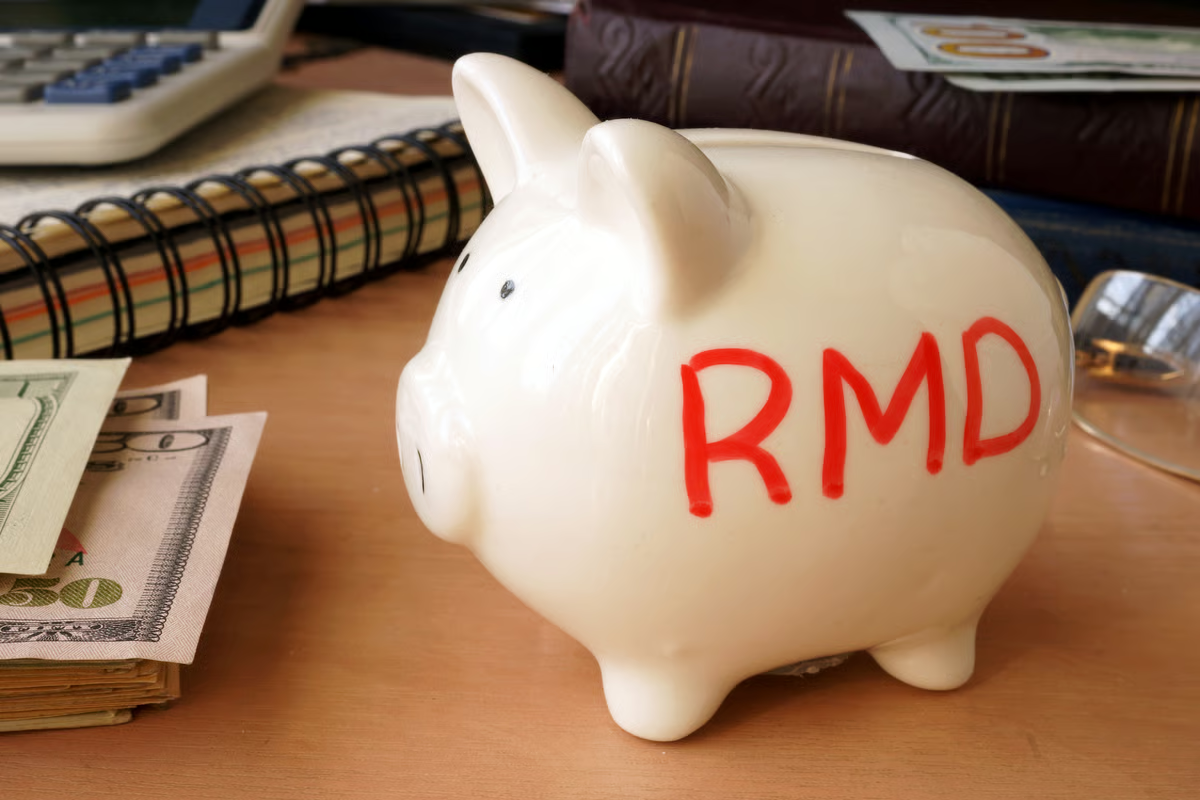
Many Americans reduce their tax obligations during their working years by contributing to tax-deferred retirement accounts. However, the federal government ultimately collects taxes by requiring retirees to take required minimum distributions (RMDs).
While the IRS requires withdrawals from traditional IRAs and 401(k) plans, it does not specify how retirees must reinvest the money. For those reinvesting RMDs in 2026, several options may fit different income, risk, and tax needs.
If you want to keep the investments you already hold, an in-kind distribution can allow you to move shares from a tax-advantaged IRA or 401(k) into a taxable brokerage account without selling them.
This approach may be less suitable if you need the cash immediately, and you may still need another source of funds to cover the taxes owed on the RMD.
Another option is to take the RMD in cash and reinvest it in new assets within a taxable brokerage account. Dividend-focused stocks or ETFs can help support retirement income, though they come with market volatility.
Dividend “Kings”—stocks with at least 50 consecutive years of dividend increases—are a popular category among retired investors. For an ETF approach, the Schwab U.S. Dividend Equity ETF (SCHD) is cited at 0.70%.
Municipal bonds are often attractive to retirees seeking to reduce taxes on investment income. Interest from municipal bonds is typically exempt from federal taxes, and these bonds generally have lower volatility than stocks.
For those who prefer not to select individual municipal bonds, an ETF can provide broad exposure. The Vanguard Tax-Exempt Bond Fund (VTEB) is cited as one example, with a portfolio that includes over 9,900 bonds issued by state and local governments.
For retirees prioritizing capital preservation and stability, high-yield savings accounts or short-term certificates of deposit (CDs) may be suitable for some RMD funds, particularly if there are near-term spending needs.
The Federal Deposit Insurance Corporation (FDIC) insures deposits up to $250,000 per depositor per FDIC-insured bank.
The best reinvestment choice depends on individual goals and risk tolerance. Retirees are not required to select only one strategy; for example, splitting an RMD across a dividend ETF, municipal bonds, and a CD is described as a valid approach.
The key takeaway is to be intentional, since an RMD does not have to end the potential growth of retirement savings.

Premium gym chains are entering a “golden era” that is ending or already in decline, as rising operating costs collide with shifting consumer preferences toward more flexible, community-based ways to exercise. Long-term memberships are shrinking, margins are pressured by higher rents and facility expenses, and competition from smaller, more personalized…