•
•
•
•
•
•
•
•
•
•
•
•
•
•
•
•
•
•
•
•
•
•
•
•
•
•
•
•
•
•
•
•
•


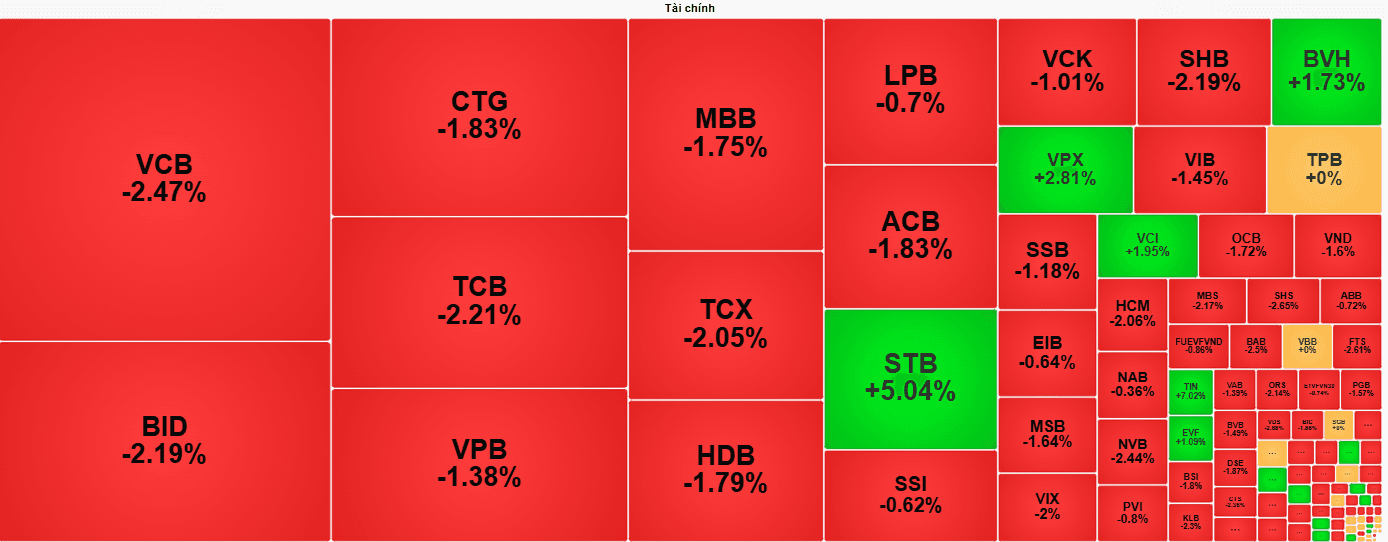
The heightened geopolitical tensions between Iran and Israel triggered another sharp “shake” in Vietnam’s stock market at the start of March, prompting a flight to energy stocks as investors sought safer exposures. Amid the volatility, the market is being tested on capital discipline and its ability to absorb risk at peak levels.
On March 2, 2026, the VN-Index opened with a sharp decline of more than 33 points, before rebounding to close at 1,877.18, down 3.15 points. Sector performance diverged clearly: banks and real estate stocks fell, with some names hitting the floor. In contrast, energy stocks—particularly oil and gas names such as PVS, PVD, BSR, PLX, and OIL—advanced, showing a run of strong gains.
Nguyen Quang Huy, CEO of the Finance and Banking Faculty at Nguyen Trai University, said the market was directly influenced by the return of global risk-off sentiment. Heightened geopolitical tensions between Iran and Israel, alongside U.S. involvement, encouraged a defensive posture, with funds rotating away from equities toward safe havens such as the USD, gold, and oil.
He added that fears of supply-chain disruption through the Hormuz Strait pushed crude oil higher, breaking the profit expectations investors had previously built. This helped upstream and oil-field services stocks benefit, while other firms faced higher input costs.
Huy also attributed the 33-point drop to three overlapping pressures: a domino effect from margin calls following a period of market exuberance; renewed inflation fears and reduced room for monetary easing; and foreign funds selling blue chips as a defensive move.
Although the energy group is rallying, Huy cautioned investors to stay cautious, noting the move may reflect a short-term reaction to oil-price news. If the conflict does not escalate into a full-blown crisis, he said the rally is likely to face a re-pricing.
Bui Van Huy, Vice Chairman and Head of the Investment Research Department at CTCP FIDT, said the VN-Index faces several challenges as it approaches its historical peak. While the index has recovered, recent liquidity weakness and narrow breadth suggest capital is selective—moving into only a limited set of stocks rather than broadening across the market.
He also pointed to an unfavorable macro backdrop. The market-wide P/E has risen above 15x, which he said leaves less room for upside “windfalls.” In addition, domestic interest rates are expected to rise, reducing stock attractiveness.
From these deteriorating drivers, Bui Van Huy said a sharp rally in 2026 appears unlikely. The 1,900-point level has become a firm psychological and technical resistance. He recommended investors avoid FOMO behavior in overheated stocks and instead realize profits to protect gains when the index meets strong resistance.
With liquidity currently selective, he said opportunities will favor patient investors who buy on dips during periods of volatility. He highlighted four sectors expected to perform relatively well: banks, retail, materials and infrastructure linked to public investment, and state-owned enterprises awaiting divestment deals.
Both experts said geopolitical events, trade tensions, and currency shocks tied to global polarization are no longer rare “Black Swan” occurrences. They are happening more frequently, requiring investors to adjust risk management and treat such shocks as part of the new environment.
Financial analyst Phan Dung Khanh said the risk from current geopolitical conflicts is creating global pressure that does not respect national borders. He noted most sectors face negative pressures, including the financial-banking group, while energy and oil remain the main area of resilience.
Khanh said the conflict’s concentration in the Middle East directly affects the oil supply chain, helping energy companies reduce losses and potentially benefit from rising prices.
On overall market volatility, he argued the event does not represent a heavy shock. He said many tension scenarios were anticipated and priced in, so—after discounting temporary psychological swings—the long-term trend remains positive.
Cat Lam — FILI (11:56, 02/03/2026)







Premium gym chains are entering a “golden era” that is ending or already in decline, as rising operating costs collide with shifting consumer preferences toward more flexible, community-based ways to exercise. Long-term memberships are shrinking, margins are pressured by higher rents and facility expenses, and competition from smaller, more personalized…




