Global markets are showing extreme volatility as geopolitical tensions and trade-policy uncertainty intensify at the same time. Escalating conflict involving the United States, Israel and Iran has pushed investors toward safety and disrupted key energy trade routes, while the aftereffects of trade disputes and policy changes worldwide are reshaping expectations for capital flows across currencies, commodities, bonds and equities.
The biggest catalyst for markets this week has been the escalation of conflict in the Middle East. Strikes on Iran by the United States and Israel have raised fears of a wider regional war. The situation worsened after the closure of the Strait of Hormuz, one of the world’s most important energy corridors.
The disruption has already increased stress on global supply chains. Nearly 200 oil tankers are reported to be stranded as shipping companies avoid the area due to security concerns.
Manufacturing economies such as Taiwan and South Korea, which depend heavily on Middle Eastern energy imports, have begun working with regional partners to arrange alternative supplies. Governments have also moved to adjust trade and energy policies to reduce the risk of shortages.
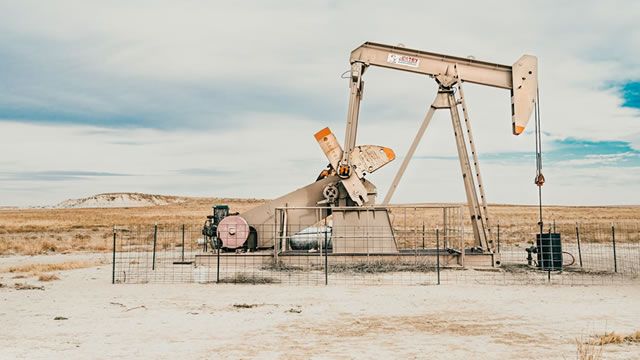
Energy markets reacted quickly to the supply risks created by the conflict. Brent crude oil (BCO) moved above $90 as traders priced in the possibility of prolonged supply disruptions. The market typically prices instability in the Strait of Hormuz early, with physical shortages appearing later in official data.
Governments have also started using policy measures to stabilize supply. The United States temporarily eased certain restrictions on Russian oil shipments to India to ease pressure in global markets. At the same time, China ordered some refineries to cut back exports of refined fuel products, a move that could tighten global supply further.
The U.S. dollar rose as investors shifted toward liquid, widely accepted assets. Despite uncertainty around tariffs and fiscal policy, the dollar gained 1.24% over the week and outperformed some traditional safe-haven currencies.
The move highlights the dollar’s role in the global financial system: during periods of uncertainty, investors often prioritize dollar liquidity because much of world trade and finance is conducted in U.S. currency. The dollar also benefits from the United States’ position as a major energy exporter, which can support the currency when oil prices rise during geopolitical crises.
Even so, the outlook for the dollar remains uncertain while the index stays below 100.50. The article notes a strong sideways trading range between 100.50 and 96.50 since July 2025, with a break likely to define the next move.
The USD/CHF pair moved higher as the dollar gained against the Swiss franc. The franc is traditionally viewed as a safe currency during crises, but in this episode investors appeared to prefer liquidity over defensive currency exposure.
The Swiss National Bank (SNB) has also historically intervened to limit excessive franc appreciation because a stronger currency can weigh on Swiss exports. The possibility of intervention can reduce upside potential for the franc during “risk-off” periods, supporting the dollar’s performance.
The article cites a rebound from long-term support near 0.76. It also notes that the weekly candle produced a sharp shadow, signaling uncertainty. A break below 0.76 would indicate renewed safe-haven demand for the franc and target 0.74, while recovery above 0.79 could open the way toward 0.8080.
USD/JPY also reflected shifts in safe-haven behavior. The Japanese yen has often been considered defensive due to Japan’s external assets and stable financial conditions, but it weakened against the dollar during recent market stress.
The article points to ambiguity around Japan’s monetary-policy outlook. Political debate in Japan about potential future interest-rate increases has created doubt about how quickly the Bank of Japan might tighten policy, keeping yen demand lower and supporting the dollar.
On the daily chart, the article references a double bottom at 152. It states that a break above 159 would signal a strong surge, while a break below the 200-day moving average near 151 would indicate a correction toward 140.
Global trade was already under pressure from escalating tariffs associated with Trump’s administration, and the Middle East crisis has added further uncertainty. Trade policy affects inflation, hiring and business investment across the global economy.
According to estimates cited from the Yale Budget Lab, the average effective U.S. tariff rate was 2.4% before Trump took office. By the end of 2025, the rate had risen to more than 16%. At one point, tariffs on Chinese goods surged to 145%, raising costs for importers and disrupting global supply chains.
Even after the Supreme Court invalidated some tariff measures, the overall tariff burden is not expected to fall much this year. The administration still has other legal tools to impose replacement tariffs, meaning trade barriers are likely to remain high. Companies are therefore continuing to adapt supply chains and review sourcing and pricing strategies.
Higher tariffs are beginning to show up in consumer inflation. While overall price increases remain moderate, the article says goods that rely heavily on imports have seen sharper price changes. Products with thin profit margins cannot absorb tariff costs and companies often pass them to consumers.
It cites coffee and tomatoes as examples. Tomatoes experienced some of the most dramatic price increases since the tariffs were implemented. The article states that inflation jumped rapidly in 2021 and 2022, reaching above 8%, driven by energy-price surges and strong consumer demand. Since then, inflation has eased and is currently around 2.4%, closer to the Federal Reserve’s long-term target.
However, the article notes that lower inflation does not mean price pressures have disappeared. Tariffs, supply-chain shifts and ongoing geopolitical tensions continue to affect the costs of imported goods, leaving some consumer categories sensitive to global supply conditions.
Uncertainty about tariff policy has also affected the labour market. The article links tariff changes to higher unemployment risk, arguing that businesses struggle to predict costs when trade rules change quickly. This uncertainty has led many companies to delay hiring.
It also states that over the past year, many businesses put recruitment on hold to limit workforce growth. The article describes the period as one of the darkest years for jobseekers in decades outside of recessions, citing a chart showing the indirect economic cost of long-term trade uncertainty.
The article adds that technological change is another factor weighing on hiring. Advances in artificial intelligence and automation allow companies to operate with fewer employees, which can make firms even more cautious about expanding headcount during uncertain periods.
It notes that companies did not increase workforce levels in uncertain times and instead invested in technology, contributing to uneven growth across sectors. The article cites a chart showing a decline in U.S. job openings since a March 2022 peak, with the latest figure dropping to 6.542 million in December 2025—reported as the lowest since September 2020 and below market expectations.
Tariffs have also been a significant source of government revenue in recent years. Higher import duties have helped generate income for the federal government and partially reduce budget deficits. However, the article says legal challenges have complicated the picture.
Courts later found that many tariffs generating large revenues last year were illegal. Businesses are now taking legal action to recover payments, and thousands of cases involving refunds are moving through the U.S. Court of International Trade. The article notes that the process could take years, adding uncertainty for financial markets.
Gold (XAU) continues to hold its long-term safe-haven reputation despite short-term volatility. The article says gold experienced sharp swings as investors sold profitable positions to cover losses in other markets—behavior that can occur early in stress episodes when liquidity becomes a priority for large investors.
Despite that, the article describes the structural outlook for gold as bullish, supported by persistent geopolitical tensions, inflation risks and rising global debt levels. It also notes that portfolio allocations to gold remain low relative to historical norms, leaving room for institutional investors to increase exposure.
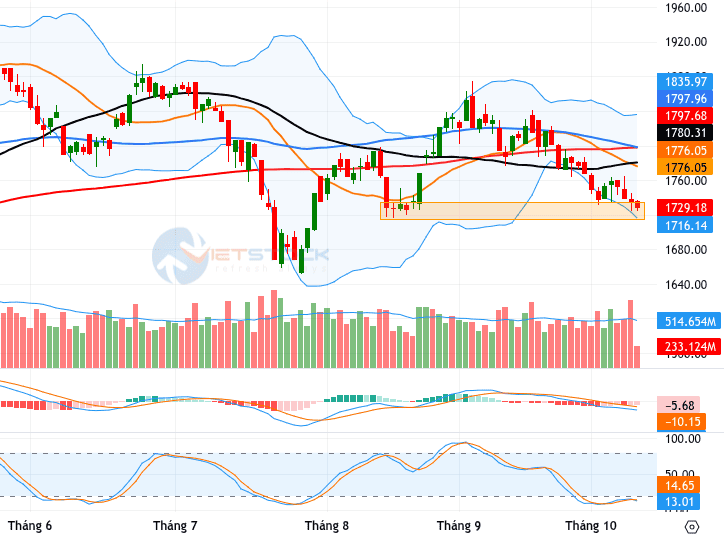
On the price structure, the article states that gold is consolidating above $5,000 and appears set to rise further. It adds that a correction below $5,000 would likely attract strong buying interest at $4,700–$4,800.
Markets are likely to remain sensitive to geopolitical tensions and trade-policy uncertainty. The Middle East conflict has shown how quickly global supply chains and energy markets can be disrupted, and rising oil prices and changing trade routes are already influencing investor sentiment across commodities, currencies and equities.
In this environment, the article emphasizes that liquidity and flexibility are becoming the most valuable assets for investors. The U.S. dollar has returned to prominence as a source of world liquidity, while gold remains positioned as a long-term store of value.
It also reiterates that the broader dollar outlook remains bearish while the index stays below 100.50. For USD/CHF, it says the pair remains within a negative trend until 0.8080 is clearly broken, and for USD/JPY it notes the pair is fluctuating below 159 and needs a break higher to gain upside momentum.
Finally, the article states that oil is the biggest beneficiary of the current crisis and highlights the potential for energy-driven inflation to support further moves in gold, while warning that markets may continue to react quickly to new developments as long as geopolitical tensions remain unresolved and trade barriers stay high.