•
•
•
•
•
•
•
•
•
•
•
•
•
•
•
•
•
•
•
•
•
•
•
•
•
•
•
•
•
•
•
•
•


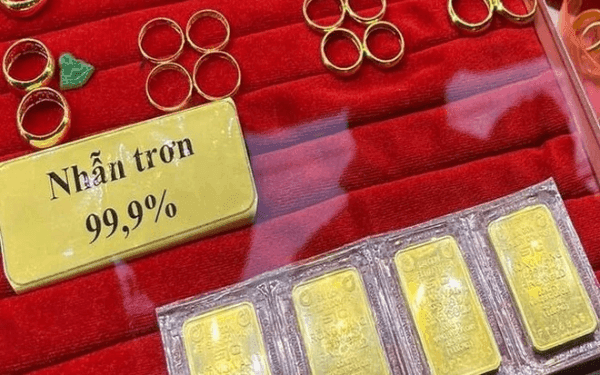
Two trading sessions on 26–27/3 saw SJC gold bars fall by a total of 2.9 million dong per tael, even as world gold prices were rising. The prevailing selling price was quoted at 170.6 million dong per tael.
After Bao Tin Minh Chau resumed operations from 12:00 noon on 26/3, gold-bar trading units in the afternoon session collectively cut prices by 2–3.5 million dong per tael.
As of 10:00 on 27/3, bid/ask prices for gold bars at SJC, DOJI, PNJ, Bao Tin Minh Chau, Bao Tin Manh Hai, Phu Quy and Ngoc Tham were quoted at 167.6–170.6 million dong per tael.
Compared with the closing price on 26/3, trading prices for gold bars at SJC, DOJI, PNJ, Bao Tin Manh Hai and Ngoc Tham fell by 0.9 million dong per tael on both the buy and sell sides.
At Bao Tin Minh Chau and Phu Quy, selling prices declined by 0.9 million dong per tael, while buying prices dropped by 0.8 million and 0.4 million dong per tael, respectively.
After the 26/3 close, the bid-ask spread for gold bars at Phu Quy widened to as much as 3.5 million dong per tael—the widest since early February 2026. In the morning session on 27/3, the spread narrowed back to 3 million dong per tael. Mi Hong recorded the smallest spread at 2 million dong per tael.
Mi Hong also quoted the selling price of SJC gold bars at 170.6 million dong per tael, with the buying price at 168.6 million dong per tael. This represented a decline of 0.4 million dong per tael on the buy side and 0.9 million dong per tael on the sell side.
Following the move in the jewelry market, the price of 4-number-9 jewelry also declined, with adjustments of 0.4–1.0 million dong per tael on both sides.
At the opening of the morning session, SJC set buy at 166.7 million dong per tael and sell at 169.7 million dong per tael, down 1.6 million dong per tael on both sides. Within the first 10 minutes, bid/ask rose by 0.7 million dong per tael to 167.4–170.4 million dong per tael. By 10:00, SJC had not changed quotes, remaining down a total of 0.9 million dong per tael on both sides.
In the morning session on 27/3, jewelry prices generally fell by 0.4–0.9 million dong per tael. DOJI’s 4-number-9 jewelry rose by 0.5 million dong per tael to 166–170 million dong per tael, while the bid-ask spread stayed at 4 million dong per tael.
At Phu Quy, the opening quotes were buy at 166.9 million dong per tael and sell at 169.9 million dong per tael, down 1.1 million dong per tael on both sides. Within 30 minutes, the brand adjusted up to 167.6–170.6 million dong per tael. By 10:00, quotes were unchanged, still down 0.4 million dong per tael on both sides.
In Ho Chi Minh City, after a 3 million dong per tael drop on 26/3, Ngoc Tham’s 4-number-9 jewelry continued to fall by 1 million dong per tael at the morning open. By 10:00, Ngoc Tham quoted buy at 159 million dong per tael and sell at 163 million dong per tael.
On the world market, as of 10:00 on 27/3, spot gold rose by more than 1%, advancing to around 4,431 USD/oz. Despite this, domestic gold prices moved in the opposite direction.
According to Vietcombank exchange rates (including tax and fees), the gap between bullion prices and world prices narrowed by more than 2 million dong per tael compared with 26/3, commonly around 28.37 million dong per tael. For 4-number-9 jewelry, the gap ranged from 20.77 to 28.37 million dong per tael, depending on brand.






Premium gym chains are entering a “golden era” that is ending or already in decline, as rising operating costs collide with shifting consumer preferences toward more flexible, community-based ways to exercise. Long-term memberships are shrinking, margins are pressured by higher rents and facility expenses, and competition from smaller, more personalized…




