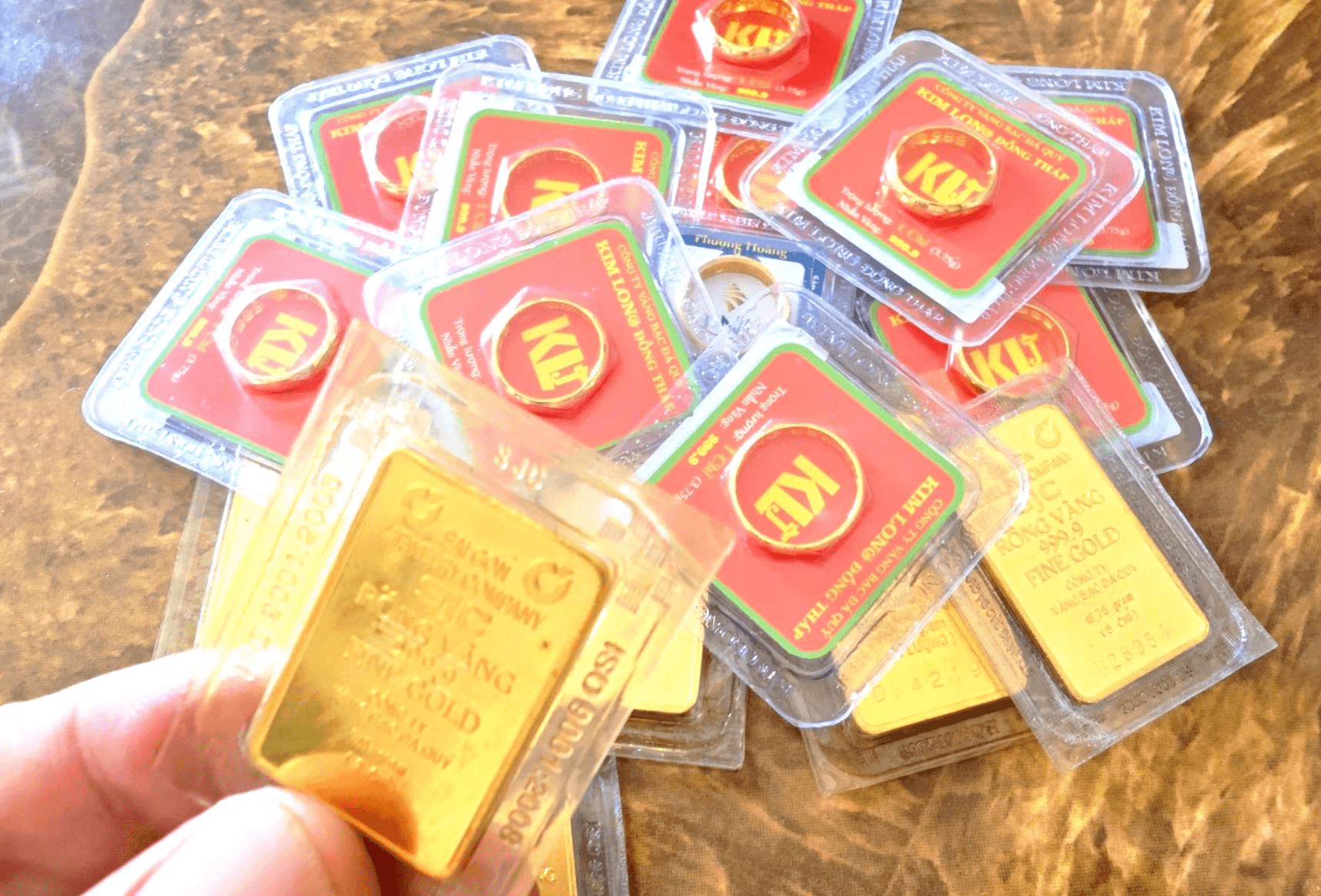
Global gold prices opened the week lower and extended last week’s downtrend, pressured by a stronger U.S. dollar and concerns that interest rates will stay high. In the domestic market, major gold traders did not update price quotes due to the holiday.
On the international market, spot gold edged down 0.25% to $4,696 per ounce in early trading. Earlier, gold had fallen more than 2.5% over the previous week.
Gold fell on Monday as the U.S. dollar strengthened. At the same time, higher oil prices raised concerns about inflation and the prospect of higher interest rates, with U.S.–Iran peace talks remaining deadlocked.
U.S. President Donald Trump said on Sunday that Iran may call if it wants to negotiate an end to the two-month conflict and stressed that Iran could never possess a nuclear weapon, after Tehran said the U.S. should remove obstacles to a deal, including blocking Iran’s ports.
Trump also canceled the trip of two U.S. special envoys to Pakistan, the mediator in the Iran conflict, on Saturday. This hindered prospects for peace after Iran’s foreign minister left Islamabad following discussions with Pakistani officials.
Rising oil prices are also increasing inflation concerns, which could lead the Federal Reserve to maintain its current monetary policy stance in the near term.
“When inflation shock fears rise, central banks are likely to keep rates steady or even raise rates in the future. This tightening of monetary policy is bad news for gold — which yields around zero,” said Lukman Otunuga, senior market analyst at FXTM, to Kitco.
The turmoil and uncertainty surrounding the Iran conflict have erased expectations that the Fed will cut rates in 2026. As a result, rate cuts are likely to be held off in April, while Chair Jerome Powell remains a focal point, Otunuga added.
Ole Hansen, Head of Commodities Strategy at Saxo Bank, said gold prices continue to swing within a $200 range, from about $4,650 to $4,850 per ounce. He added that, despite the volatility, the market remains well-positioned to benefit from longer-term fundamentals.
“Powell is unlikely to materially alter his stance as long as the U.S. economy continues to show resilience—even if modest. Yet what worries me more is the trajectory of U.S. fiscal policy—rising debt burdens from tariffs and high military spending—continuing to mount,” Hansen said. “Looking forward, the fundamental case for gold remains intact. Once geopolitical tensions around Iran ease, investor attention is likely to return to the structural drivers that supported the recent rally in gold.”